


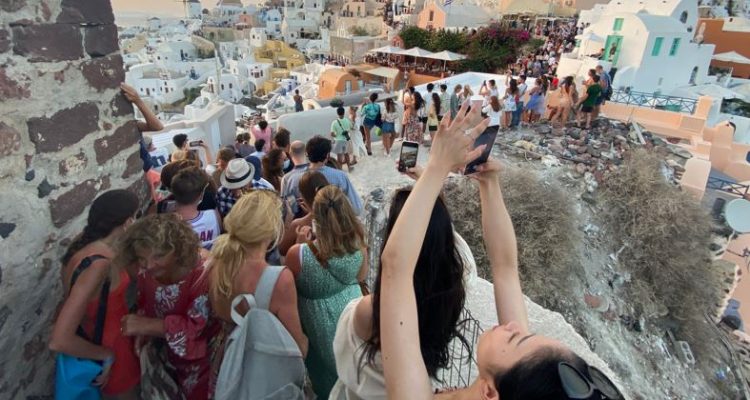
Mayor warns unrestrained development endangers the island’s future.
Santorini, renowned for its picturesque views and Instagram-worthy landscapes, is on the brink of an over-tourism crisis. The island, a top destination in Greece, risks losing its charm and beauty if rapid development is not curbed immediately, according to its mayor, Nikos Zorzos.
This year alone, Santorini is set to welcome over 3.4 million visitors. Mayor Zorzos has urged for immediate intervention to stop the ongoing construction frenzy, which he believes could lead to the island’s irreversible damage. “Our community consists of just 25,000 residents,” Zorzos remarked. “We don’t need more hotels or rental properties. If we destroy our landscape, which is what attracts visitors, we destroy the very reason people come here.”
The surge in building activities is directly linked to the rising number of tourists. Santorini, famous for its breathtaking sunsets and unique natural wonders, already boasts approximately 80,000 hotel beds, surpassing most other Greek tourist destinations, except for Kos and Rhodes. The island has reached what Zorzos describes as “saturation point,” a situation that predates even the Covid-19 pandemic.
Ecologists are alarmed as around 20% of Santorini’s land is already covered in concrete. Despite this, Athens has granted even more building permits between 2018 and 2022, allowing construction on an additional 449,579 square metres of land. These developments are primarily driven by foreign hotel chains and investors, targeting affluent tourists from emerging markets such as India and China, with plans for high-end accommodation.
Greece aims to attract almost 40 million tourists annually by 2028, a figure nearly quadruple its population. For Zorzos, this rapid development poses a threat as severe as climate change. Although Santorini has invested in desalination facilities, the island faces significant pressure on its water resources and infrastructure, particularly after years of below-average rainfall in a region highly vulnerable to climate change. “The environment is our home, and by destroying it, we harm ourselves,” Zorzos emphasised. “History teaches us that no ancient civilisation that honoured its natural beauty ever declined.”
Re-elected for a third term this year, Zorzos recalls a different Santorini, one characterised by local agriculture and mining, far removed from the bustling tourism hotspot it is today. The notion of tourists flocking to the island for luxury experiences was inconceivable just decades ago, especially since it was only in 1974 that electricity reached the island’s homes.
While Santorini is a glaring example of over-tourism, it is not alone. Other islands in the Aegean, once quiet and serene, now grapple with the overwhelming impact of tourism. Locals have become increasingly vocal, with protests against the commercial takeover of beaches, and demands for governmental intervention to protect the fragile ecosystems.
In a rare move, Greek President Katerina Sakellaropoulou highlighted the need for a sustainable approach to tourism, urging the government to consider the long-term effects on islands heavily impacted by visitor numbers. The Cyclades, especially islands like Santorini and Mykonos, have become playgrounds for the rich and famous, with the influx of massive cruise ships further straining local resources. This summer, up to 17,000 tourists crowded the narrow streets of Fira, Santorini’s main town, on a daily basis.
Greece is now among the top ten global tourist destinations, with the government aspiring to elevate its status to a “global tourism power.” Amid growing concerns, Prime Minister Kyriakos Mitsotakis has acknowledged the need for change, particularly regarding cruise ship arrivals. Proposals have been made to limit daily passengers disembarking in Santorini to 8,000, a measure Zorzos has long supported.
Despite another intense tourist season, Zorzos remains hopeful. “I may still feel like Sisyphus,” he admitted, referring to the mythical figure condemned to an endless, futile task. “But perceptions are changing. People now recognise the validity of my concerns. We do not want to become another Venice or Barcelona. We know this path is unsustainable.”
 [adblockingdetector id="638efa67113bf"]