


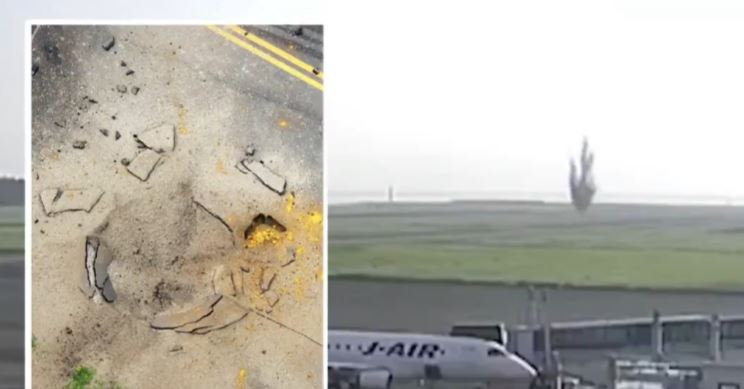
Unexploded WWII bomb disrupts Japanese airport operations.
An unexploded bomb, believed to be from the Second World War, detonated at Miyazaki Airport in south-western Japan on Wednesday, causing significant disruption. The explosion created a crater on a taxiway and forced the cancellation of over 80 flights, although fortunately, no one was injured in the incident.
The blast left a hole measuring approximately seven metres (23 feet) in diameter. Authorities suspect the bomb, buried for decades, was dropped by the United States during World War II in an effort to hinder “kamikaze” planes on suicide missions.
Chief Cabinet Secretary Yoshimasa Hayashi reassured the public, stating that there was no immediate danger of a second explosion. He also confirmed that both police and firefighters were working to ensure the area was safe. The airport is aiming to resume operations by Thursday, following thorough examinations of the scene by experts.
A bomb disposal team from Japan’s Self-Defense Forces determined that the explosive in question was a 500lb US bomb. Although the exact time it was dropped remains unclear, it is widely believed to have been part of wartime efforts during the 1940s.
Miyazaki Airport was originally established in 1943 as a base for the Imperial Japanese Navy, making it a target for airstrikes during the conflict. This is not the first time unexploded ordnance has been discovered in the area. Bombs from the same period were previously found at nearby construction sites in 2009 and 2011, heightening concerns about buried remnants from the war.
Unexploded bombs from World War II are not an uncommon occurrence in Japan, given the extensive bombings that took place during the war. Reuters reported that in 2023 alone, 2,348 bombs, weighing a total of 41 tonnes, were safely disposed of across the country. The ongoing discovery of such remnants continues to serve as a reminder of the war’s lasting impact on Japan’s landscape and infrastructure.
 [adblockingdetector id="638efa67113bf"]