


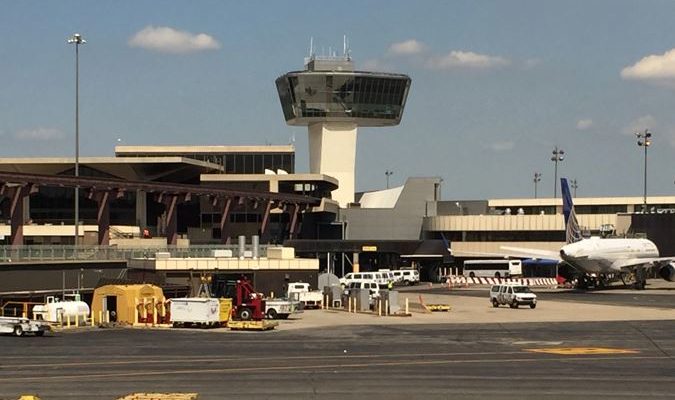
Newark Airport radar outage raises ongoing safety concerns.
Radar systems at Newark Liberty International Airport failed once more early on Friday morning, causing concern and disruption less than a fortnight after a similar incident led to widespread flight delays and cancellations. This latest malfunction occurred shortly before 4 a.m., as reported by WABC, and involved critical radar screens going dark during air traffic operations.
During the outage, air traffic controllers were forced to adapt quickly, with some being heard on audio recordings informing incoming flights of the situation. One such controller advised a private jet arriving from Cyprus to maintain an altitude of 3,000 feet in case communication was lost during its descent. These precautionary instructions underscore the severity of the situation and the potential danger posed by unexpected system failures.
Another transmission reportedly captured a controller notifying a FedEx cargo flight of the radar issue, suggesting that multiple aircraft were directly affected by the brief but concerning lapse in functionality.
Just two weeks prior, on 28 April, a significant radar failure disrupted operations when air traffic controllers temporarily lost contact with aircraft in flight for at least 30 seconds. That event triggered a cascade of cancellations and delays, severely impacting both travellers and airline schedules.
In the aftermath of the earlier malfunction, the The Federal Aviation Administration (FAA) attributed the disruption to the physical breakdown of a telecommunications line. They also pointed to other compounding factors, such as an ongoing shortage of air traffic control staff and ongoing runway construction, both of which have made maintaining smooth airport operations increasingly difficult.
Newark Liberty has seen continued operational struggles, with these repeated system malfunctions bringing to light deeper infrastructural and staffing challenges. Travellers using the airport have had to contend with mounting delays and uncertainty, raising questions about long-term reliability and passenger safety.
The repeated failures at one of the United States’ major transportation hubs are prompting renewed scrutiny of the FAA and its infrastructure management. The ability of air traffic controllers to respond under pressure has been admirable, but the persistence of technical issues demands a comprehensive review and modernisation of airport systems.
Until these systemic issues are resolved, further disruptions remain a possibility, leaving travellers, airline personnel, and airport staff alike to brace for ongoing uncertainty at Newark Liberty.
 [adblockingdetector id="638efa67113bf"]