


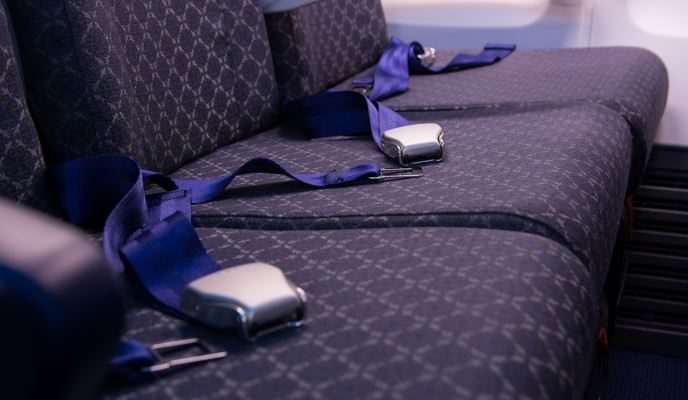
Finnair suspends flights after seat cover safety issue.
Thousands of travellers faced unexpected disruption after Finnair was forced to cancel flights because of a safety concern linked to how seat covers were cleaned. The Finnish national carrier confirmed that around 40 flights were cancelled on Monday and Tuesday, affecting approximately 5,000 passengers. The issue stemmed from uncertainty about whether washing the aircraft seat covers with water could compromise their fire-retardant properties.
The airline announced that it had suspended operations for eight of its fifteen Airbus A321 aircraft while awaiting further guidance. Finnair received information from the seat-cover manufacturer that the impact of washing them with water had not been properly verified. Out of caution, the airline chose to ground the aircraft involved until the situation was fully assessed.
“Safety is always our top priority,” a Finnair spokesperson stated, adding that the airline strictly follows all maintenance guidelines issued by manufacturers and aviation authorities. The eight affected jets were flown without passengers to the airline’s main hub in Helsinki, where inspections and further checks were carried out to ensure compliance with fire safety standards.
Finnair is currently evaluating the best options to return the aircraft to service as soon as possible. The company said it was working closely with both the seat manufacturer and aviation regulators to confirm that all cleaning processes meet the required safety certifications. Once this is verified, the suspended planes will resume normal operation.
This type of operational setback, though rare, highlights how even minor maintenance uncertainties can have significant effects across airline schedules. Similar issues have disrupted other carriers in recent months. In June, KLM had to turn a flight around mid-Atlantic after realising that the aircraft was approaching a maintenance deadline, prompting a return to Amsterdam to avoid breaching licensing conditions.
That same month, an American Airlines service bound for Naples had to divert to Rome after the airline dispatched a Boeing 787-9 instead of the smaller 787-8 normally used for that route. The longer aircraft required different firefighting and rescue provisions at the destination airport, making it unable to land as planned.
Such incidents demonstrate the complexities of modern aviation, where even procedural details—like how a seat cover is cleaned—can have far-reaching operational and financial consequences. Finnair’s decision to act swiftly underscores its commitment to passenger safety and regulatory compliance, even when the disruption to travellers is considerable.
 [adblockingdetector id="638efa67113bf"]