


Algiers Food Guide
Food in Algiers: What to Eat & Drink
Algiers’ culinary landscape is a rich tapestry shaped by Berber traditions, Arab influences, Ottoman legacies, French colonial heritage, and the bounty of the Mediterranean. Set across dramatic hills overlooking the sea, the city known as Alger la Blanche takes its name from the whitewashed buildings cascading toward the harbor. Its food culture reflects a complex history that spans Phoenician trade routes, Roman settlement, Ottoman rule, and French colonial administration, resulting in a cuisine that balances mountain and sea, tradition and modernity.
Semolina, lamb, Mediterranean seafood, olives, dates, and aromatic spices such as cumin, coriander, and caraway form the foundation of Algerian cooking. Algiers’ position between the fertile Tell Atlas mountains and the Mediterranean ensures access to fresh herbs, seasonal produce, and daily seafood catches. From traditional eateries in the UNESCO-listed Casbah to French-style cafés along grand boulevards and seafood restaurants near the port, the city offers a culinary journey through Algeria’s diverse regions and layered past.
Local Specialities of Algiers
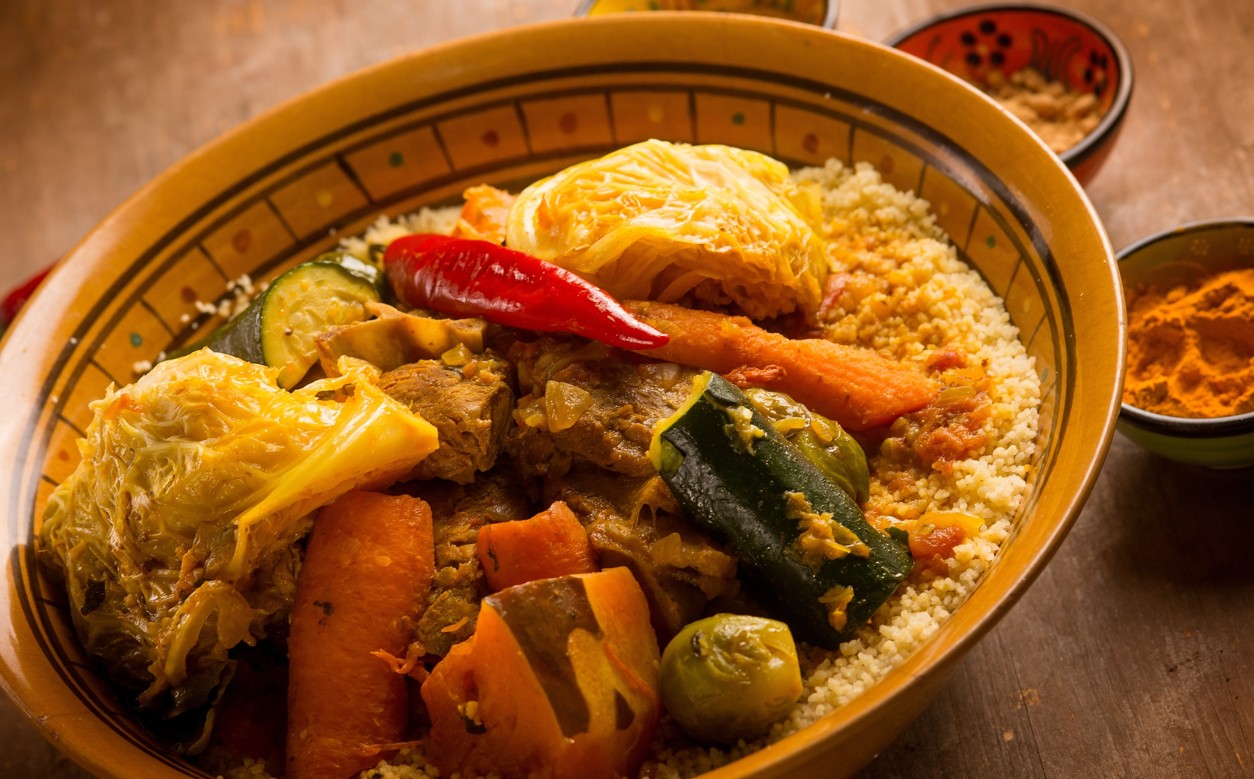
Algiers is renowned for its couscous, Algeria’s national dish, which in the capital often features fish or seafood, reflecting its coastal setting. This variation offers a Mediterranean interpretation of a dish rooted in Berber mountain traditions. Another signature is chakhchoukha, made from torn pieces of flatbread soaked in a rich stew of lamb or chicken, chickpeas, and vegetables. Hearty and comforting, it remains a staple of home cooking and traditional restaurants.
Karantika, a savory flan made from chickpea flour, eggs, and spices, is perhaps the city’s most iconic street food. Baked until golden and typically served inside a baguette with harissa, it is especially popular in the morning and at lunchtime. Dolma, vegetables stuffed with spiced meat and rice, reflects Ottoman influence, while merguez, spicy lamb sausages grilled over charcoal, are enjoyed everywhere from street stalls to family gatherings.
Algerian pastries occupy an important place in the local food culture. Delicacies such as m’hanncha, a coiled almond pastry scented with orange blossom, baklava, and kalb el louz, a dense semolina cake soaked in syrup, showcase the combined influence of Ottoman technique and French refinement.
Everyday Algerian Food
Breakfast in Algiers often features msemen, a square, pan-fried bread, or baghrir, spongy pancakes with honeycomb texture, served with honey, butter, or jam and accompanied by strong coffee. Chorba frik, a warming soup made with crushed green wheat, lamb, tomatoes, and herbs, is especially associated with Ramadan but is enjoyed throughout the year.
Tajine in Algeria refers not to a clay pot, but to a baked egg dish similar to a savory quiche, prepared with meat, vegetables, herbs, and spices bound with eggs. Rechta, thin handmade noodles served with chicken and a lightly spiced white sauce, is a beloved Friday meal for many families. Grilled meats, particularly lamb and chicken brochettes, are widely available, while salads such as mechouia and zaalouk provide fresh, smoky contrasts to richer dishes.
Street Food and Market Culture
Algiers’ street food scene is lively from early morning until late evening. Alongside karantika, vendors sell bourek, crisp fried pastry rolls filled with meat, cheese, or potatoes, as well as grilled corn and seasonal fruits. Shawarma stalls, though originally Middle Eastern, have become fully integrated into local food culture through Algerian spices and bread.
Markets such as the Marché de la Lyre and the Casbah market offer insight into everyday life, with stalls selling spices, olives, dried fruits, and freshly prepared foods. Sweet shops display impressive assortments of pastries, and each neighborhood tends to have its preferred patisserie. Juice vendors press fresh orange, pomegranate, and seasonal fruit juices, while coffee sellers prepare strong, Turkish-style coffee over small braziers.
Seafood Culture and Coastal Dining
As a Mediterranean capital, Algiers enjoys excellent seafood. Coastal neighborhoods and areas near the port, including Sidi Fredj and Aïn Taya, are known for restaurants serving fish delivered daily from local boats. Diners typically choose their fish from displays, select the cooking method, and enjoy it freshly prepared.
Seafood couscous, combining fish, shrimp, and squid in a tomato-based broth, is a distinctive local specialty. Grilled sea bream, red mullet, and sardines are also popular, often served with lemon and chermoula, a marinade of herbs, garlic, and spices. Octopus salads, calamari, and shrimp dishes further highlight the Mediterranean influence, with meals accompanied by bread, salads, and harissa.
French Influences and Café Culture
The legacy of French rule is most visible in Algiers’ café and patisserie culture. Boulevards such as Didouche Mourad are lined with cafés serving coffee, pastries, and light meals in a distinctly European atmosphere. French-style bakeries produce baguettes, croissants, and pastries alongside traditional Algerian breads.
Historic cafés in the Casbah and city center function as social spaces for conversation and people-watching. More contemporary dining has developed in neighborhoods like Hydra and El Biar, where restaurants offer international cuisine alongside Algerian classics. Wine production, once prominent, continues on a smaller scale in nearby regions and is available in licensed venues.
Food Customs and Practical Tips
Meals in Algiers are typically shared, with dishes placed at the center of the table and bread used as the primary utensil. Dining often begins with salads and small dishes before moving on to the main course, followed by fruit or pastries.
Lunch is generally the main meal of the day, eaten between early and mid-afternoon, while dinner is lighter and served later. Tipping of around 5 to 10 percent is appreciated in restaurants, though it is less expected in casual settings. Many establishments close between lunch and dinner service and reopen in the evening.
Street food is usually safe when freshly prepared and served hot, and busy stalls are a good indicator of quality. Bottled water is recommended, and caution should be taken with raw vegetables outside reputable restaurants. When eating in homes or traditional settings, using the right hand is customary. Accepting offers of tea or coffee is an important gesture of respect, as hospitality is deeply valued. Generous portions and second helpings are common and considered a sign of welcome.
This guide covers what to eat in Algiers, from traditional couscous and street food to seafood, French-influenced cafés, and local dining customs. Use it alongside our Algiers Travel Guide to plan your culinary exploration of Algeria’s historic capital.
Check monthly weather averages for
Latest Secret Flying deals to Algiers
Dallas, Texas to Algiers, Algeria for only $625 roundtrip
Cheap flights from Dallas, Texas to Algiers, Algeria for only $625 roundtrip with Air France.
View DealMiami to Algiers, Algeria for only $552 roundtrip
Cheap flights from Miami to Algiers, Algeria for only $552 roundtrip.
View DealGeneva, Switzerland to Algiers, Algeria for only €129 roundtrip
Cheap flights from Geneva, Switzerland to Algiers, Algeria for only €129 roundtrip.
View Deal [adblockingdetector id="638efa67113bf"]