


Amman Food Guide
Food in Amman: What to Eat & Drink
Amman’s culinary landscape is a vibrant expression of Jordanian heritage, Levantine traditions, and deep-rooted Middle Eastern hospitality, unfolding across the city’s historic hills with an increasingly cosmopolitan edge. As Jordan’s capital and largest city, Amman has developed a food culture that balances Bedouin customs and rural traditions with modern urban dining, creating a scene where ancient cooking techniques coexist with contemporary restaurant concepts. Positioned at the crossroads of the Levant, the city absorbs influences from Palestine, Syria, and Lebanon while retaining a distinctly Jordanian identity shaped by desert landscapes and fertile highlands.
Staple ingredients such as olive oil, yogurt, tahini, lamb, chickpeas, and fresh herbs form the backbone of Amman’s cuisine. Dishes are defined by bold yet balanced flavors, seasonal produce, and generous portions that reflect Jordan’s culture of hospitality. The city’s elevation and climate support high-quality fruits and vegetables, while its role as a regional business and diplomatic hub has introduced a wide range of international influences. From traditional mansaf meals served in family-run restaurants to stylish cafés and bistros in Jabal Al-Weibdeh and Rainbow Street, Amman offers a culinary journey that mirrors both its ancient roots and its modern identity.
Local Specialities of Amman
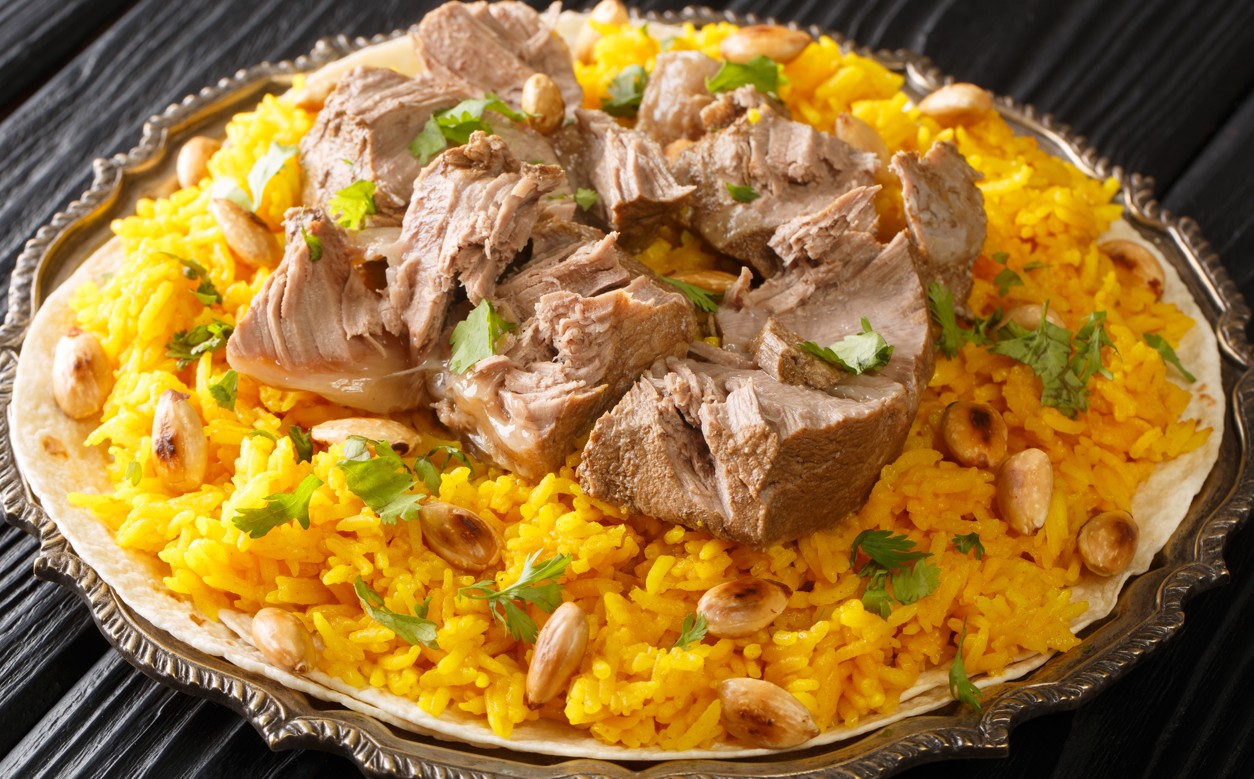
Amman is synonymous with mansaf, Jordan’s national dish and a symbol of Bedouin hospitality. Tender lamb is cooked in a sauce made from jameed, a fermented dried yogurt, then served over flatbread and rice. Traditionally eaten communally using the right hand, mansaf is reserved for celebrations, gatherings, and important guests.
Maqluba, meaning “upside down,” is another iconic dish. Rice, vegetables, and meat are layered in a pot, cooked together, and then flipped dramatically onto a serving platter, revealing a neatly layered centerpiece often served with yogurt salad. Musakhan, originally from Palestine but widely loved in Amman, features roasted chicken topped with sumac-spiced onions and pine nuts on taboon bread, highlighting the simplicity and depth of Levantine flavors.
Manakish, often described as Jordanian flatbread, is a popular breakfast food topped with za’atar, cheese, or minced meat and baked in stone ovens. Sweet cravings are satisfied by kanafeh, a syrup-soaked pastry made with cheese and shredded dough. While its roots lie in Nablus, some of the most celebrated versions are found in Amman’s Downtown sweet shops.
Everyday Jordanian & Levantine Food
Breakfast in Amman typically includes ful medames, hummus, labneh, olives, and fresh vegetables served with warm pita bread. Falafel, made from chickpeas or fava beans, appears in sandwiches and mezze plates throughout the city. Shawarma is ubiquitous, with countless variations of chicken or lamb wrapped in flatbread and seasoned according to neighborhood tradition.
Mezze culture is central to everyday dining. Meals often begin with an assortment of small dishes such as baba ghanoush, tabbouleh, fattoush, and warak enab. Grilled meats dominate restaurant menus, especially kofta and shish tawook, while Jordanian rice cooked with vermicelli and spices serves as a common accompaniment.
Street Food and Market Culture
Amman’s street food scene is active throughout the day and well into the night. Falafel and shawarma stands are found on nearly every major street, while vendors sell fresh juices, roasted nuts, and ka’ak, the city’s popular sesame-crusted bread rings. Downtown’s Hashem Restaurant has achieved legendary status for its no-frills falafel and hummus, drawing crowds of locals and visitors alike.
Souk Jara, a seasonal Friday market, blends street food with crafts, music, and a lively community atmosphere. Sweet shops across the city display generous assortments of Middle Eastern pastries, including baklava, barazek, and muhallabiya. Fruit stands showcase produce from across Jordan, from citrus and stone fruits to the country’s well-known dates.
Traditional Beverages and Café Culture
Arabic coffee, lightly spiced with cardamom and served in small cups, is an essential symbol of welcome in Amman. Sweet mint tea is widely enjoyed, especially in cooler months, while fresh juices such as pomegranate, orange, and carrot are popular year-round.
Although Jordan produces wine and beer, non-alcoholic drinks dominate everyday life. Jallab, made from dates, grape molasses, and rose water, is especially popular during Ramadan, while ayran offers a refreshing yogurt-based option. Amman’s café culture has expanded rapidly, with specialty coffee shops existing alongside traditional ahwas where locals gather for conversation, tea, and shisha.
International Dining and Contemporary Scene
As a regional hub, Amman offers a wide range of international dining options. Iraqi, Syrian, Lebanese, and Armenian cuisines are particularly well represented, reflecting regional migration patterns. European, Asian, and American restaurants are concentrated in neighborhoods such as Abdoun and Sweifieh.
Modern Jordanian restaurants increasingly reinterpret traditional dishes with contemporary techniques, while food trucks and pop-up dining concepts appeal to younger crowds. Rooftop restaurants have become popular, offering sweeping views across the city’s hills. Areas like Rainbow Street and Jabal Al-Weibdeh are especially known for their walkable streets lined with cafés, galleries, and restaurants.
Food Customs and Practical Tips
Dining in Amman is social and communal, with meals often shared and unhurried. Traditional meals usually begin with mezze and conclude with fruit, sweets, and coffee. Bread is used both as an accompaniment and as a utensil.
Lunch is generally the main meal of the day, eaten between early and mid-afternoon, while dinner is lighter and later, particularly in summer. Tipping of around 10 to 15 percent is customary in restaurants, and many establishments include a service charge, so bills should be checked before adding extra gratuity.
Street food is generally safe when freshly prepared and served hot; busy vendors are usually the best choice. Bottled water is recommended, although tap water is relatively clean by regional standards. When visiting a home, bringing a small gift is appreciated, and guests are expected to try a little of everything offered. Eating with the left hand during traditional meals is discouraged, and generous second helpings are a common sign of Jordanian hospitality.
This guide covers what to eat in Amman, from traditional mansaf and Levantine mezze to street food and contemporary dining. Use it alongside our Amman Travel Guide to plan your culinary exploration of Jordan’s historic capital.
Check monthly weather averages for
Latest Secret Flying deals to Amman

Madrid, Spain to Amman, Jordan for only €66 roundtrip
Non-stop flights from Madrid, Spain to Amman, Jordan for only €66 roundtrip.
View DealPrague, Czech Republic to Amman, Jordan for only €52 roundtrip
Non-stop flights from Prague, Czech Republic to Amman, Jordan for only €52 roundtrip.
View Deal [adblockingdetector id="638efa67113bf"]