


Barcelona Food Guide
Food in Barcelona: What to Eat & Drink
Barcelona’s culinary landscape is a magnificent celebration of Catalan traditions, Mediterranean abundance, and creative innovation, making it one of Europe’s most dynamic food cities. As the cosmopolitan capital of Catalonia, Barcelona has developed a distinctive food culture that balances centuries-old regional recipes with cutting-edge gastronomy, all set against the backdrop of Gaudí’s architecture and the Mediterranean Sea. The city’s cuisine reflects its position between mountains and coast, its complex history, and its role as a global tourism and business hub—producing food that is deeply rooted in Catalan identity while embracing contemporary creativity.
Core ingredients such as tomatoes, garlic, olive oil, seafood, pork, and beans form the foundation of Barcelona’s cuisine. Dishes are built around the Mediterranean trilogy of bread, wine, and olive oil, enhanced by Catalan staples like romesco sauce and picada (a nut-and-herb thickener). The city’s markets, especially the legendary La Boqueria, showcase both local produce and global ingredients. From traditional tapas bars in the Gothic Quarter to avant-garde restaurants in Eixample, Barcelona offers a culinary journey through Catalonia’s rich gastronomic heritage and modern ambitions.
Local Specialities of Barcelona
Barcelona is celebrated for pa amb tomàquet, the deceptively simple Catalan staple of bread rubbed with tomato, garlic, and olive oil that accompanies almost every meal. The city’s most famous rice dish, paella (originally from Valencia), appears in Barcelona with local variations, particularly seafood paella featuring squid, mussels, and prawns. Escudella i carn d’olla, a hearty meat-and-vegetable stew traditionally eaten in winter and during holidays, represents Catalan comfort food at its most satisfying.
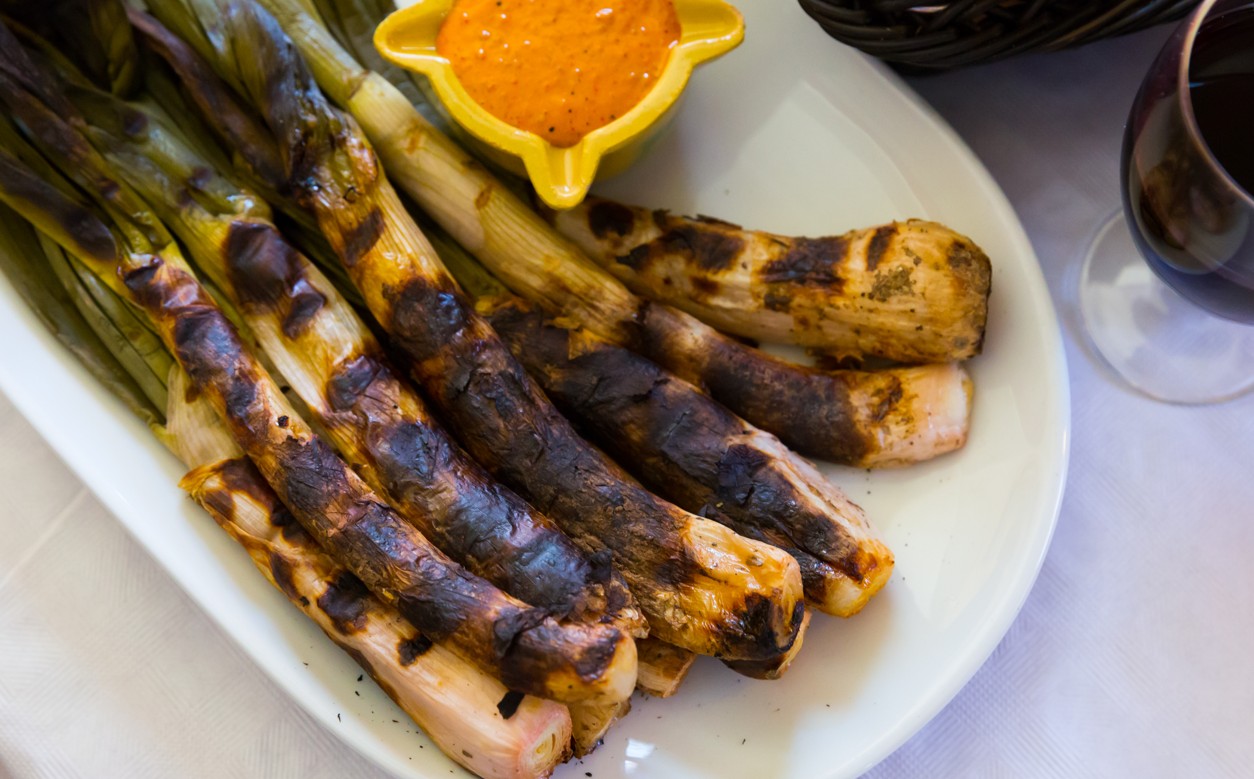
Calçots, sweet spring onions grilled over open flames and dipped in romesco sauce, inspire seasonal feasts known as calçotades from January to March. Crema catalana, the silky custard dessert topped with caramelised sugar that predates French crème brûlée, showcases Catalan pastry tradition. Botifarra amb mongetes, grilled Catalan sausage with white beans, offers simple, rustic nourishment. Fideuà, similar to paella but made with noodles instead of rice, reflects Barcelona’s coastal noodle tradition.
Everyday Catalan & Spanish Food
Breakfast in Barcelona is typically light, often consisting of café con leche with pastries or pa amb tomàquet. Lunch is the main meal of the day, with many restaurants offering excellent-value menú del día set lunches. Tapas culture thrives throughout the city, with bars serving small plates designed for sharing and leisurely socialising.
Seafood dominates Barcelona’s coastal cuisine. Dishes such as suquet (Catalan fish stew), esqueixada (salt cod salad), and zarzuela (seafood medley) highlight Mediterranean bounty. Vegetable-forward dishes like escalivada (roasted peppers and eggplant) and samfaina (a Catalan ratatouille) showcase seasonal produce. Jamón ibérico, Manchego cheese, and Spanish olives appear on menus citywide, while fresh anchovies, sardines, and sea bream are prepared simply with olive oil and herbs.
Tapas Culture and Vermouth Tradition
Barcelona’s tapas scene ranges from traditional standing-room-only bars to modern, creative establishments. The ritual of tapeo—moving from bar to bar sampling small dishes—is central to local social life. Classic tapas include patatas bravas, croquetas, gambas al ajillo, and pulpo a la gallega.
Vermut (vermouth) culture has experienced a major revival, with vermuterías serving the fortified wine alongside small bites, particularly before lunch on weekends. Pintxos—Basque-style tapas on bread—also appear with Catalan interpretations. Understanding the difference between tapas (small plates) and raciones (larger sharing portions) helps when ordering. Many traditional bars retain their original interiors, offering a sense of culinary time travel alongside excellent food.
Market Culture and Fresh Ingredients
Barcelona’s markets are culinary landmarks. While La Boqueria is the most famous, neighborhood markets such as Santa Caterina, Ninot, and Mercat de la Llibertat offer more local experiences. Many market stalls operate small bars where chefs cook dishes using ingredients sourced just steps away.
The city’s respect for ingredients extends to specialised shops, including jamonerías (ham shops), queserías (cheese shops), and xarcuterías (cured meat shops). Proximity to agricultural regions ensures outstanding seasonal produce—spring strawberries, summer tomatoes, autumn mushrooms, and winter citrus. Olive oil, particularly from Catalonia and neighbouring Aragón, plays a central role in both cooking and finishing dishes.
Contemporary Dining and Innovation
Barcelona has stood at the forefront of culinary innovation since Ferran Adrià and elBulli transformed modern gastronomy. While molecular cuisine has evolved, the city remains a global reference point for creative dining. Numerous Michelin-starred restaurants reinterpret Catalan traditions through modern techniques.
Contemporary tapas bars experiment with global influences while respecting local ingredients. Barcelona’s international dining scene has expanded significantly, offering outstanding Japanese, Peruvian, Middle Eastern, and fusion cuisine. Craft beer, natural wine, and cocktail culture now thrive alongside traditional wine and vermouth. Despite innovation, most restaurants remain anchored in Catalan culinary identity.
Food Customs and Practical Tips
Dining in Barcelona follows a distinctly Spanish rhythm: late breakfast (9–11 AM), lunch (2–4 PM), tapas (7–9 PM), and dinner from 9 PM onward. Tipping is not expected but appreciated—rounding up or leaving small change is customary. Reservations are essential for popular restaurants.
When ordering tapas, drinks usually come first, followed by food. Sharing dishes is standard—Catalan dining is inherently communal. Unlike some Spanish regions, free tapas with drinks are uncommon in Barcelona; you typically pay for what you order. Learning a few Catalan phrases, even basic ones, is appreciated in this identity-conscious region.
Visit markets early to avoid crowds and observe local shopping habits. Sample both traditional and modern interpretations of Catalan dishes. Be adventurous with seafood—quality is exceptional. Consider a food tour to better understand Barcelona’s culinary history and neighbourhood diversity. Note that many restaurants close between lunch and dinner service. Dress is generally casual but stylish.
This guide covers what to eat in Barcelona, from Catalan classics and tapas to seafood, market culture, and contemporary dining. Use it alongside our Barcelona Travel Guide to plan your culinary exploration of Catalonia’s vibrant capital.
Check monthly weather averages for
Latest Secret Flying deals to Barcelona
Denver, Colorado to Barcelona, Spain for only $407 roundtrip
Cheap flights from Denver, Colorado to Barcelona, Spain for only $407 roundtrip.
View DealNon-stop from Montreal, Canada to Barcelona, Spain for only $599 CAD roundtrip
Non-stop flights from Montreal, Canada to Barcelona, Spain for only $599 CAD roundtrip.
View DealNon-stop from Tunis, Tunisia to Barcelona, Spain for only $157 USD roundtrip
Non-stop flights from Tunis, Tunisia to Barcelona, Spain for only $157 USD roundtrip with Tunisair.
View Deal [adblockingdetector id="638efa67113bf"]