


Beijing Food Guide
Food in Beijing: What to Eat & Drink
Beijing’s culinary landscape is a majestic celebration of imperial Chinese traditions, northern Chinese flavors, and the capital’s role as China’s political and cultural heart. As the seat of imperial power for centuries, Beijing has developed a distinctive food culture that balances refined court cuisine with hearty everyday dishes and enduring street food traditions. The result is one of the world’s most historically significant and diverse culinary scenes.
Beijing’s cuisine reflects its northern geography and imperial past, shaped by wheat-based agriculture, cold winters, Mongol and Muslim influences, and centuries of royal banquets. Core ingredients such as wheat, lamb, cabbage, garlic, and fermented sauces define local cooking, with dishes characterized by bold flavors, robust textures, and meticulous technique. From humble noodle shops tucked inside hutongs to restaurants recreating imperial banquets, Beijing offers a culinary journey through China’s history and northern food traditions.
Local Specialities of Beijing
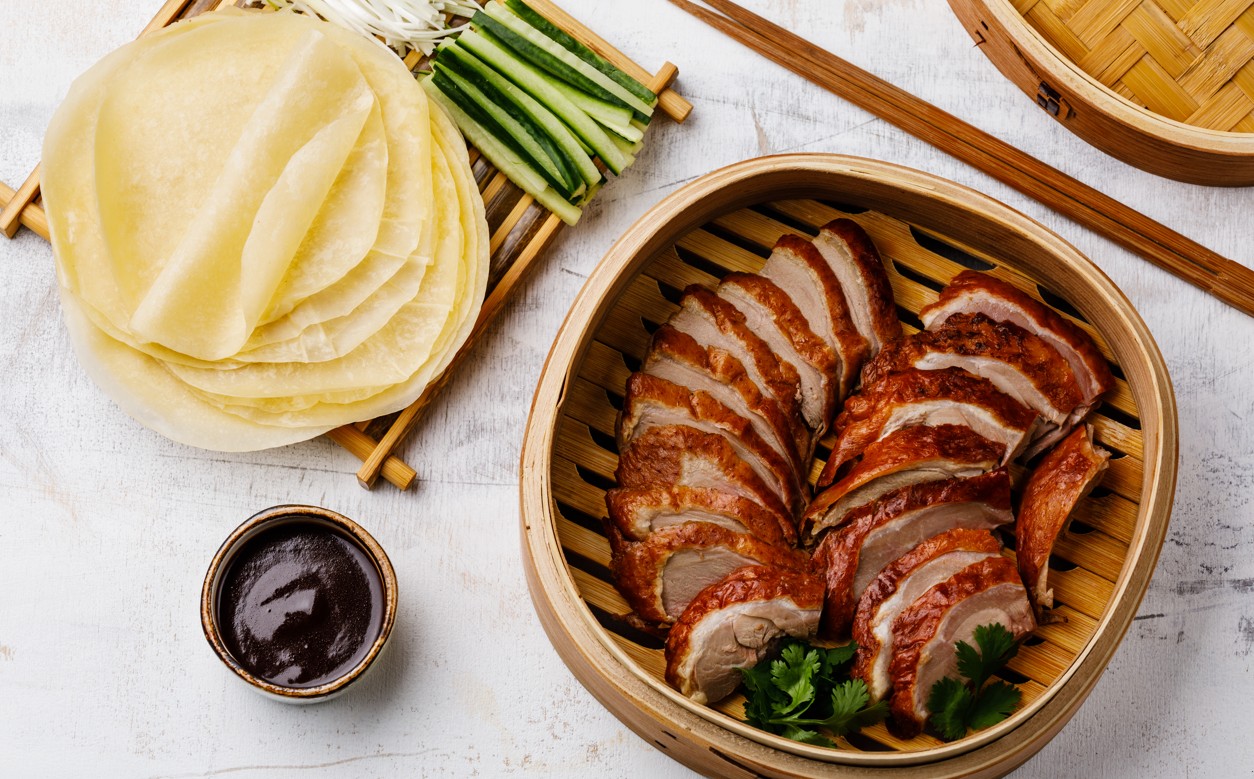
Beijing is world-famous for Peking duck, the city’s signature dish made from specially bred ducks roasted in wood-fired ovens until the skin becomes perfectly crisp. The duck is traditionally served in thin pancakes with hoisin sauce, scallions, and cucumber. Zhajiangmian, wheat noodles topped with rich fermented soybean paste and vegetables, represents Beijing’s quintessential comfort food. Mongolian hot pot, particularly the Beijing-style lamb-focused version, offers interactive communal dining and is especially popular during winter.
Jiaozi (dumplings), closely associated with northern China and Chinese New Year, are available year-round in countless variations. Lǘdagunr (donkey rolls), glutinous rice rolls coated in soybean flour and filled with sweet red bean paste, are a traditional Beijing dessert. Beijing yogurt, sold in distinctive ceramic jars, provides tangy refreshment. Douzhi, a fermented mung bean drink with a strong, acquired flavor, remains one of old Beijing’s most authentic and polarizing tastes.
Everyday Northern Chinese Food
Breakfast in Beijing often features youtiao (fried dough sticks) dipped into doujiang (soy milk), or jianbing, a savory street crepe filled with egg, sauce, and crispy elements. Lunch commonly includes noodle dishes such as lamian (hand-pulled noodles) or daoxiaomian (knife-shaved noodles), served in broths or with rich sauces. Various forms of bing (flatbreads) provide portable sustenance throughout the day.
Wheat-based staples dominate Beijing cuisine, including mantou (steamed buns), baozi (stuffed buns), and dumplings. Lamb features prominently, reflecting Mongol and Muslim culinary influence, appearing in kebabs, stews, and hot pots. Pickled vegetables add acidity and balance, while napa cabbage—traditionally stored through winter—appears in stir-fries, soups, and dumpling fillings.
Street Food and Hutong Culture
While modern regulations have reduced traditional street vending, Beijing’s street food culture persists in night markets, hutong neighborhoods, and designated food streets. Areas such as Wangfujing Snack Street and Donghuamen Night Market offer concentrated street food experiences, while hutongs like Nanluoguxiang blend traditional snacks with modern interpretations.
Classic Beijing street foods include tanghulu (candied fruit skewers), chuan’r (lamb kebabs), and savory pancakes. Breakfast vendors continue to serve jianbing, youtiao, and baozi to commuters. Many of the best street food experiences now exist inside food halls and markets rather than open-air stalls, but the ritual of quick, informal eating remains central to Beijing’s food culture.
Imperial and Banquet Cuisine
Beijing’s imperial culinary heritage survives in restaurants inspired by Qing Dynasty court cooking. Tan Family Cuisine represents one of the few remaining traditions linked to official banquets. Recreated versions of the Man–Han Imperial Feast offer insight into the extravagance of historical court dining.
Imperial cuisine emphasizes balance, presentation, and refined technique, often featuring luxury ingredients such as abalone, sea cucumber, and bird’s nest. While fully authentic imperial banquets are rare today, many high-end restaurants incorporate palace-inspired dishes, aesthetics, and service styles, often set within historic buildings or traditional courtyards.
International Dining and Contemporary Scene
As a global capital, Beijing offers exceptional international dining. Diplomatic and expatriate communities have fostered high-quality French, Italian, Japanese, Korean, and Southeast Asian restaurants, particularly in areas like Sanlitun and Chaoyang. These coexist alongside a growing number of modern Chinese restaurants reinterpreting traditional dishes with contemporary techniques.
Beijing’s café culture has expanded rapidly, with specialty coffee shops serving both Chinese and international beans. A small but vibrant craft beer scene has emerged, alongside traditional baijiu-focused dining. Despite global influences, most restaurants retain strong ties to Chinese culinary traditions and local ingredients.
Food Customs and Practical Tips
Dining in Beijing ranges from casual noodle shops to highly formal banquet settings. Tipping is not traditionally expected, though it is becoming more common in international restaurants. Reservations are strongly recommended for popular establishments, especially Peking duck specialists.
When eating Peking duck, observe locals for the proper way to assemble pancakes. Use chopsticks correctly—never stick them upright in rice, as this resembles funeral offerings. Dishes are typically shared family-style, and it is polite to offer the last piece before taking it. Learning a few basic Mandarin food phrases is helpful, as English is limited in local restaurants.
Explore both tourist-oriented and neighborhood eateries to experience Beijing’s full culinary range. Be selective with street food and consider hygiene standards. Try seasonal specialties, such as hot pot in winter or river crab dishes in autumn. Cooking classes and food tours offer valuable insight into Beijing’s culinary history and techniques. Note that many restaurants close between lunch and dinner service, usually from 2 to 5 PM.
This guide covers what to eat in Beijing, from Peking duck and northern Chinese classics to street food and imperial cuisine. Use it alongside our Beijing Travel Guide to plan your culinary exploration of China’s historic capital.
Check monthly weather averages for
Latest Secret Flying deals to Beijing
Budapest, Hungary to Beijing, China for only €484 roundtrip
Cheap flights from Budapest, Hungary to Beijing, China for only €484 roundtrip with Hainan Airlines.
View Deal
 [adblockingdetector id="638efa67113bf"]