


Birmingham Food Guide
Food in Birmingham: What to Eat & Drink
Birmingham’s culinary landscape is a powerful expression of British tradition, multicultural innovation, and industrial heritage reimagined through food. As England’s second city and the historic heart of the Industrial Revolution, Birmingham has developed a distinctive food culture that balances classic British cooking with one of the most diverse immigrant food scenes in Europe. The city’s cuisine reflects its manufacturing roots, its globally significant South Asian and Caribbean communities, and its modern renaissance as a serious gastronomic destination.
Traditional British ingredients such as beef, potatoes, dairy, and seasonal vegetables form the backbone of Birmingham’s local food identity, while waves of migration have introduced flavors from the Indian subcontinent, the Caribbean, East Asia, the Middle East, and Eastern Europe. Located in the West Midlands, the city benefits from excellent regional produce sourced from surrounding countryside. From the legendary Balti Triangle to Michelin-starred dining rooms, Birmingham offers one of the UK’s most compelling and diverse food experiences outside London.
Local Specialities of Birmingham
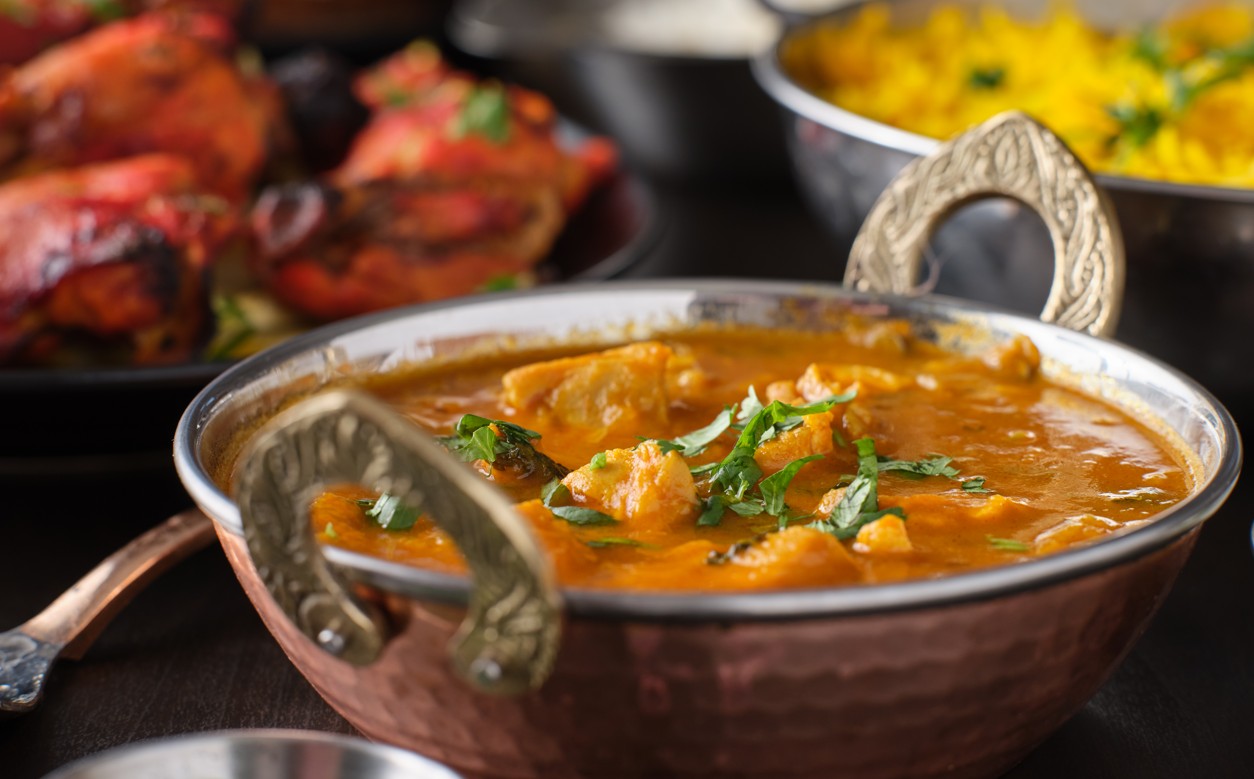
Birmingham is internationally known as the birthplace of the Balti, a style of curry developed in Sparkbrook in the 1970s. Baltis are fast-cooked over high heat and served in thin steel bowls (the word balti meaning “bucket”), accompanied by naan bread for scooping rather than cutlery. This cooking style distinguishes itself from other British curries through its lighter sauce and emphasis on immediacy and freshness.
Traditional West Midlands dishes include faggots and peas—minced offal meatballs served with mushy peas and gravy—and Black Country pork scratchings, a robust pub snack. The Birmingham pork pie and regional variations of meat pies reflect the city’s working-class industrial roots. Sweet heritage is represented by Cadbury chocolate, founded in Birmingham in 1824 and still central to the city’s identity. The city’s revived brewing tradition is reflected in a strong craft beer scene led by local breweries such as Two Towers and Birmingham Brewing Company.
Everyday British & Multicultural Food
Breakfast in Birmingham often includes a full English breakfast or a bacon sandwich. Lunch may involve pub classics such as fish and chips, pies, or a ploughman’s lunch. Dinner reflects the city’s diversity, ranging from traditional British fare to global cuisines. The Sunday roast remains an important weekly ritual, served across pubs and restaurants throughout the city.
Birmingham is widely regarded as Britain’s curry capital, with an extraordinary concentration of South Asian restaurants spanning Pakistani, Punjabi, Gujarati, Bengali, and South Indian cuisines. Caribbean food—jerk chicken, curry goat, patties, and rice and peas—is equally prominent. Chinese dining ranges from Cantonese roast houses to Sichuan specialists. Polish, Middle Eastern, African, and Balkan cuisines further shape the city’s everyday dining culture. Markets such as the Bull Ring and surrounding street vendors showcase this diversity in a single walk.
Balti Culture and the Balti Triangle
The Balti Triangle—covering parts of Sparkbrook, Sparkhill, and Moseley—is Birmingham’s most famous culinary district. Traditional Balti houses are informal, fast-paced, and food-focused, often operating as BYOB establishments. Dishes are eaten communally, typically using naan bread to scoop curry directly from the steel bowl.
Balti dishes range from mild to extremely spicy, with popular options including chicken tikka balti, lamb balti, and vegetable balti. The cooking technique emphasizes speed, high heat, and minimal oil. Despite changes in the neighborhood over time, the Balti Triangle remains a pilgrimage site for food lovers. The annual Birmingham Balti Festival celebrates this uniquely local culinary invention.
Market Culture and Local Producers
Birmingham’s markets are central to its food identity. The outdoor Bull Ring Market and the Bullring Indoor Market offer fresh produce, meat, fish, spices, and prepared foods from across the world. The city’s German Christmas Market (November–December) has become one of the largest of its kind outside Germany.
Local producers from the West Midlands supply restaurants with high-quality meats, dairy, and vegetables. Farmers’ markets and independent food shops showcase regional cheeses, baked goods, and traditional products. Birmingham’s extensive canal network has been revitalized with waterside restaurants, pubs, and cafés, blending industrial history with modern dining.
International Dining and Contemporary Scene
Birmingham now hosts the largest concentration of Michelin-starred restaurants in the UK outside London. These range from modern British kitchens to refined Indian fine dining. Neighborhoods such as the Jewellery Quarter, Brindleyplace, and Edgbaston are key hubs for upscale and contemporary restaurants.
Modern British chefs reinterpret classic dishes using seasonal, locally sourced ingredients. The city’s café culture has expanded rapidly, with specialty coffee shops across Digbeth, Kings Heath, and the city centre. Food halls and pop-up venues such as Digbeth Dining Club and Hockley Social Club showcase street food, experimental concepts, and independent traders.
Pub Culture and Craft Beverages
Birmingham’s pub culture blends historic tradition with modern revival. Pubs such as The Old Crown (dating to 1368) preserve centuries-old pub culture, while newer venues focus on craft beer and food-led experiences. Real ale remains central, with strong support for cask-conditioned beers.
The city’s craft beer scene continues to grow, supported by microbreweries, taprooms, and beer festivals. Gin distillation has also seen a revival, alongside traditional ciders and modern interpretations. Non-alcoholic options include locally roasted coffee, artisanal sodas, and alcohol-free beers. Many pubs enjoy canal-side locations, reflecting Birmingham’s historic role as a canal city.
Food Customs and Practical Tips
Dining in Birmingham ranges from ultra-casual to refined, with generally relaxed dress codes. Tipping of 10–12.5% is customary in restaurants, and service charges are often included. Reservations are recommended for popular restaurants, particularly on weekends.
When eating Balti, embrace the hands-on style—naan bread is part of the experience. Sunday roasts are usually served between 12–4 PM and often sell out. In pubs, order at the bar unless table service is indicated.
Visit both the Balti Triangle and the city centre to experience Birmingham’s full culinary range. Try traditional Black Country dishes when available. Explore markets for multicultural street food. Consider a food tour to understand how Birmingham’s industrial past shaped its modern dining scene. Compared to London, Birmingham offers excellent value across all levels of dining.
This guide covers what to eat in Birmingham, from Balti and British classics to multicultural cuisine, pub culture, and contemporary dining. Use it alongside our Birmingham Travel Guide to plan your culinary exploration of England’s second city.
Check monthly weather averages for
Latest Secret Flying deals to Birmingham
Barcelona, Spain to European cities from only €11 one-way
Non-stop flights from Barcelona, Spain to European cities from only €11 one-way.
View DealLos Angeles to Birmingham, UK for only $479 roundtrip
Cheap flights from Los Angeles to Birmingham, UK for only $479 roundtrip with Air France.
View DealBoston to Birmingham, UK for only $385 roundtrip (Sep-Mar dates)
Cheap flights from Boston to Birmingham, UK for only $385 roundtrip with Air France, KLM and Delta Air Lines.
View Deal [adblockingdetector id="638efa67113bf"]