


Busan Food Guide
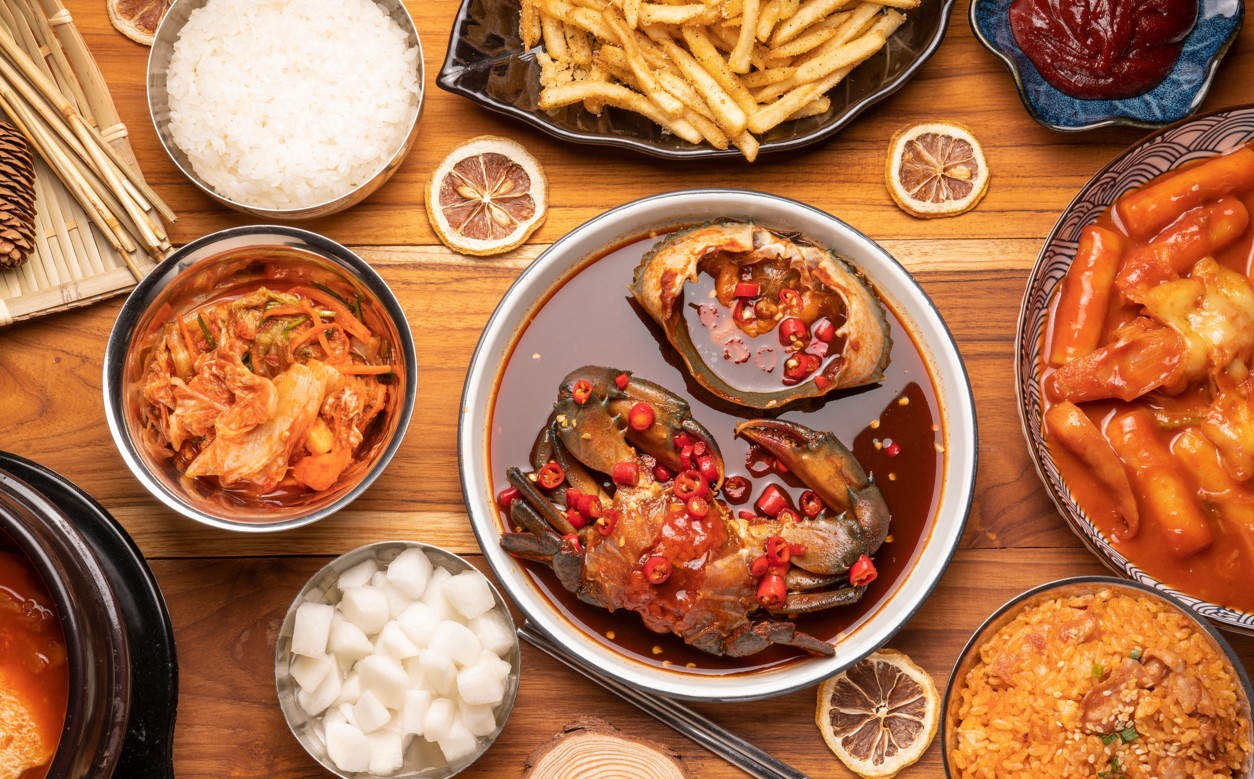
Food in Busan: What to Eat & Drink
Busan’s culinary landscape is a vibrant expression of Korean coastal traditions, port-city energy, and the bold flavors that distinguish South Korea’s second-largest city from the capital. As the country’s primary maritime gateway and a city shaped by fishing communities and refugees during the Korean War, Busan has developed a food culture defined by exceptional seafood freshness, fiery broths, and the constant movement of markets, harbors, and street stalls.
The city’s cuisine reflects its unique geography between mountains and sea, its role as a place of resilience and reinvention, and its contemporary identity as a fast-paced coastal metropolis. Compared with Seoul, Busan’s food is generally bolder, spicier, and more seafood-driven. From legendary fish markets and seaside raw-fish restaurants to late-night street food alleys, eating in Busan is inseparable from the city’s maritime character.
Local Specialties of Busan
Busan is most closely associated with dwaeji gukbap, a hearty pork and rice soup that has become the city’s signature comfort dish. Featuring tender pork simmered into a rich, milky broth and served with rice and side dishes, it reflects Busan’s working-class roots and refugee history.
Another iconic dish is milmyeon, cold wheat noodles in a spicy, tangy broth, originally developed by North Korean refugees who adapted buckwheat noodle recipes using locally available wheat. Hoe (sliced raw fish), especially from Jagalchi Market, highlights Busan’s unrivaled seafood freshness and is typically served with cho gochujang, garlic, and leafy wraps.
Distinctive street foods include ssiat hotteok, Busan’s seed- and nut-filled version of the sweet pancake, and eomuk (fish cake), which appears skewered, simmered in broth, or served as a snack in countless variations. Dongnae pajeon, a seafood-rich scallion pancake from the Dongnae district, is another regional specialty. Adventurous diners may try ganjang gejang, raw crabs marinated in soy sauce, prized for its deep umami intensity.
Everyday Korean & Busan Food
Breakfast in Busan often includes soup-based meals such as dwaeji gukbap or rice with banchan. Lunch may feature noodle dishes or simple set meals, while dinner tends to be more elaborate and shared. Seafood plays a central role throughout the day, appearing grilled, steamed, raw, or simmered in spicy stews.
Korean staples such as rice, kimchi, and banchan accompany every meal, with Busan versions often incorporating seafood and stronger chili heat. Pork dishes are common beyond gukbap, including bossam (boiled pork wraps) and grilled preparations. Noodles—both hot and cold—are particularly popular, while vegetables and wild greens from the surrounding mountains appear in seasonal side dishes.
Market Culture and Jagalchi Market
Jagalchi Market, Korea’s largest fish market, is the beating heart of Busan’s food culture. Its sprawling stalls display an astonishing range of live and fresh seafood—fish, crabs, octopus, shellfish, and more. Visitors can select seafood directly from tanks and have it prepared immediately at upstairs restaurants.
The market’s atmosphere is defined by the calls of vendors and the expertise of the ajummas who run many of the stalls. Beyond fresh seafood, Jagalchi offers dried fish, seaweed, and preserved marine products. Nearby markets such as Gukje Market and Bupyeong Kkangtong Market reflect Busan’s trading history and provide a mix of street food, shopping, and international influences.
Seafood Culture and Coastal Dining
Seafood is central to daily life in Busan. Raw fish restaurants (hoe jip) line coastal areas such as Haeundae and Gwangalli, serving hoe, maeuntang (spicy fish stew), and jeonbokjuk (abalone porridge). Shellfish including oysters, clams, and mussels are served steamed, grilled, or in broths.
Many coastal restaurants feature floor seating and ocean views, while nearby fishing villages such as Taejongdae and Songdo offer more rustic dining experiences. Selecting live seafood for immediate preparation is standard practice, ensuring exceptional freshness. Compared with Jeju Island, Busan’s seafood cuisine is generally more savory and spicy, with less emphasis on sweetness.
International Dining and Contemporary Scene
As a major port city, Busan has long absorbed international influences, particularly from China, Japan, and Russia. Today, Haeundae’s luxury hotels house fine-dining restaurants, while Gwangalli and Seomyeon offer a growing selection of international and contemporary Korean eateries.
Busan’s café culture has expanded rapidly, with specialty coffee shops and dessert cafés throughout the city. Modern Korean restaurants reinterpret traditional dishes with contemporary techniques, but seafood remains the dominant focus. Even international menus often incorporate local fish and shellfish, reinforcing Busan’s coastal identity.
Food Customs and Practical Tips
Dining in Busan follows standard Korean customs with local variations. Meal times typically run from breakfast (7–9 AM), lunch (12–2 PM), and dinner (6–9 PM). Tipping is not expected. Reservations are recommended for popular seafood restaurants, especially on weekends.
When eating hoe, wrap the fish in lettuce or perilla leaves with rice and sauce. Dwaeji gukbap can be eaten by mixing rice into the broth or separately, according to preference. Bargaining at markets should be polite and modest. Expect heat—Busan cuisine is often spicier than in other regions. Soju and beer are common accompaniments to balance the spice.
Visit Jagalchi Market early for the best selection and fewer crowds. Explore both traditional markets and modern dining districts. Don’t miss street food in Nampo-dong and Seomyeon. Be adventurous with seafood—Busan offers some of Korea’s freshest and most diverse marine ingredients. A food tour can provide valuable insight into the city’s fishing heritage and culinary identity. Note that many restaurants close between meal periods, typically from 2–5 PM.
This guide covers what to eat in Busan, from coastal Korean specialties and seafood to market foods and contemporary dining. Use it alongside our Busan Travel Guide to plan your culinary exploration of South Korea’s dynamic port city.
Check monthly weather averages for
Latest Secret Flying deals to Busan
London, UK to Busan, South Korea for only £450 roundtrip
Cheap flights from London, UK to Busan, South Korea for only £450 roundtrip.
View DealBudapest, Hungary to South Korean cities from only €396 roundtrip
Cheap flights from Budapest, Hungary to South Korean cities from only €396 roundtrip.
View DealXMAS: Milan, Italy to Busan, South Korea for only €378 roundtrip
Christmas flights from Milan, Italy to Busan, South Korea for only €378 roundtrip.
View Deal [adblockingdetector id="638efa67113bf"]