


Cancún Food Guide
Food in Cancún: What to Eat & Drink
Cancún’s culinary landscape is a vibrant fusion of Yucatecan traditions, Caribbean influences, and international resort dining on Mexico’s stunning Caribbean coast. As Mexico’s premier beach destination and the gateway to the Riviera Maya, Cancún has developed a food culture that balances deeply rooted regional cuisine with the expectations of a global audience.
The city’s cuisine reflects its position on the Yucatán Peninsula, its strong Mayan heritage, and its modern identity as a world-class holiday hub. The result is food that is bold yet fresh, citrus-driven, and shaped by both jungle and sea.
Local Specialities of Cancún
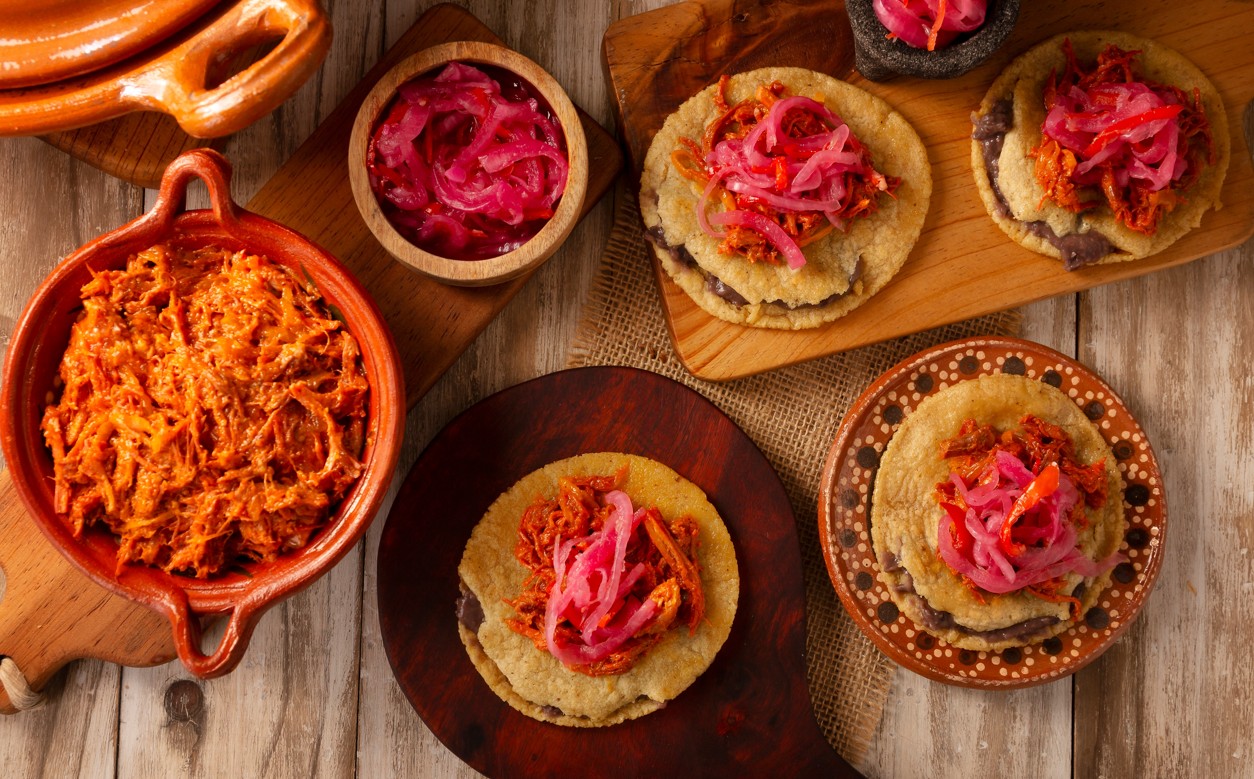
Cancún is best known for cochinita pibil, the signature dish of the Yucatán. Pork is marinated in achiote and bitter orange, wrapped in banana leaves, and slow-cooked until meltingly tender, then served in tacos, tortas, or plates with pickled red onions and habanero salsa.
Seafood plays a central role, particularly ceviche, made with fresh fish or shrimp cured in lime juice with tomato, onion, cilantro, and chili—perfect for the Caribbean climate. Another standout is tikin xic, a Mayan-style grilled fish marinated in achiote, wrapped in banana leaves, and cooked over fire, showcasing indigenous cooking techniques still widely used today.
Classic Yucatecan street foods include panuchos and salbutes, tortillas topped with refried beans, shredded turkey or chicken, avocado, and pickled onions. Sopa de lima, a fragrant chicken soup with lime, tortilla strips, and subtle chili heat, offers comfort with a refreshing edge.
For dessert, marquesitas—crispy rolled waffles traditionally filled with Edam cheese and sometimes Nutella or cajeta—are a Cancún favourite. Agua de chaya, made from nutrient-rich chaya leaves blended with pineapple or citrus, is a uniquely local drink worth trying.
Everyday Yucatecan & Mexican Food
Breakfast in Cancún may include huevos motuleños—eggs served on tortillas with black beans, ham, peas, cheese, and tomato sauce—or chilaquiles with salsa and crema. Lunch often revolves around seafood or Yucatecan specialties, while dinner ranges from casual taquerías to refined restaurant dining.
Key ingredients define the region’s flavour profile: achiote, sour orange, habanero peppers, and recados (traditional spice pastes). Corn remains fundamental, appearing in tortillas, tamales, atole, and pozole. Tropical fruits such as mango, papaya, mamey, guanábana, and pineapple are eaten fresh or blended into juices and desserts.
While hotel zones often serve internationalised Mexican cuisine, venturing into downtown Cancún reveals more authentic Yucatecan flavours and better value.
Seafood Culture and Caribbean Dining
Seafood is integral to Cancún’s identity. Beachfront palapa restaurants and casual seafood spots specialise in freshly caught grouper, snapper, lobster (in season), octopus, and shrimp. Popular preparations include al ajillo (garlic), a la plancha (grilled), or served whole with citrus and herbs.
Many restaurants operate on a “catch of the day” basis, depending on morning landings. Cevicherías offer multiple ceviche styles, from classic lime-based versions to coconut-inflected Caribbean interpretations. Traditional Mayan fishing practices still coexist alongside modern commercial fishing.
International Dining and Resort Cuisine
As a major international resort destination, Cancún offers extensive global dining. The Hotel Zone is home to restaurants serving Italian, French, Japanese, Argentine, and fusion cuisine, alongside upscale Mexican concepts. All-inclusive resorts feature international buffets complemented by regional dishes.
Modern Mexican restaurants reinterpret traditional recipes with contemporary techniques and refined presentation. Downtown Cancún, away from the resorts, provides a more local dining experience with taquerías, family-run restaurants, and market stalls.
Food Customs and Practical Tips
Dining in Cancún ranges from ultra-casual beachside eating to elegant fine dining. Tipping of 15–20% is customary in restaurants, and service charges are often added automatically. Reservations are recommended during high season (December to April).
Yucatecan food can be spicy—habanero peppers are powerful. Salsas are usually served separately; taste before adding generously. Street food is generally safe when freshly cooked and hot, especially at busy stalls. Drink bottled water and be cautious with ice outside reputable establishments.
Visit downtown markets for authentic flavours and lower prices. Try marquesitas from street vendors at night—they are uniquely Yucatecan. Be adventurous with tropical fruits, and consider a food tour to better understand Cancún’s Mayan and Yucatecan culinary heritage.
This guide covers what to eat in Cancún, from Yucatecan classics and Caribbean seafood to international dining and resort cuisine. Use it alongside our Cancún Travel Guide to plan your culinary exploration of Mexico’s Caribbean coast.
 [adblockingdetector id="638efa67113bf"]