


Düsseldorf Food Guide
Food in Düsseldorf: What to Eat & Drink
The culinary landscape of is a refined blend of Rhineland tradition, world-class Japanese cuisine, and Michelin-level innovation, making it one of Germany’s most distinctive and cosmopolitan food destinations. As the capital of North Rhine-Westphalia and a major European business and fashion hub, Düsseldorf has developed a food culture that balances hearty regional comfort food with exceptional international dining, shaped by its position on the Rhine River and its unique status as home to Europe’s largest Japanese community.
Düsseldorf’s cuisine reflects centuries of trade, industry, and cultural exchange. From medieval brewing traditions and Rhineland classics to cutting-edge European gastronomy and authentic Tokyo-style ramen, the city offers a culinary identity that is both deeply local and confidently global. Traditional Brauhäuser in the Altstadt coexist with Michelin-starred restaurants and one of Europe’s most authentic Japanese dining districts, creating a food scene unmatched elsewhere in Germany.
Local Specialities of Düsseldorf
Düsseldorf is celebrated for classic Rhineland dishes built on slow cooking and bold flavors. Rheinischer Sauerbraten, a pot roast marinated for several days in vinegar, spices, and herbs, is a cornerstone dish, traditionally served with potato dumplings and red cabbage. Another regional favorite is Himmel un Ääd (“Heaven and Earth”), combining black pudding with mashed potatoes and apple sauce in a sweet-savory balance.
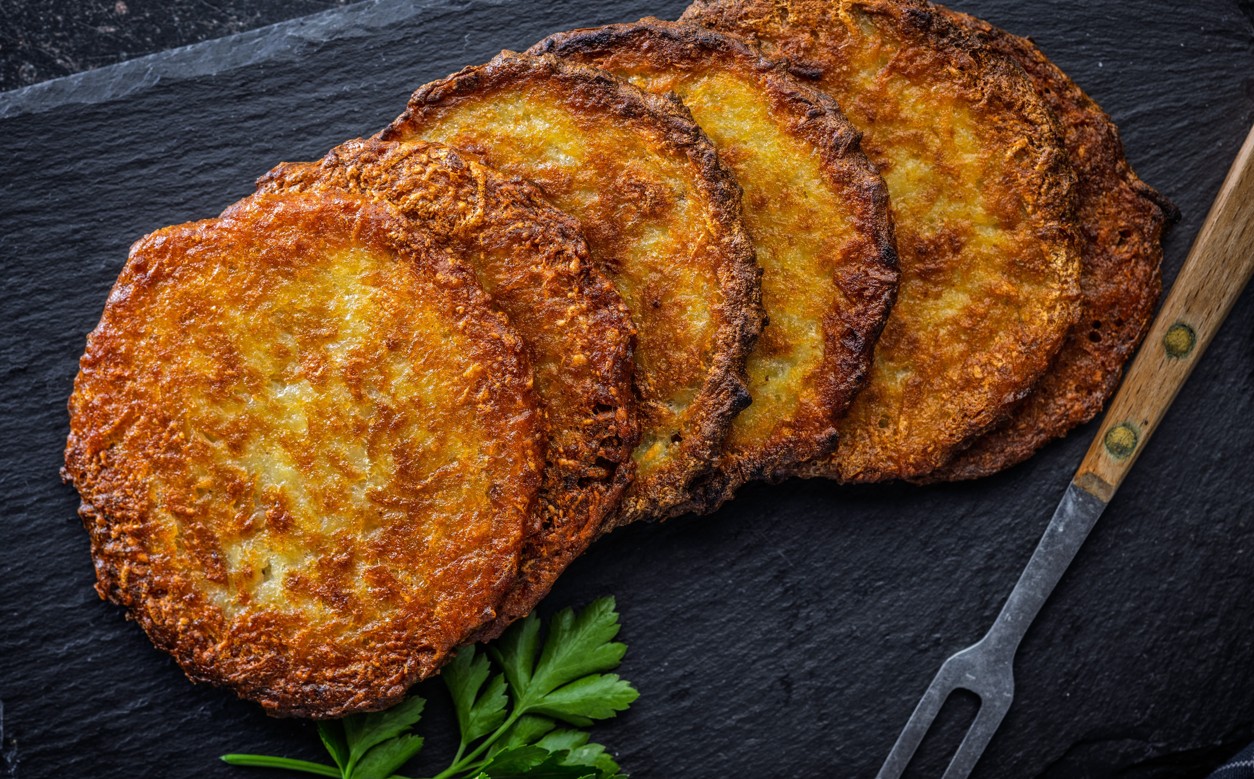
The city’s iconic pub snack, Halve Hahn, is famously misleading—rather than chicken, it consists of a dense rye roll topped with butter, aged Gouda cheese, onions, mustard, and pickles. Comfort foods include Rheinischer Döppekooche, a baked potato casserole with bacon and onions, and Handkäse mit Musik, a pungent sour-milk cheese marinated in vinegar, oil, and onions. Reibekuchen (crispy potato pancakes), often served with apple sauce, are popular street food at markets and festivals. Düsseldorf is also famous for its mustard, particularly the medium-hot Düsseldorfer Mostert.
Everyday Rhineland & Düsseldorf Food
Breakfast in Düsseldorf typically consists of Brötchen (bread rolls) with butter, jam, cheese, or cold cuts, accompanied by strong coffee. Lunch is often the most substantial meal of the day, featuring schnitzel, casseroles, or daily specials offered as Mittagstisch in business districts. Dinner may be lighter, following the German tradition of Abendbrot—bread with spreads, meats, and cheese.
Pork is central to the regional diet, appearing as schnitzel, sausages, roasts, and cured meats. Potatoes dominate as the main starch, prepared mashed, fried, baked, or as dumplings. Cabbage—particularly red cabbage and sauerkraut—features heavily, while dense rye bread is preferred over wheat. Fish from the Rhine and nearby rivers appears in traditional preparations. Alongside these classics, Japanese food has become part of everyday life, with ramen, sushi, and bento eaten as casually as schnitzel.
Cultural Fusion: Rhineland, Japanese & Global Influences
Düsseldorf’s food culture is defined by layers of historical and modern influence. Traditional Rhineland cooking emphasized hearty, preserved foods suitable for cold winters. French culinary techniques entered during periods of Napoleonic rule, adding refinement and sauces. Industrialization brought migration from across Germany, further enriching local cuisine.
After World War II, Düsseldorf emerged as the European headquarters for many Japanese companies, resulting in the largest Japanese community in Europe. The area around Immermannstraße—often called “Little Tokyo”—is home to some of the most authentic Japanese restaurants outside Japan, including ramen shops, sushi counters, udon specialists, bakeries, and izakayas. Italian, Turkish, Greek, and Chinese communities have also contributed to the city’s diversity. The result is a uniquely Düsseldorf experience: traditional Sauerbraten in a historic Brauhaus, followed by impeccable ramen or sushi just a few streets away.
Altbier, Brauhaus Culture & Local Drinks
Düsseldorf’s beverage culture revolves around Altbier, the city’s signature beer style. Copper-colored, top-fermented, and moderately bitter, Altbier is served in small glasses called Stangen to ensure freshness. In traditional Brauhäuser, waiters automatically replace empty glasses until diners signal they are finished by placing a coaster over the glass.
Historic breweries such as Uerige, Füchschen, Schumacher, and Schlüssel are central to local life, serving Altbier alongside hearty food in wood-paneled halls. Killepitsch, a dark herbal liqueur, is Düsseldorf’s iconic digestif. Wines from nearby Mosel and Rhine regions are excellent, while the city’s coffee culture is strong, with numerous specialty cafés. In neighborhoods like Flingern and Pempelfort, cocktail bars and craft-focused venues complement the traditional beer scene.
International Dining and Contemporary Scene
As a major business, fashion, and cultural capital, Düsseldorf boasts one of Germany’s most impressive international dining scenes. Japanese cuisine is the standout—Immermannstraße offers ramen, sushi, yakitori, and izakaya food at a level that rivals Tokyo. French cuisine remains influential, while Italian restaurants are plentiful and high quality.
Düsseldorf also has one of Germany’s highest concentrations of Michelin-starred restaurants per capita, many of which reinterpret German and European cuisine with contemporary techniques. The MedienHafen district, with its striking modern architecture, is home to upscale restaurants in converted industrial spaces. Carlsplatz Markt offers casual food stalls and gourmet products. Even at the highest levels, many chefs emphasize Rhineland ingredients and traditions, maintaining a strong sense of place.
Food Customs and Practical Tips
Dining in Düsseldorf ranges from casual communal benches in Brauhäuser to formal fine-dining rooms. Tipping is customary—rounding up or adding 5–10% is standard. Reservations are strongly recommended for popular Japanese restaurants and fine-dining establishments.
When visiting a Brauhaus, understand the Altbier ritual—beer will keep coming unless you stop it with your coaster. Try different breweries, as each Altbier has a distinct character. Don’t miss Little Tokyo; it is authentic rather than tourist-oriented. During Karneval (February/March), expect special dishes and festive atmospheres.
Explore Altstadt for traditional beer halls, Immermannstraße for Japanese cuisine, MedienHafen for modern dining, Flingern for creative cafés, and Carlsplatz Markt for local products. Embrace Düsseldorf’s contrasts: raise a glass of Altbier in a centuries-old brewery, then enjoy world-class sushi minutes later. This balance of tradition and global sophistication defines Düsseldorf’s unique culinary identity.
This guide covers what to eat in Düsseldorf, from Rhineland classics and Altbier to authentic Japanese cuisine and Michelin-starred dining. Use it to plan your culinary exploration of Germany’s most stylish and internationally minded Rhine city.
Check monthly weather averages for
Latest Secret Flying deals to Düsseldorf
SUMMER: Business Class from Jakarta, Indonesia to European cities from only $1599 USD roundtrip (lie-flat seats)
Business Class, summer flights from Jakarta, Indonesia to European cities from only $1599 USD roundtrip with Etihad Airways.
View DealChicago to German cities from only $184 one-way
Cheap flights from Chicago to German cities from only $184 one-way with American Airlines and British Airways.
View DealDenver, Colorado to German cities from only $465 roundtrip
Cheap flights from Denver, Colorado to German cities from only $465 roundtrip with British Airways.
View Deal [adblockingdetector id="638efa67113bf"]