


Hangzhou Food Guide
Food in Hangzhou: What to Eat & Drink
The culinary landscape of is an exquisite expression of Zhejiang cuisine, poetic refinement, and understated elegance, making it one of China’s most graceful and influential food destinations. As the capital of Zhejiang province and home to the UNESCO-listed Hangzhou has developed a food culture rooted in subtlety, seasonality, and visual beauty—often described by Chinese scholars as cuisine meant to be “tasted with the eyes as well as the palate.”
Hangzhou’s cuisine reflects its history as the capital of the Southern Song dynasty, its central role in Chinese tea culture, and its modern identity as a technology hub and cultural destination. Dishes emphasize light seasoning, precise technique, and the philosophy of 原汁原味—preserving the ingredient’s original flavor. The result is food that is delicate, balanced, and deeply connected to nature, poetry, and refined living.
Local Specialities of Hangzhou
Hangzhou is world-famous for Dongpo pork, named after the Song dynasty poet and statesman Su Dongpo. Thick cuts of pork belly are slowly braised in soy sauce, Shaoxing wine, and sugar until meltingly tender, producing a glossy, rich dish that exemplifies Zhejiang cuisine’s balance of indulgence and restraint.
The city’s signature dish, West Lake vinegar fish, features freshly caught grass carp lightly cooked and finished with a sweet-sour vinegar glaze. Its simplicity highlights Hangzhou’s preference for clean flavors over heavy seasoning. Beggar’s chicken, a whole chicken stuffed with aromatics, wrapped in lotus leaves, sealed in clay, and baked for hours, is both a culinary and theatrical classic tied to local folklore.
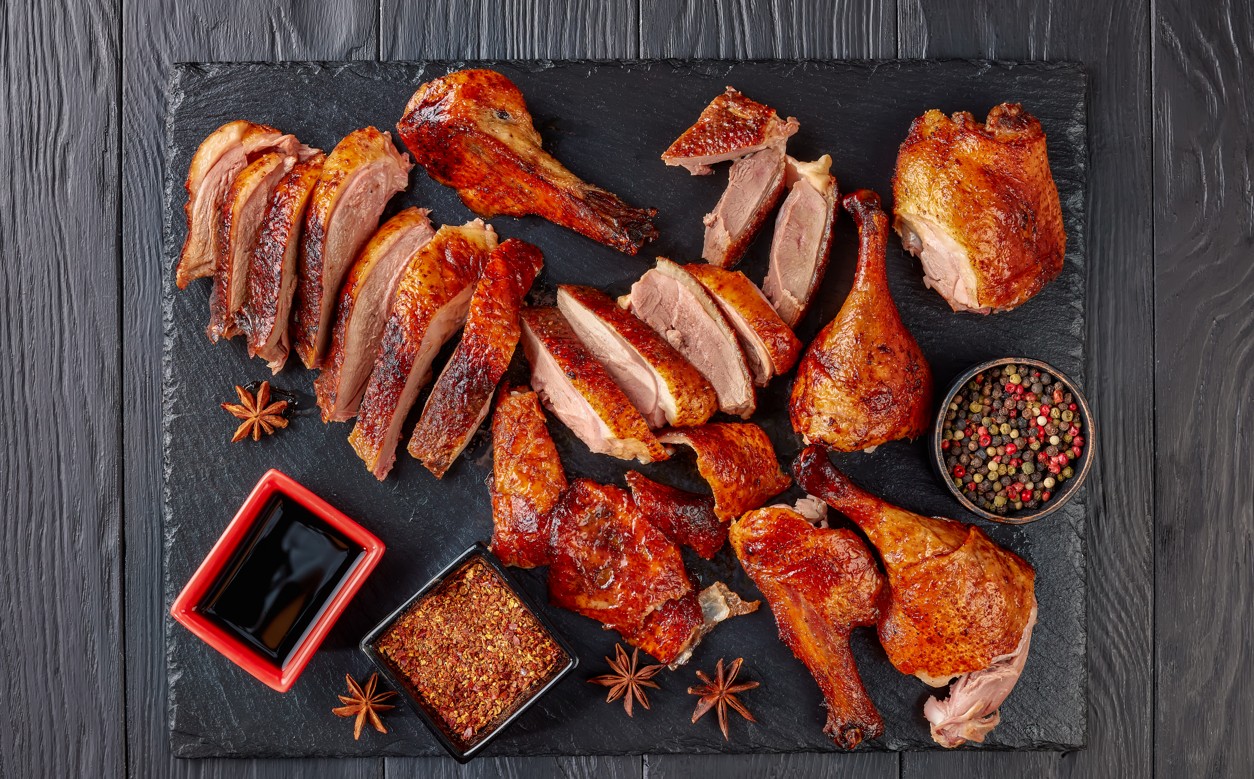
Other essential dishes include Longjing shrimp, river shrimp stir-fried with fragrant Dragon Well tea leaves; Sister Song’s fish broth, a clear soup with fish and bamboo shoots; and seasonal bamboo shoot dishes, particularly prized in spring. Hangzhou-style roasted duck offers a lighter, more aromatic alternative to Beijing duck. Cat’s ear noodles, small dough shapes resembling cat ears, are a distinctive local comfort food. Desserts often feature osmanthus flowers, especially in soft cakes and jellies.
Everyday Zhejiang & Hangzhou Food
Breakfast in Hangzhou may include congee, steamed buns, or youtiao (fried dough sticks) from street vendors. Lunch often features quick noodle dishes, dumplings, or rice plates, while dinner is typically the main meal, shared communally with several dishes placed at the center of the table.
Freshwater fish from lakes and rivers appears frequently, prepared simply to emphasize texture and freshness. Pork is central, appearing in both elaborate braises and everyday stir-fries. Bamboo shoots, lotus root, and seasonal greens follow the agricultural calendar closely. Tea is inseparable from dining—served before, during, and after meals, and sometimes incorporated directly into cooking. Hangzhou’s popularity as a tourist city ensures a wide spectrum of dining, from centuries-old institutions to modern reinterpretations of traditional dishes.
Cultural Foundations: Song Dynasty Refinement, Buddhism & Tea
Hangzhou’s cuisine is deeply shaped by its role as China’s cultural capital during the Southern Song dynasty (1127–1279). Court cuisine from this period emphasized elegance, presentation, and harmony—principles that still define Hangzhou cooking today. Nearby Buddhist temples contributed a rich vegetarian tradition, producing meatless dishes notable for their depth and balance.
Tea culture is central, with Longjing tea cultivated on hills surrounding West Lake and woven into daily life, ritual, and cuisine. The city’s position along the Grand Canal facilitated ingredient exchange and culinary development. Together, these influences created a cuisine where Song-era court dishes, Buddhist vegetarian cooking, tea-infused specialties, and modern techniques coexist seamlessly—reflecting Hangzhou’s enduring cultural confidence.
Beverage Culture and Traditional Libations
Tea dominates Hangzhou’s beverage culture. Longjing (Dragon Well) tea is among China’s most revered green teas, prized for its flat jade-colored leaves, chestnut aroma, and gentle sweetness. Tea appreciation in Hangzhou is a practiced art involving specific brewing temperatures, vessels, and etiquette.
Traditional alcoholic beverages include huangjiu (yellow rice wine) and baijiu, commonly served at banquets. Soy milk and fresh juices are everyday drinks. Beer and Western wines are available but secondary. Coffee culture is growing rapidly among younger residents. What distinguishes Hangzhou is the immersive tea culture—visiting plantations, learning harvesting seasons, and drinking tea as both nourishment and meditation, especially in lakeside teahouses.
International Dining and Contemporary Scene
As a major tourist destination and technology center—home to Alibaba—Hangzhou offers a strong international dining scene. Italian, French, Japanese, Korean, and Southeast Asian restaurants are widely available, particularly in modern commercial districts.
At the same time, contemporary Chinese restaurants are reinterpreting traditional Zhejiang dishes with refined plating and modern techniques. Despite global influences, Hangzhou dining remains firmly rooted in local identity—even international restaurants often adapt to local tastes for subtle seasoning and seasonal ingredients. The city’s food scene balances innovation with preservation, maintaining Hangzhou’s reputation as the spiritual heart of Zhejiang cuisine.
Food Customs and Practical Tips
Dining in Hangzhou follows standard Chinese customs: meals are shared, dishes are communal, chopsticks are used for most foods, and tipping is not practiced. Historic restaurants around West Lake often charge premium prices, but offer unmatched ambiance and authenticity.
Seasonality matters greatly—spring is ideal for bamboo shoots and fresh tea, summer for lotus-root dishes, autumn for river crab, and winter for warming braises. Tea-infused dishes are a must-try and unique to the region. West Lake views significantly enhance the dining experience.
Explore different areas: West Lake for historic restaurants and scenery, Hefang Street for traditional snacks, Wulin Square for modern dining, and Xixi Wetland for rustic countryside-style meals. Visit both legendary institutions such as Louwailou and Zhiweiguan and modest neighborhood eateries. Reservations are essential at famous restaurants. Hangzhou offers excellent quality across all price ranges. Above all, embrace the city’s culinary philosophy—subtlety, seasonality, visual beauty, and harmony with nature define why Hangzhou cuisine is considered China’s most elegant.
This guide covers what to eat in Hangzhou, from Dongpo pork and West Lake vinegar fish to tea-infused dishes and seasonal specialties. Use it to plan your culinary exploration of China’s “Paradise on Earth,” where every meal reflects the refined art of Zhejiang cooking.
Check monthly weather averages for
Latest Secret Flying deals to Hangzhou
Budapest, Hungary to Hangzhou, China for only €356 roundtrip
Cheap flights from Budapest, Hungary to Hangzhou, China for only €356 roundtrip with Hainan Airlines.
View DealFrankfurt, Germany to Chinese cities from only €478 roundtrip
Cheap flights from Frankfurt, Germany to Chinese cities from only €478 roundtrip.
View DealParis, France to Hangzhou, China for only €421 roundtrip
Cheap flights from Paris, France to Hangzhou, China for only €421 roundtrip with Xiamen Airlines.
View Deal [adblockingdetector id="638efa67113bf"]