


Hawaii Food Guide
Food in Hawaii: What to Eat & Drink
The culinary landscape of is a remarkable fusion of indigenous Hawaiian traditions, plantation-era immigrant cuisines, and American influences, creating one of the world’s most distinctive regional food cultures. As the only U.S. state composed entirely of islands—and the most geographically isolated population center on Earth—Hawaii has developed a food identity shaped by scarcity, ingenuity, and cultural exchange.
Hawaiian cuisine reflects the islands’ history as an independent Polynesian kingdom, a plantation economy built on immigrant labor, and a modern multicultural society rooted in Native Hawaiian values. Food here is deeply tied to land (ʻāina), ocean (kai), and community, resulting in dishes that are comforting, flavorful, and inseparable from daily island life.
Local Specialties of Hawaii
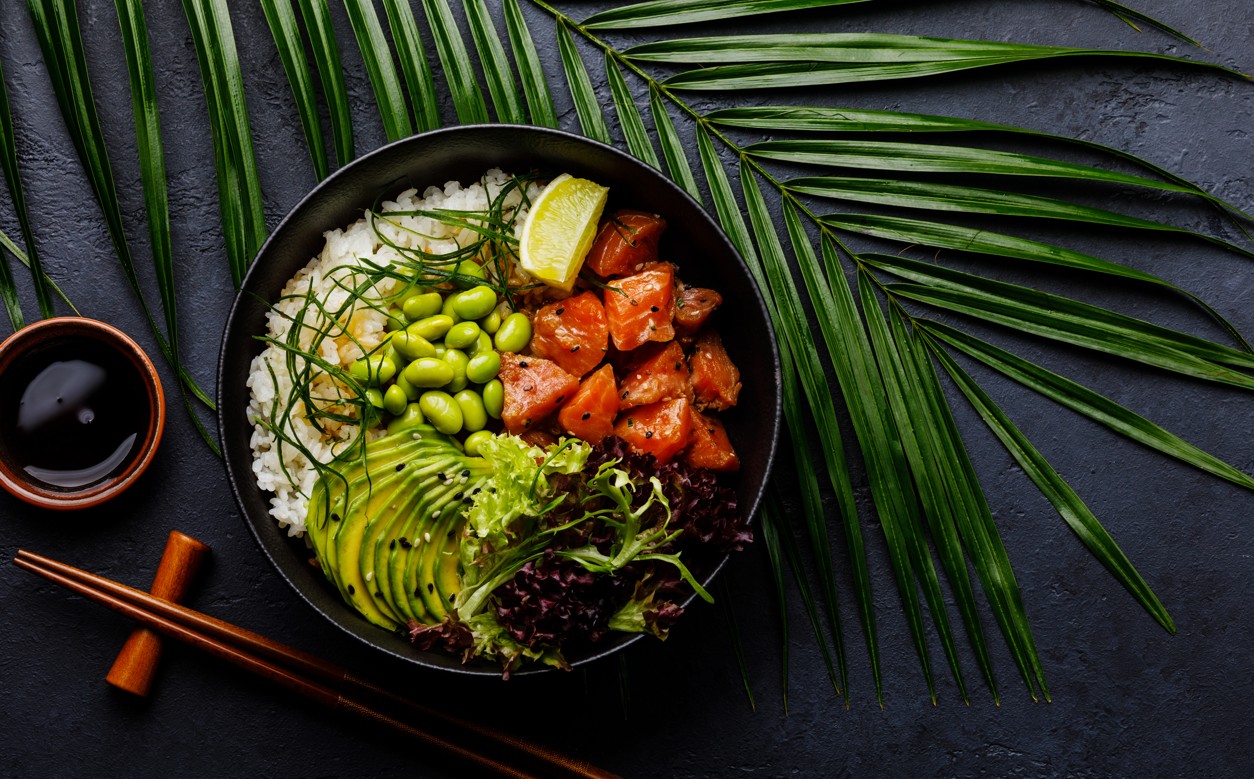
Hawaii is internationally known for poke, the iconic dish of cubed raw fish—traditionally ahi tuna—seasoned simply with sea salt, limu (seaweed), and roasted kukui nut. While modern poke bowls feature countless toppings, traditional poke remains minimalist and seafood-forward.
The islands’ most defining everyday dish is the plate lunch, a working-class staple consisting of two scoops of rice, macaroni salad, and a protein such as kālua pork, chicken katsu, teriyaki beef, or mahi-mahi. Another beloved comfort food is loco moco, invented in Hilo: rice topped with a hamburger patty, fried egg, and brown gravy.
Traditional Native Hawaiian foods include kālua pig, pork slow-cooked in an imu (underground oven); laulau, pork and butterfish wrapped in taro leaves and steamed; and poi, a pounded taro paste that is the cultural and nutritional foundation of Hawaiian cuisine. Spam musubi, grilled Spam over rice wrapped with nori, reflects Hawaii’s unique WWII-era food history and remains ubiquitous.
Sweet specialties include haupia, a coconut milk pudding; shave ice (never “shaved”), finely shaved ice with tropical syrups and optional ice cream or azuki beans; and malasadas, Portuguese-style doughnuts without holes.
Everyday Hawaiian & “Local” Food
Breakfast in Hawaii often features Portuguese sausage with eggs and rice, loco moco, or fresh tropical fruit. Lunch commonly means plate lunch, poke bowls, or bentos from neighborhood shops. Dinner ranges from traditional Hawaiian dishes to pan-Asian and modern island cuisine. Rice is the dominant starch and appears at nearly every meal.
Fresh seafood—ahi, ono (wahoo), mahi-mahi, opah—is eaten frequently. Pork appears in many forms, from kālua to char siu. Tropical fruits such as pineapple, mango, papaya, guava, and lilikoʻi (passion fruit) are consumed fresh or in drinks. The term “local food” refers specifically to dishes created in Hawaii through generations of cultural blending—not simply food grown locally.
Hawaii’s year-round growing season supports constant access to fresh produce, while the outdoor lifestyle encourages beach picnics, potlucks, and casual dining. Japanese-style delis known as okazuya sell prepared foods for takeaway and remain central to everyday eating.
Cultural Fusion: Native Hawaiian, Plantation & Modern Influences
Hawaiian cuisine is a living record of the islands’ demographic history. Native Hawaiian foodways centered on taro, sweet potato, breadfruit, coconut, and seafood, prepared through steaming, roasting, and earth-oven cooking.
From the late 19th century, plantation labor brought waves of immigrants: Japanese introduced rice, soy sauce, and bento culture; Chinese brought stir-fries and noodles; Portuguese contributed sausage and baking traditions; Filipinos introduced adobo and pancit; Koreans added kimchi and barbecue. American influence, particularly during World War II, normalized canned foods—cementing Spam’s iconic status.
This fusion created a uniquely Hawaiian food culture where multiple traditions coexist and cross-pollinate. A single potluck may include poi, teriyaki chicken, macaroni salad, pancit, and haupia—dishes that have evolved together into shared local identity.
Beverage Culture and Tropical Libations
Hawaii’s beverage culture reflects its climate and agricultural heritage. Kona coffee, grown on the volcanic slopes of the Big Island, is internationally prized for its smooth, balanced profile. Fresh fruit juices—lilikoʻi, guava, pineapple, sugarcane—are widely available.
The Mai Tai, though invented in California, became synonymous with Hawaii and is often made with local rum. Local breweries such as Kona Brewing and Maui Brewing produce popular island beers. POG (passion fruit–orange–guava) juice is a Hawaii invention, while okolehao, a traditional ti-root spirit, is experiencing a quiet revival.
Shave ice culture is especially distinctive, with elaborate syrup combinations and regional preferences. Beverages are commonly enjoyed outdoors—at beach parks, backyard gatherings, or casual eateries—reflecting Hawaii’s relaxed social rhythms.
International Dining and Contemporary Scene
Hawaii’s diversity and tourism industry support a wide international dining scene. Japanese cuisine is especially strong and deeply integrated into daily life. Korean, Chinese, Filipino, Thai, Vietnamese, and Pacific Island cuisines are widely represented.
Since the 1990s, the Hawaii Regional Cuisine movement has elevated island food globally, emphasizing local sourcing, cultural respect, and refined technique. Despite high-end dining, many of Hawaii’s most memorable meals remain simple: grocery-store poke, a roadside plate lunch, or fruit from a farmers’ market. The contrast between Waikīkī’s resort dining and neighborhood eateries highlights Hawaii’s culinary duality—both are valid expressions of island food culture.
Food Customs and Practical Tips
Dining in Hawaii ranges from food trucks to fine dining, with relaxed service guided by the “aloha spirit.” Tipping (15–20%) is standard. Reservations are recommended for popular restaurants, particularly in resort areas.
When attending a lūʻau, approach it as a cultural gathering, not just entertainment. Try poi—it is central to Native Hawaiian identity, even if unfamiliar. Use “Hawaiian food” to refer specifically to Native Hawaiian cuisine; use “local food” for the broader multicultural tradition. Shoes are typically removed when entering homes—and sometimes small eateries.
Explore different islands: Oʻahu for diversity and iconic spots, Maui for upscale farm-to-table dining, the Big Island for Kona coffee and seafood, and Kauaʻi for rustic charm. Seek out both visitor-focused experiences and local favorites. Be prepared for high food prices—most goods are imported—making locally grown and caught food especially valued.
This guide covers what to eat in Hawaii, from poke and plate lunch to traditional Hawaiian dishes and modern island cuisine. Use it to plan your culinary exploration of America’s Pacific crossroads, where food tells a story of migration, adaptation, and aloha.
Check monthly weather averages for
Latest Secret Flying deals to Hawaii
🚨 PRICE DROP 🚨 Dallas, Texas to Honolulu, Hawaii (& vice versa) for only $390 roundtrip
Cheap flights from Dallas, Texas to Honolulu, Hawaii for only $390 roundtrip with United Airlines. Also works in reverse.
View DealNew Orleans to Honolulu, Hawaii (& vice versa) for only $404 roundtrip
Cheap flights from New Orleans to Honolulu, Hawaii for only $404 roundtrip with United Airlines. Also works in reverse.
View DealRaleigh, North Carolina to Honolulu, Hawaii (& vice versa) for only $420 roundtrip
Cheap flights from Raleigh, North Carolina to Honolulu, Hawaii for only $420 roundtrip with United Airlines. Also works in reverse.
View Deal [adblockingdetector id="638efa67113bf"]