


Ho Chi Minh City Food Guide
Food in Ho Chi Minh City: What to Eat & Drink
The culinary landscape of is a high-energy fusion of Southern Vietnamese traditions, French colonial influence, and one of Asia’s most dynamic street food cultures. As Vietnam’s largest city and economic powerhouse, the metropolis—still affectionately called Saigon—offers a nonstop gastronomic experience where sidewalk stalls, historic coffee houses, and contemporary restaurants operate side by side from dawn until late night.
Saigon’s cuisine reflects its history as a trading port, its colonial legacy, its role as a magnet for migration from across Vietnam, and its fast-paced modern identity. The result is food that is bold, fragrant, and abundant, defined by freshness, sweetness, and a remarkable openness to outside influences—always adapted into something distinctly Vietnamese.
Local Specialties of Ho Chi Minh City
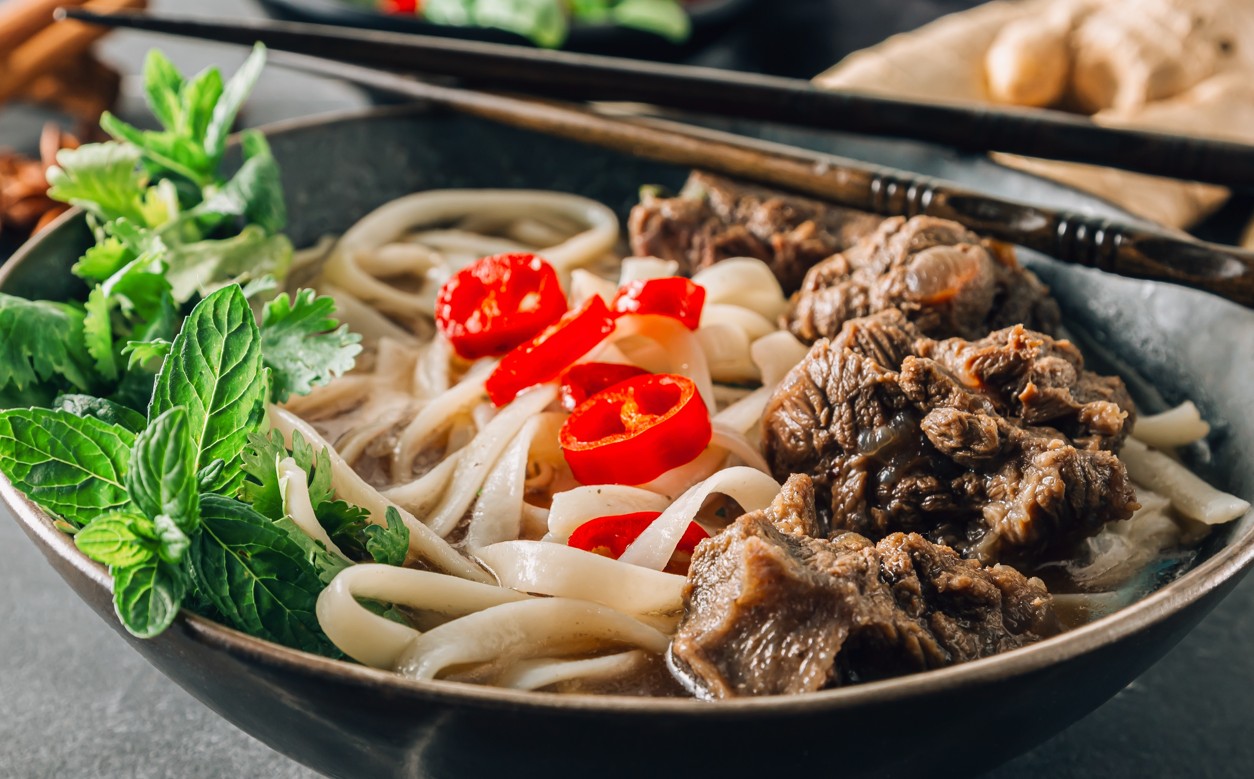
Ho Chi Minh City is best known for its Southern-style phở, which differs from Hanoi’s version with a lighter, subtly sweeter broth and a wider array of herbs served on the side. The city is also considered the spiritual home of bánh mì, where crisp baguettes—an inheritance of French colonial baking—are filled with pâté, cold cuts, pickled vegetables, chili, and fresh herbs.
Hủ tiếu, a clear pork- and seafood-based noodle soup with Chinese origins, is a defining Saigon dish. It is commonly served either as a soup or “dry” with the broth on the side, topped with minced pork, shrimp, quail eggs, and crispy shallots.
Cơm tấm, broken rice served with grilled pork chop, fried egg, pickled vegetables, and fish sauce, is the city’s most iconic comfort food. Bún thịt nướng, grilled pork over rice vermicelli with herbs and peanuts, offers a lighter but intensely flavorful alternative. Bánh xèo, crispy turmeric-colored rice crêpes filled with pork, shrimp, and bean sprouts, are a southern specialty eaten wrapped in lettuce and herbs.
Fresh spring rolls (gỏi cuốn) and the wide universe of chè—Vietnamese sweet soups and puddings made with beans, coconut milk, jellies, and tropical fruit—round out Saigon’s signature flavors.
Everyday Saigon & Southern Vietnamese Food
Breakfast in Saigon is typically eaten outside the home and may include phở, hủ tiếu, or bánh mì from a street vendor. Lunch often centers on rice or noodle dishes such as cơm tấm or bún bowls, while dinner ranges from family-style meals to informal sidewalk dining or modern restaurants.
Fresh herbs—mint, cilantro, perilla, fish mint—are fundamental to nearly every dish. Pork is the most common protein, prepared grilled, minced, stewed, or cured. Seafood from the nearby coast and Mekong Delta—shrimp, squid, crab, and river fish—is widely consumed. Tropical fruits such as mango, rambutan, dragon fruit, and durian are eaten fresh, blended into drinks, or incorporated into desserts.
Street food is not a niche in Saigon—it is the backbone of daily eating. Plastic stools, motorbike-side kitchens, and open-air grills define the city’s food culture. The warm climate ensures year-round produce, while southern cuisine’s natural sweetness reflects the fertility of the Mekong Delta.
Cultural Fusion: Vietnamese Roots, French Legacy & Saigon Adaptability
Saigon’s cuisine is the product of layered cultural exchange. Indigenous Vietnamese cooking emphasized rice, fish sauce, fermentation, and herbs. Chinese merchants introduced noodle soups, dumplings, and wok techniques. French colonial rule added baguettes, pâté, coffee, and Western baking traditions.
Post-war migration from central and northern Vietnam transformed Saigon into a national culinary crossroads. Later American and global influences expanded dining formats without displacing local food culture. This adaptability defines Saigonese cuisine: foreign ideas are absorbed, reinterpreted, and made unmistakably local.
It is common to eat a French-influenced pastry in the morning, a Chinese-origin noodle soup at midday, and a southern Vietnamese rice dish at night—all within a few city blocks.
Coffee, Beer & Local Drinks
Ho Chi Minh City’s beverage culture is inseparable from its coffee obsession. Vietnamese coffee—dark, strong, and brewed through a metal phin filter—is consumed hot or iced, often sweetened with condensed milk (cà phê sữa đá). Cafés range from decades-old institutions to modern third-wave roasters and serve as social spaces throughout the day.
Fresh fruit smoothies (sinh tố) and sugarcane juice are ubiquitous street drinks. Beer is hugely popular, with mass-market brands like Saigon Beer coexisting alongside a growing craft beer scene and lively rooftop bars. Traditional drinks include herbal teas, lotus tea, rice wine (rượu đế), and fruit-infused spirits.
What distinguishes Saigon is the sheer density of cafés and beer spots—drinking is deeply woven into the rhythm of daily life, from morning coffee to late-night street beers.
International Dining and Contemporary Saigon
Alongside its dominant local food culture, Ho Chi Minh City offers some of Southeast Asia’s best international dining. French cuisine remains influential, while Japanese, Korean, Chinese, and Thai restaurants are widespread and authentic.
Modern Vietnamese restaurants are redefining traditional dishes with refined presentation and technique, particularly in central districts. Despite global influences, the city’s culinary soul remains rooted in street food—many upscale restaurants draw direct inspiration from sidewalk stalls.
Saigon’s dining scene is defined by momentum and competition. New concepts emerge constantly, yet traditional vendors thrive unchanged. This coexistence of old and new is central to the city’s identity.
Food Customs and Practical Tips
Dining in Saigon ranges from plastic-stool street stalls to polished dining rooms. Tipping is not expected but appreciated for exceptional service. Basic Vietnamese phrases such as xin chào (hello) and cảm ơn (thank you) are welcomed.
When eating street food, follow locals—busy stalls signal freshness and quality. Customize dishes with herbs, lime, and chili, but taste first. Bến Thành Market offers a concentrated food experience, while Vĩnh Khánh Street in District 4 is famous for seafood at night.
Explore different neighborhoods: District 1 for classic and upscale options, District 3 for everyday local food, District 5 (Chợ Lớn) for Chinese-Vietnamese cuisine, and Thảo Điền for modern cafés and international dining. Consider a guided street-food tour for orientation. Expect heat, crowds, and constant motion.
This guide covers what to eat in Ho Chi Minh City, from phở and bánh mì to cơm tấm, coffee culture, and street food traditions. Use it to plan your culinary exploration of Vietnam’s southern capital—a city that eats with intensity, creativity, and unstoppable energy from morning to midnight.
Check monthly weather averages for
Latest Secret Flying deals to Ho Chi Minh City
Stockholm, Sweden to East Asia from only €335 roundtrip
Cheap flights from Stockholm, Sweden to East Asia from only €335 roundtrip.
View Deal
Barcelona, Spain to Ho Chi Minh City, Vietnam for only €416 roundtrip
Cheap flights from Barcelona, Spain to Ho Chi Minh City, Vietnam for only €416 roundtrip.
View Deal [adblockingdetector id="638efa67113bf"]