


Jaipur Food Guide
Food in Jaipur: What to Eat & Drink
Jaipur’s culinary landscape is a majestic celebration of Rajasthani royal heritage, desert-born ingenuity, and a vibrant street food culture, making it one of India’s most colorful and flavor-intense food destinations. As the Pink City and the capital of Rajasthan, Jaipur has developed a distinctive cuisine that balances palace kitchen refinement with the energy of bustling bazaars. Shaped by its desert environment, Rajput warrior traditions, and role as a cornerstone of India’s Golden Triangle, the city’s food reflects its origins as a planned princely capital, its adaptations to arid conditions, and its modern identity as a cultural and tourism hub. The result is cuisine that is rich, deeply spiced, and infused with both royalty and resilience.
Core ingredients such as millet, lentils, gram flour, buttermilk, and aromatic spices form the foundation of Jaipur’s cuisine. Dishes are defined by preservation techniques, intense spice profiles, and the generous use of ghee and dried ingredients that characterize desert cooking. Jaipur’s location on the edge of the Thar Desert has profoundly shaped its culinary identity, as limited water and seasonal vegetables encouraged creative use of dried legumes, preserved foods, and dairy. From regal dining rooms in heritage hotels to lively street food stalls in the old city, Jaipur offers a culinary journey through one of Rajasthan’s most resourceful and regal kitchens.
Local Specialities of Jaipur
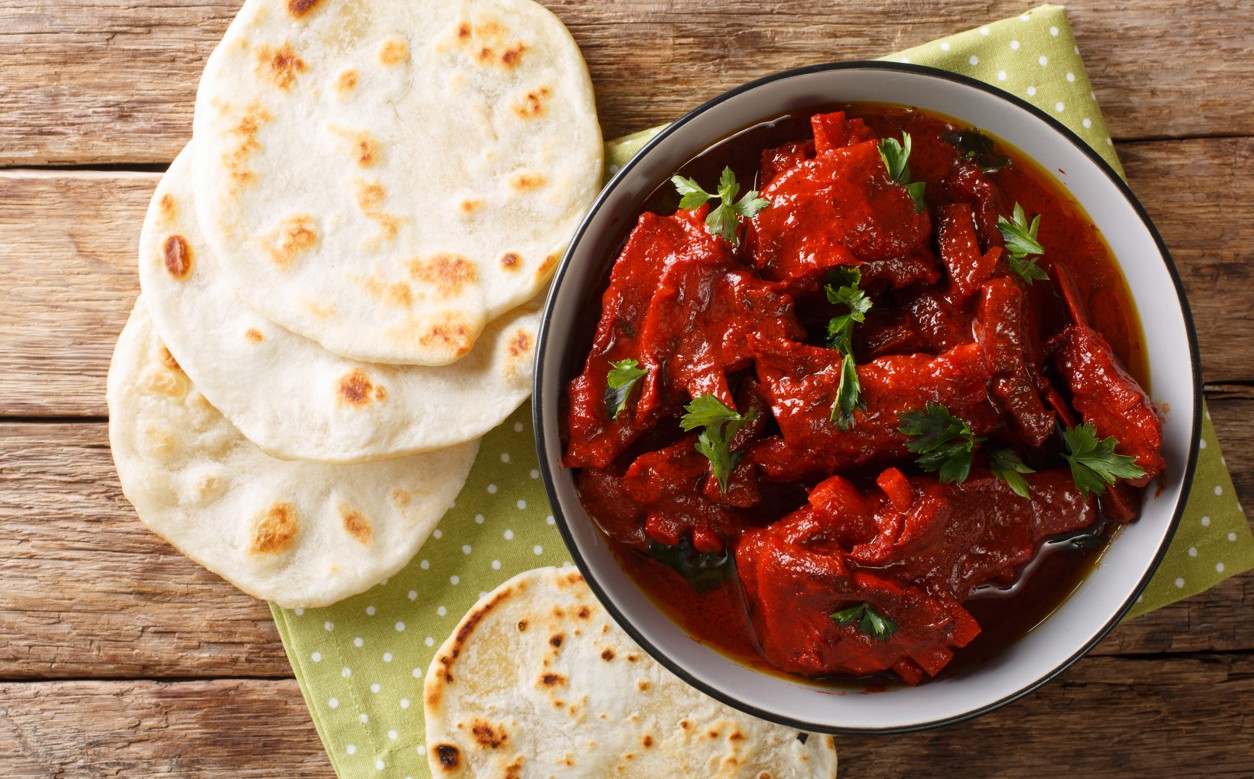
Jaipur is renowned for laal maas, a fiery red mutton curry prepared with Mathania red chilies, yogurt, and garlic, traditionally cooked over a wood fire. Originally a Rajput warrior dish, it embodies the bold, uncompromising flavors of Rajasthan. Dal baati churma, the quintessential Rajasthani meal, combines lentil curry with baked wheat balls and a crushed sweet wheat preparation, offering a complete expression of the region’s culinary philosophy.
Gatte ki sabzi, made from gram flour dumplings simmered in spiced yogurt gravy, is a signature vegetarian dish born from vegetable scarcity. Pyaaz kachori, a deep-fried pastry filled with spiced onions, is Jaipur’s iconic street food breakfast, while mirchi vada, large green chilies stuffed with potato filling and fried in gram flour batter, is a popular spicy snack. Ghewar, a disc-shaped honeycomb sweet associated with festivals such as Teej and Makar Sankranti, is the city’s most celebrated dessert. Kalakand, a soft milk-based sweet flavored with cardamom, is another local favorite, often purchased from renowned sweet shops. Mawa kachori, a sweet variation filled with khoya, nuts, and cardamom, is a uniquely Jaipuri indulgence.
Everyday Jaipur & Rajasthani Food
Breakfast in Jaipur often includes pyaaz kachori served with tamarind chutney or a traditional Rajasthani meal of bajra roti accompanied by buttermilk. Lunch commonly features thali-style meals offering a variety of dishes, including lentils, vegetables, breads, and sweets. Dinner ranges from casual street food explorations to more formal restaurant dining set against a backdrop of royal décor.
Millet and wheat are everyday staples, transformed into breads such as bajra roti and missi roti. Lentils and legumes provide the backbone of vegetarian cooking, while dairy products including ghee, yogurt, buttermilk, and milk solids appear in both savory and sweet preparations. Dried spices, especially red chili, coriander, turmeric, and asafoetida, create the region’s signature intensity. Pickles and chutneys made from local ingredients such as ker and sangri regularly accompany meals. Street food plays a central role in daily life, with markets like Johari Bazaar and Bapu Bazaar offering an endless array of snacks and sweets. Given the desert climate, meals often incorporate cooling elements such as buttermilk and yogurt to balance the heat.
Cultural Fusion: Rajput Foundations, Marwari Traditions & Royal Refinement
Jaipur’s cuisine reflects a layered history shaped by Rajput warrior culture, Marwari mercantile traditions, and royal culinary refinement. Rajput cooking emphasized game, meat, and robust flavors, while Marwari cuisine, influenced by Jain vegetarianism, developed elaborate preparations based on legumes, dairy, and spices.
The royal kitchens of the Kachwaha dynasty brought these traditions together, incorporating Mughlai influences while adapting to the constraints of the desert environment. Preservation techniques and inventive use of limited ingredients became essential. The result is a distinctly Jaipuri cuisine in which a Rajput meat curry, a Marwari vegetarian feast, and a royal dessert can coexist on the same table. Jaipur’s food culture exemplifies adaptation, transforming scarcity into richness through skill, spice, and culinary ingenuity.
Craft Beverage Scene and Local Libations
Jaipur’s beverage culture reflects its desert climate, royal past, and increasingly vibrant modern café scene. Lassi, both sweet and salty, is a staple, valued for its cooling and digestive properties, especially when paired with spicy dishes.
Chai is consumed throughout the day, typically strong and milky, while jaljeera, a tangy cumin and mint drink, serves as a traditional refresher. Although alcohol was historically limited in mainstream Rajasthani culture due to Rajput and Marwari values, modern Jaipur offers bars in hotels and restaurants, along with local beers and spirits. What truly distinguishes the city is its lassi culture, with specialized shops serving thick, creamy versions topped with malai or saffron. The contemporary café scene is also thriving, particularly on rooftop terraces in the old city that combine views with coffee and light meals.
International Dining and Contemporary Scene
While Rajasthani cuisine remains dominant, Jaipur’s international dining scene continues to grow alongside its tourism industry. North Indian restaurants are widespread, and Chinese and Continental establishments cater to a broad range of visitors.
Modern Indian restaurants increasingly reinterpret traditional Rajasthani dishes with contemporary presentation, especially in heritage hotels and upscale neighborhoods. Despite the availability of international cuisine, Jaipur’s culinary soul remains firmly rooted in its street food and traditional eateries, with even luxury hotels hosting authentic Rajasthani food festivals. The city’s dining scene balances centuries-old traditions with modern execution, particularly in the highly competitive sweets and snack sector. What sets Jaipur apart is its royal legacy, where recipes once reserved for palace kitchens are now enjoyed by locals and visitors alike in busy markets.
Food Customs and Practical Tips
Dining in Jaipur ranges from informal street food stalls to elegant heritage palace restaurants, generally accompanied by attentive service. Tipping is appreciated, with around 10% considered standard in restaurants. Eating with the right hand is customary, particularly for traditional dishes such as dal baati.
When sampling street food, following the crowds is a reliable way to ensure freshness and quality. For an authentic experience, try laal maas at a traditional restaurant and request a milder version if needed. Visit well-known sweet shops such as Laxmi Mishthan Bhandar or Rawat Mishthan Bhandar for classic desserts, and explore the old city markets for a complete street food experience.
Different neighborhoods offer distinct culinary experiences. The old city around Johari Bazaar and Bapu Bazaar is ideal for street food and traditional sweets, MI Road is known for established restaurants and cafés, C Scheme offers upscale dining, and heritage hotels provide immersive royal dining experiences. Mixing famous institutions with small local eateries offers the most rewarding experience. A guided food tour can help navigate the old city’s options safely and confidently. Be prepared for Jaipur’s bold spice levels by starting mild and gradually building tolerance. Jaipur delivers exceptional culinary value, offering remarkable flavors at accessible prices. Above all, embrace the city’s culinary spirit, where generosity, boldness, and desert ingenuity are celebrated with royal flair.
This guide covers what to eat in Jaipur, from laal maas and dal baati churma to pyaaz kachori, ghewar, and classic Rajasthani specialties. Use it to plan your culinary exploration of the Pink City, where every meal is a vivid celebration of spice, history, and tradition.
Check monthly weather averages for
Latest Secret Flying deals to Jaipur
SUMMER: Business Class from Copenhagen, Denmark to Jaipur, India for only €1480 roundtrip (lie-flat seats)
Business Class, summer flights from Copenhagen, Denmark to Jaipur, India for only €1480 roundtrip with Etihad Airways.
View DealMEGA POST: Paris, France to many Indian cities from only €358 roundtrip
Fly from Paris, France to Goa, Jaipur, Hyderabad, Delhi or Mumbai, India from only €358 roundtrip with Jet Airways.
View Deal [adblockingdetector id="638efa67113bf"]