


Jakarta Food Guide
Food in Jakarta: What to Eat & Drink
Jakarta’s culinary landscape is a dynamic fusion of Betawi heritage, the vast diversity of the Indonesian archipelago, and the energy of a global metropolis, making it one of Southeast Asia’s most complex and flavorful food destinations. As Indonesia’s capital and economic powerhouse, Jakarta has developed a distinctive food culture that balances indigenous traditions with centuries of migration and trade. Shaped by its colonial history, long-standing role as a port city, and status as the world’s largest Muslim-majority metropolis, the city’s cuisine reflects its origins as the port of Sunda Kelapa, its Dutch colonial past, its role as a magnet for Indonesia’s many ethnic groups, and its modern identity as a sprawling megacity. The result is food that is bold, aromatic, and endlessly varied.
Core ingredients such as rice, coconut, chili, peanuts, and aromatic herbs form the foundation of Jakarta’s cuisine. Dishes are defined by complex spice pastes known as bumbu, rich coconut milk sauces, and the vibrant street food culture that underpins daily urban life. Jakarta’s location on the northwest coast of Java shapes its culinary identity, placing it at the intersection of the island’s agricultural heartland and the archipelago’s historic trade routes. From humble kaki lima street carts tucked into busy neighborhoods to refined restaurants in the Sudirman Central Business District, Jakarta offers a culinary journey through Indonesia’s most diverse and fast-moving kitchen.
Local Specialities of Jakarta
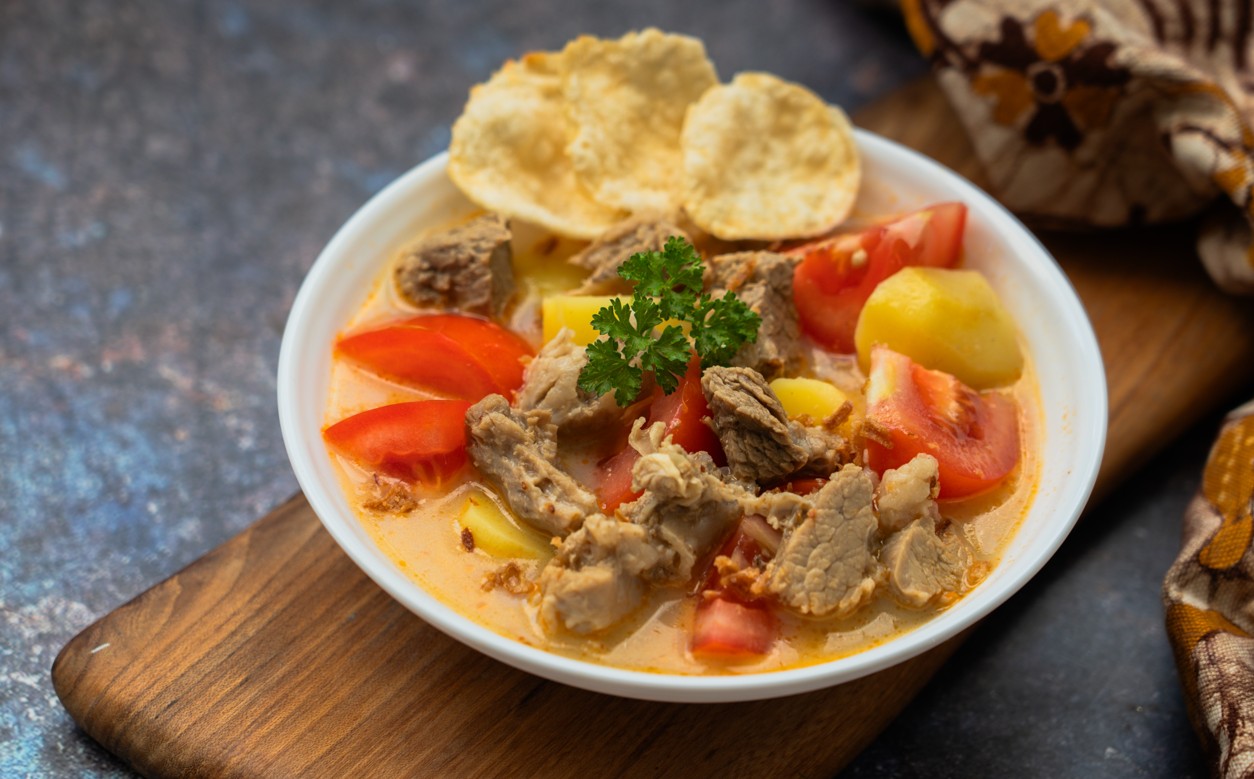
Jakarta is best known for its Betawi cuisine, the food of the city’s original inhabitants. Signature dishes include soto betawi, a rich and comforting beef soup made with coconut milk, fried potatoes, and tomatoes. Kerak telor, a spicy omelet of glutinous rice, dried shrimp, and coconut cooked over charcoal, is the city’s most iconic street food and a proud expression of Betawi tradition.
Nasi uduk, rice cooked in coconut milk and served with accompaniments such as fried chicken, tempeh, sambal, and peanuts, is Jakarta’s everyday comfort food. Gado-gado, Indonesia’s well-known vegetable salad with peanut sauce, is particularly associated with the Betawi style in the capital. Semur jawa, a beef stew braised in sweet soy sauce and spices, reflects strong Javanese influence. Ketoprak, rice noodles topped with tofu, bean sprouts, and peanut sauce, is a popular vegetarian street food. Soto tangkar, a Betawi specialty made with beef ribs in coconut milk broth, is especially hearty, while kue ape, a thin pancake with a soft center and crisp edges often topped with banana or chocolate, remains a nostalgic street snack.
Everyday Jakarta & Indonesian Food
Breakfast in Jakarta may consist of nasi uduk, bubur ayam, or simple bread accompanied by sweet tea. Lunch is typically rice-based and may include several side dishes, noodle soups, or meals purchased from street vendors. Dinner ranges from casual meals at local warungs to more formal dining experiences in restaurants and malls.
Rice is the unquestioned staple and appears at nearly every meal. Chicken, beef, and seafood are the most common proteins, with goat used in traditional preparations. Tempeh and tofu play an essential role as affordable and nutritious protein sources. Coconut is used in many forms, including milk, oil, and grated garnish, while herbs such as lemongrass, kaffir lime leaves, galangal, turmeric, and coriander provide the aromatic backbone of Indonesian cooking. Street food is central to daily life, with thousands of vendors serving everything from light snacks to complete meals. Given Jakarta’s tropical climate, dishes often balance heat from chilies with cooling elements such as iced desserts and drinks like es cendol.
Cultural Fusion: Betawi Foundations, Javanese Influence & Archipelago Diversity
Jakarta’s cuisine is a layered reflection of its indigenous Betawi roots, dominant Javanese influence, Chinese immigrant contributions, Dutch colonial legacy, and the extraordinary diversity of Indonesia’s thousands of islands. Betawi cooking traditionally emphasized coconut, beef, and rich sauces, forming the foundation of many local dishes.
Javanese migrants introduced sweet soy sauce and refined spice blends, while Chinese communities brought noodles, soy-based condiments, and stir-frying techniques. Dutch colonial rule added European baking traditions and ingredients. After independence, migration from across the archipelago transformed Jakarta into a culinary mosaic. As a result, it is common to enjoy Betawi soto, Javanese gudeg, Padang rendang from Sumatra, and Chinese-inspired bakmi noodles within a single food court. Jakarta’s food culture embodies Indonesia’s national motto, Bhinneka Tunggal Ika, or Unity in Diversity, quite literally on the plate.
Craft Beverage Scene and Local Libations
Jakarta’s beverage culture reflects its tropical climate, colonial influences, and Islamic foundations. Tea is consumed throughout the day, often sweetened and served hot or iced.
Coffee culture is deeply rooted, with traditional Indonesian coffee typically served thick and sweet. Iced drinks such as es cendol, es teler, and es campur provide welcome relief from the heat. While alcohol consumption is limited in much of Indonesian society, Jakarta offers bars and clubs catering to expatriates and non-Muslims, with local beer widely available. What sets the city apart is its street beverage culture, where vendors sell fresh coconut water, sugarcane juice, and traditional herbal drinks from mobile carts. Alongside this, a booming modern café scene has emerged, with third-wave coffee shops thriving next to long-established kopi stalls.
International Dining and Contemporary Scene
Although Indonesian cuisine dominates, Jakarta supports a world-class international dining scene that reflects its global economic role. Japanese restaurants are particularly prominent, and Korean barbecue has gained widespread popularity.
Western restaurants, including Italian and American establishments, cater to expatriates and affluent locals, while modern Indonesian restaurants reinterpret traditional dishes using contemporary techniques and presentation. Despite the abundance of international options, Jakarta’s culinary soul remains firmly rooted in its street food and modest warungs. Even luxury shopping malls feature food courts showcasing authentic regional Indonesian dishes. The city’s dining scene balances tradition with innovation, and what truly distinguishes Jakarta is its sheer variety, offering the most comprehensive snapshot of Indonesia’s culinary landscape in one place.
Food Customs and Practical Tips
Dining in Jakarta ranges from plastic-stool street stalls to some of Asia’s most luxurious restaurants, with service that can vary from brisk to exceptionally warm. Tipping is not expected, though rounding up the bill or leaving small change is appreciated. Eating with the right hand is traditional, but spoons and forks are commonly used.
When choosing street food, look for stalls with steady local crowds and high turnover. For an authentic experience, try kerak telor cooked over charcoal. Padang restaurants offer a distinctive dining style in which multiple dishes are displayed and you pay only for what you eat. Night food markets provide an excellent introduction to Jakarta’s street food culture.
Exploring different neighborhoods reveals the city’s culinary depth. Glodok is known for Chinese-Indonesian food, Kota Tua offers historic atmosphere and street snacks, Sudirman and Kuningan concentrate upscale dining, and areas such as Kebayoran and Pondok Labu preserve Betawi traditions. Shopping malls are also worth visiting for their remarkably diverse food courts. Balancing street vendors with established restaurants offers the fullest experience. Given Jakarta’s traffic, it is wise to plan meals around location. The city offers exceptional culinary range, from inexpensive street food to high-end dining. Above all, embrace Jakarta’s culinary spirit, where food is about community, bold flavors, and celebrating the immense diversity of Indonesia in a city that never stops eating.
This guide covers what to eat in Jakarta, from soto betawi and kerak telor to nasi uduk, gado-gado, and regional Indonesian specialties. Use it to plan your culinary exploration of Indonesia’s capital, where every meal is a journey through the flavors of the archipelago.
Check monthly weather averages for
Latest Secret Flying deals to Jakarta
London, UK to Jakarta, Indonesia for only £378 roundtrip
Cheap flights from London, UK to Jakarta, Indonesia for only £378 roundtrip with Hainan Airlines.
View DealBrussels, Belgium to Jakarta, Indonesia for only €404 roundtrip
Cheap flights from Brussels, Belgium to Jakarta, Indonesia for only €404 roundtrip.
View DealVenice, Italy to Jakarta, Indonesia for only €456 roundtrip
Cheap flights from Venice, Italy to Jakarta, Indonesia for only €456 roundtrip.
View Deal [adblockingdetector id="638efa67113bf"]