


Kochi Food Guide
Food in Kochi: What to Eat & Drink
Kochi’s culinary landscape is a vibrant fusion of Malabar Coast traditions, Portuguese colonial influence, and Syrian Christian heritage, making it one of India’s most diverse and historically layered food destinations. As the commercial capital of Kerala and one of the subcontinent’s oldest port cities, Kochi has developed a food culture that blends ancient spice-trade legacies with cosmopolitan openness. Shaped by its Arabian Sea location, centuries of maritime exchange, and role as the culinary gateway to “God’s Own Country,” the city’s cuisine reflects a place long accustomed to feeding traders, travelers, and settlers from across the world. The result is cooking that is aromatic, coconut-rich, and deeply rooted in hospitality.
Core ingredients such as rice, coconut, seafood, bananas, and spices underpin Kochi’s cuisine. Dishes are defined by the generous use of coconut milk, curry leaves, mustard seeds, and a finely balanced interplay of sour, spicy, and subtly sweet flavors that characterise Keralite cooking. Kochi’s setting on the Malabar Coast, with its lagoons, backwaters, and open sea, creates a unique aquatic cuisine that draws equally from freshwater and marine sources. From traditional Syrian Christian eateries in Fort Kochi to bustling seafood restaurants in Mattancherry, the city offers a culinary journey through Kerala’s most historic and flavor-driven kitchen.
Local Specialities of Kochi
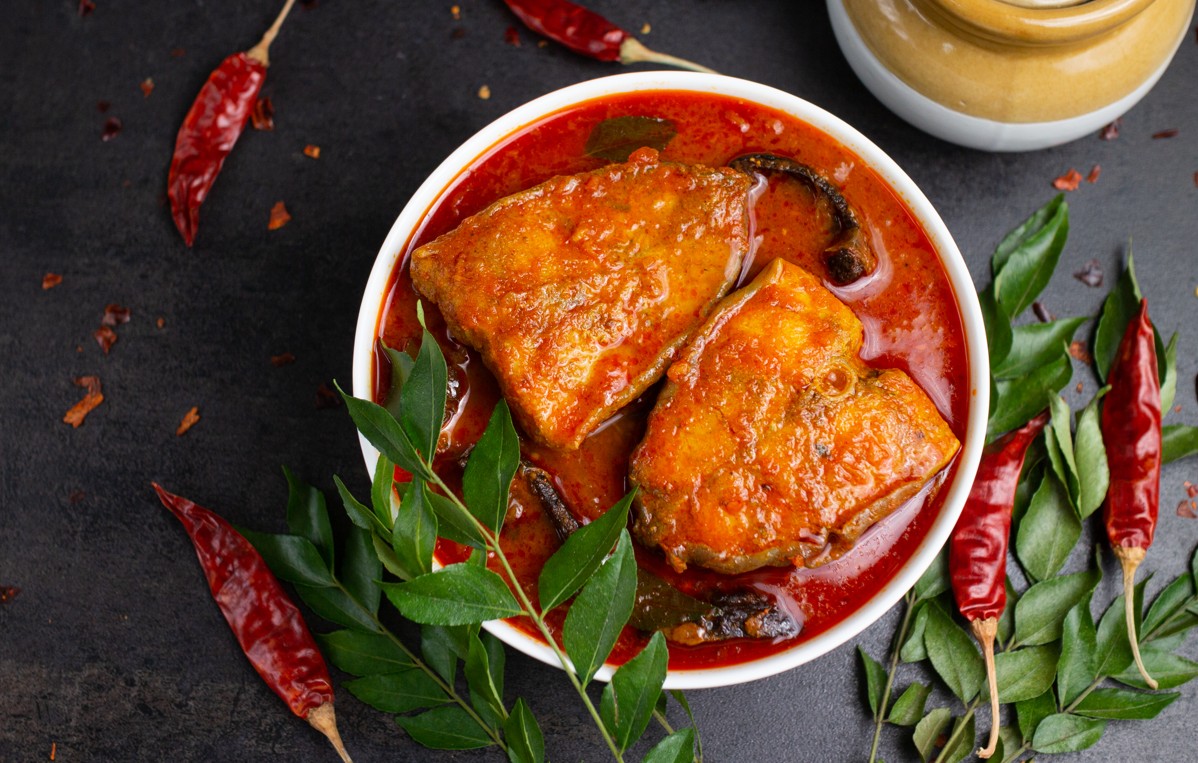
Kochi is particularly well known for Malabar fish curry, prepared with fresh local fish simmered in clay pots with coconut, tamarind, fenugreek, and red chilies. Appam with stew, soft fermented rice pancakes with lacy edges served alongside coconut milk–based vegetable or meat stew, is a classic Syrian Christian breakfast and one of the city’s most beloved combinations.
Kerala sadhya, the elaborate vegetarian feast served on a banana leaf during festivals and celebrations, features an array of dishes such as sambar, avial, olan, thoran, and pickles. Karimeen pollichathu, pearl spot fish marinated in spices, wrapped in banana leaf, and grilled or steamed, is a regional signature. Beef fry, cooked with coconut slices, spices, and curry leaves, reflects the food traditions of Kochi’s Christian and Muslim communities. Thalassery biryani, from northern Kerala but widely enjoyed in Kochi, uses fragrant small-grain rice and delicately layered spices. Puttu with kadala curry, a breakfast of steamed rice cylinders and black chickpea curry, is a daily staple, while pazham pori, deep-fried ripe plantains, remains the quintessential tea-time snack.
Everyday Kochi & Keralite Food
Breakfast in Kochi often includes appam with stew, puttu and kadala curry, or idiyappam served with coconut-based gravies. Lunch typically centers on rice accompanied by fish curry and seasonal vegetable sides, with sadhya reserved for special occasions. Dinner may range from simple home-style meals to seafood-focused restaurant dining.
Rice is the cornerstone of daily meals, while coconut appears in nearly every form, from milk and oil to grated flesh. Seafood such as prawns, mussels, sardines, crab, and a wide range of fish is consumed regularly, often within hours of landing. Bananas and plantains are used both ripe and raw in savory dishes, desserts, and snacks. Spices including black pepper, cardamom, cloves, cinnamon, and star anise reflect Kochi’s role at the heart of the historic spice trade. The city’s Hindu, Christian, Muslim, Jain, and Jewish communities each contribute distinct culinary traditions, creating an unusually broad and inclusive food culture. Kochi’s tropical climate ensures abundant fresh produce year-round and encourages cooking styles that balance richness with cooling elements such as coconut and yogurt.
Cultural Fusion: Ancient Dravidian Roots, Colonial Exchange & Religious Diversity
Kochi’s cuisine is a living record of its ancient Dravidian foundations, centuries of foreign trade, and exceptional religious diversity. Early South Indian food traditions emphasized rice, lentils, and locally grown spices. Jewish traders, believed to have arrived as early as the first century AD, introduced new ingredients and techniques.
Arab traders brought Islam and Middle Eastern influences, while Portuguese colonization introduced chili peppers, tomatoes, potatoes, and baking methods that permanently transformed Indian cooking. Subsequent Dutch and British rule added further layers, while Syrian Christian communities developed a distinct meat-centric cuisine. The result is a uniquely Kochi table where Hindu vegetarian dishes, Christian beef preparations, Muslim biryanis, and colonial-era desserts coexist naturally. Kochi’s food culture exemplifies convergence, absorbing global influences while remaining unmistakably Keralite.
Craft Beverage Scene and Local Libations
Kochi’s beverage culture reflects its tropical climate, colonial past, and increasingly modern lifestyle. Chai, typically strong, milky, and spiced with cardamom or ginger, is consumed throughout the day.
Kerala-style coffee is dark, strong, and often sweetened generously with milk and sugar. Sambharam, a spiced buttermilk drink flavored with ginger, green chili, and curry leaves, is a traditional refresher well suited to the heat. Fresh coconut water, served straight from the shell, is widely available. Toddy, a lightly fermented palm wine, is a traditional drink in rural areas, though less common in central Kochi. The city’s tea shop culture remains vibrant, with small chayakadas serving tea and snacks to people from all backgrounds. In recent years, a modern café scene has flourished, particularly in Fort Kochi and along Marine Drive.
International Dining and Contemporary Scene
Although Keralite cuisine defines Kochi’s culinary identity, the city offers a wide range of international dining options that reflect its historic cosmopolitanism and modern tourism industry. Indian-Chinese restaurants are popular, especially for their localized interpretations.
Continental restaurants, often housed in heritage hotels, echo colonial influences, while Arabic and Middle Eastern eateries cater to the Gulf-returnee population. Contemporary Kerala restaurants increasingly reinterpret traditional dishes with refined presentation, particularly in upscale hotels. Despite this variety, Kochi’s culinary heart remains firmly rooted in its local establishments, from seafood shacks to modest street food stalls. The city’s dining scene balances tradition with innovation, with breakfast and seafood remaining especially competitive sectors. What distinguishes Kochi dining is its authenticity and breadth, allowing visitors to sample the full spectrum of Kerala’s regional cuisines within one historic port city.
Food Customs and Practical Tips
Dining in Kochi ranges from informal street stalls to elegant heritage restaurants, generally accompanied by warm and attentive service. Tipping is appreciated, with around 10% considered standard in restaurants. Eating with the right hand is customary, particularly for rice-based meals and sadhya.
Sadhya is traditionally served on a banana leaf and eaten in a specific sequence, beginning with lighter dishes and ending with payasam. Karimeen pollichathu is best enjoyed at a dedicated seafood restaurant for the most authentic experience. Fort Kochi offers both historic ambiance and diverse dining, while local markets provide access to fresh spices, seafood, and snacks.
Exploring different neighborhoods enhances the culinary experience. Fort Kochi is known for cafés and heritage restaurants, Mattancherry for seafood and local eateries, Marine Drive for upscale dining with views, and Ernakulam for business lunches and everyday favorites. Combining well-known institutions with places frequented by locals offers the most complete picture. Kochi delivers excellent culinary value, offering depth of flavor at accessible prices. Above all, embrace Kochi’s culinary spirit, where food is about community, generosity, and the shared enjoyment of a cuisine shaped by centuries of trade, migration, and cultural exchange.
This guide covers what to eat in Kochi, from Malabar fish curry and appam with stew to Kerala sadhya, karimeen pollichathu, and everyday Keralite dishes. Use it to plan your culinary exploration of Kerala’s spice coast capital, where every meal is a fragrant journey through history.
Check monthly weather averages for
Latest Secret Flying deals to Kochi
XMAS & NEW YEAR: Bahrain to Kochi, India for only $210 USD roundtrip
Christmas and New Year flights from Bahrain to Kochi, India for only $210 USD roundtrip.
View DealNon-stop from Abu Dhabi, UAE to Kochi, India for only $275 USD roundtrip
Non-stop flights from Abu Dhabi, UAE to Kochi, India for only $275 USD roundtrip.
View Deal
 [adblockingdetector id="638efa67113bf"]