


Lagos Food Guide
Food in Lagos: What to Eat & Drink
Lagos’s culinary landscape is a fast-paced, high-energy fusion of Yoruba traditions, pan-Nigerian diversity, and global cosmopolitan influence, making it one of Africa’s most exciting and flavor-driven food destinations. As Nigeria’s largest city, economic engine, and cultural capital, Lagos has developed a food culture that blends deep indigenous roots with constant reinvention, shaped by its lagoon-and-Atlantic setting, colonial history, and status as one of the world’s fastest-growing megacities. The city’s cuisine reflects its evolution from fishing settlement to sprawling metropolis, its role as Nigeria’s melting pot, and its relentless urban rhythm—producing dishes that are bold, spicy, communal, and unapologetically vibrant.
Core ingredients such as yams, cassava, rice, chili peppers, and palm oil form the backbone of Lagos cuisine. Dishes emphasize starchy staples, layered spice blends, and the iconic West African “swallow” foods—soft dough-like accompaniments eaten with soups. Lagos’s location along the Bight of Benin gives it access to both coastal seafood and inland agricultural produce, creating a distinctive coastal-hinterland fusion. From crowded bukas (local eateries) on neighborhood streets to polished dining rooms in Victoria Island, Lagos offers a culinary journey through Nigeria’s most dynamic and diverse kitchen.
Local Specialities of Lagos
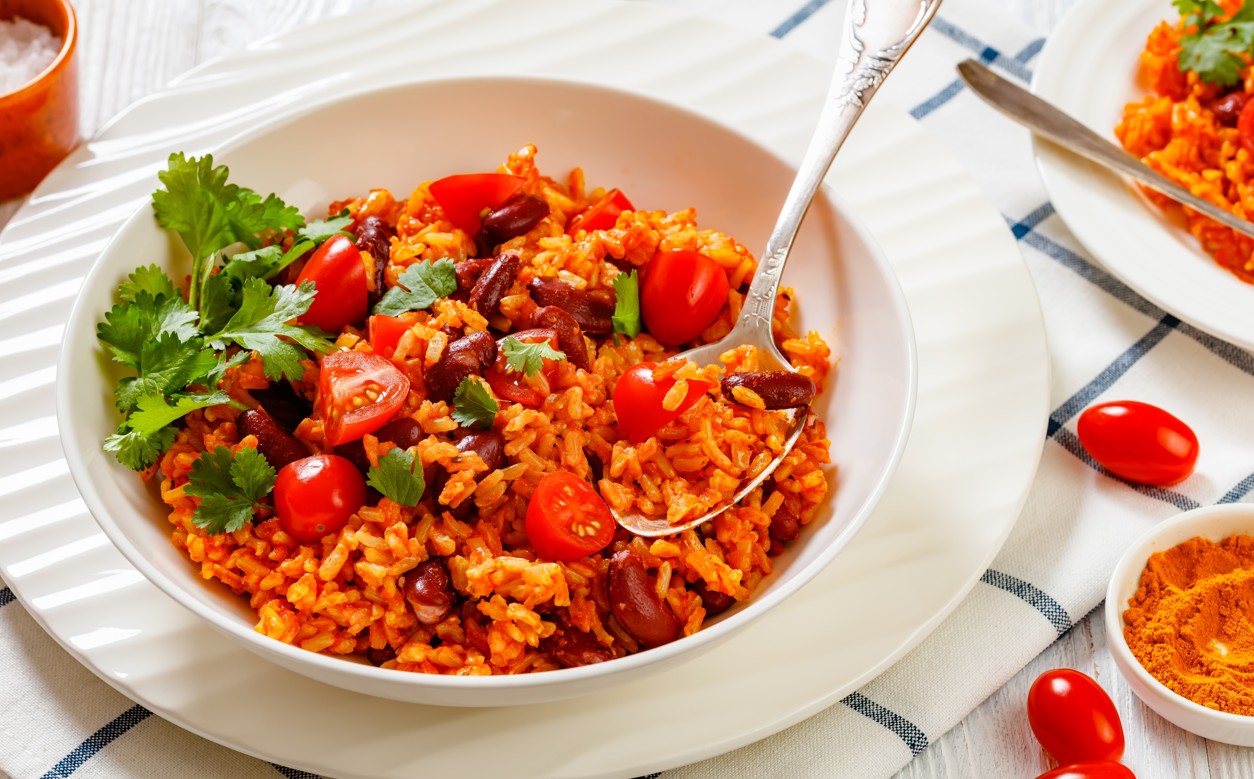
Lagos is synonymous with jollof rice, the iconic West African one-pot dish cooked with tomatoes, peppers, onions, and spices—fueling the famously passionate Nigeria-versus-Ghana rivalry. Ewa agoyin, mashed honey beans topped with intensely spicy pepper sauce, is a beloved Yoruba street food often eaten for breakfast or lunch.
Suya, skewered and charcoal-grilled meat coated in yaji (a fiery peanut-and-spice blend), is Nigeria’s most famous street food, sold roadside late into the night. Ofada rice and stew features locally grown brown rice served with a thick, aromatic pepper sauce often packed with assorted meats. Amala and ewedu—a brown yam flour swallow paired with silky jute-leaf soup and stew—is a cornerstone of Yoruba cuisine. Pepper soup, a fragrant and spicy broth made with fish, goat, or chicken, is popular as both appetizer and remedy. Akara, deep-fried bean cakes made from peeled black-eyed peas, is a classic breakfast staple, while puff-puff—soft, golden fried dough balls—remains Nigeria’s most universal snack.
Everyday Lagos & Nigerian Food
Breakfast in Lagos commonly includes akara with pap (fermented corn porridge), bread with eggs, or instant noodles reflecting modern urban habits. Lunch often consists of rice dishes, swallow with soup, or quick street food. Dinner tends to be the most varied meal, featuring multiple proteins and generous portions, whether eaten at home, in bukas, or at restaurants.
Yams, cassava, and plantains are transformed into fufu, amala, eba, and other swallow foods. Rice appears as jollof, fried rice, or plain white rice served with stew. Beans are eaten whole, mashed, or fried. Palm oil gives many soups and stews their signature richness and deep red color. Scotch bonnet and habanero peppers provide heat and aroma. Street food is integral to daily life, with vendors selling grilled meat, fried snacks, roasted corn, and fresh fruit at all hours. Lagos’s tropical climate supports year-round produce and encourages meals that balance spice with filling starches.
Cultural Fusion: Yoruba Foundations, Nigerian Diversity & Global Influences
Lagos cuisine reflects centuries of cultural layering—rooted in Yoruba food traditions and enriched by the presence of Nigeria’s more than 250 ethnic groups. Yoruba cooking emphasizes yams, beans, palm oil, and vegetable-based soups. Igbo, Hausa, Efik, Ijaw, and other communities contributed regional techniques, grains, spices, and proteins.
Portuguese contact introduced chili peppers and cassava, while British colonialism added baked goods and modern dining structures. Afro-Brazilian returnees (Saro and Aguda communities) brought additional techniques and flavors. The result is a uniquely Lagos food culture where Yoruba amala, northern tuwo, eastern delicacies, and global influences coexist on the same streets. Lagos cuisine embodies Nigeria’s “Unity in Diversity” more vividly than anywhere else.
Craft Beverage Scene and Local Libations
Lagos’s beverage culture mirrors its climate, colonial legacy, and nightlife energy. Zobo, a chilled hibiscus drink flavored with ginger and pineapple, is a refreshing staple.
Palm wine, freshly tapped and lightly fermented, remains a traditional favorite. Chapman—a colorful non-alcoholic cocktail made with sodas, grenadine, citrus, and cucumber—is a Nigerian celebration classic. Beer is hugely popular, with brands such as Star, Gulder, and Hero dominating social life. Fresh fruit juices are widely available. What sets Lagos apart is its “pepper soup and beer” culture—informal gatherings centered on spicy broth and cold drinks. The city’s upscale cocktail scene is expanding rapidly, with bartenders incorporating local fruits, spices, and bitters.
International Dining and Contemporary Scene
While Nigerian food dominates everyday eating, Lagos has one of Africa’s most extensive international dining scenes. Chinese restaurants serving Nigerian-Chinese fusion are widespread and deeply embedded in local dining culture.
Lebanese and Middle Eastern restaurants have a long-standing presence, alongside Italian, Asian, and American concepts in affluent districts. Modern Nigerian chefs are increasingly reimagining traditional dishes with refined techniques and contemporary presentation. Despite global options, Lagos’s culinary heart remains in its bukas and street food stalls—even luxury hotels highlight Nigerian cuisine. The city’s food scene balances heritage with innovation, especially in the fiercely competitive suya and jollof spaces.
Food Customs and Practical Tips
Dining in Lagos ranges from roadside stalls to high-end restaurants, with service that is generally warm but occasionally unhurried. Tipping is appreciated but not mandatory; around 10% is generous. Eating with the right hand is customary for swallow foods, though utensils are common.
Swallow foods are eaten by pinching off a small piece, shaping it into a ball, dipping it into soup, and swallowing without chewing. Suya is often extremely spicy—start cautiously. Visit local markets for the widest range of ingredients and prepared foods. Bukas in areas such as Surulere, Yaba, and Ojuelegba offer some of the most authentic and affordable meals.
Explore different neighborhoods: Victoria Island and Ikoyi for upscale dining, Lagos Island for historic eateries, mainland districts for street food and bukas, and markets for immersive food experiences. Food tours are highly recommended for first-time visitors. Plan meals carefully around Lagos’s legendary traffic. Lagos offers outstanding culinary value, especially at local spots. Above all, embrace Lagos’s culinary spirit: food here is about community, intensity, and shared enjoyment in a city that eats, hustles, and celebrates around the clock.
This guide covers what to eat in Lagos, from jollof rice and suya to ewa agoyin, amala, and Nigerian classics. Use it to plan your culinary exploration of Nigeria’s megacity, where every meal reflects West Africa’s bold flavors and unstoppable energy.
Check monthly weather averages for
Latest Secret Flying deals to Lagos

Milan, Italy to Lagos, Nigeria for only €471 roundtrip
Cheap flights from Milan, Italy to Lagos, Nigeria for only €471 roundtrip.
View DealNon-stop from London, UK to Lagos, Nigeria for only £384 roundtrip
Non-stop flights from London, UK to Lagos, Nigeria for only £384 roundtrip.
View Deal [adblockingdetector id="638efa67113bf"]