


Manila Food Guide
Food in Manila: What to Eat & Drink
Manila’s culinary landscape is an electrifying fusion of indigenous Filipino traditions, Spanish colonial heritage, Chinese merchant influence, and American-era innovation, making it one of Southeast Asia’s most emotionally expressive and flavour-driven food destinations. As the capital of the Philippines and the cultural heart of a 7,000-island nation, Manila has developed a food culture defined by contrast—humble and celebratory, chaotic and deeply personal, shaped by centuries of colonisation, trade, and resilience.
The city’s cuisine reflects its role as a historical gateway between East and West, from the Spanish galleon trade to the American Commonwealth period, and its position as a magnet for regional cooking from across the archipelago. Manila does not represent a single regional cuisine—it curates, amplifies, and reinvents them. From street-side carinderias in Quiapo to contemporary Filipino restaurants in Bonifacio Global City, Manila offers the most complete and emotionally charged introduction to Filipino food anywhere in the world.
Local Specialities of Manila
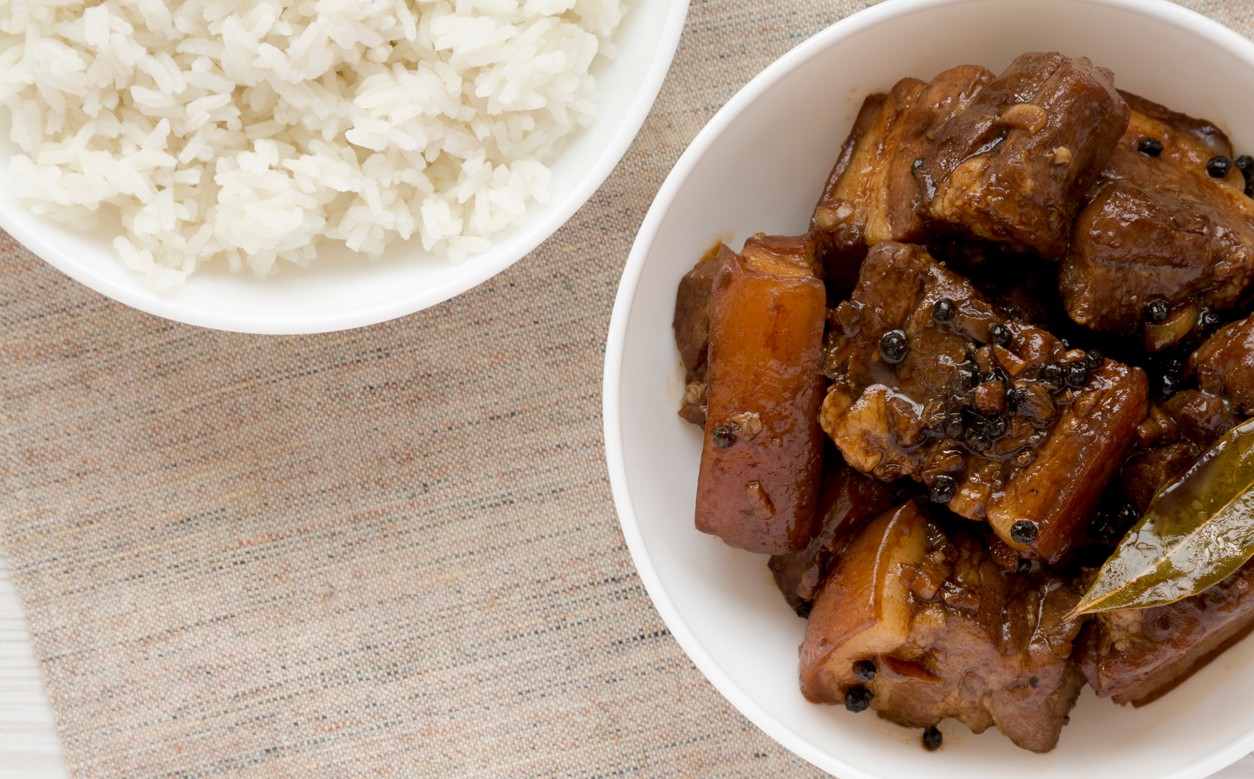
Manila is inseparable from adobo, the Philippines’ national dish of meat—most commonly pork or chicken—braised in vinegar, soy sauce, garlic, and peppercorns. Every household has its own version, and Manila’s interpretations range from deeply traditional to modern and experimental.
Kare-kare, a rich stew of oxtail and tripe in peanut sauce served with fermented shrimp paste (bagoong), is a celebratory dish with pre-colonial roots and Spanish-era refinement. Sinigang, a sour soup traditionally flavoured with tamarind, balances pork, shrimp, or fish with vegetables and is one of the most beloved everyday comfort foods.
Lechon, whole roasted pig with impossibly crisp skin, is a centrepiece of Filipino celebrations, with La Loma in Manila famed for its lechon tradition. Pancit, noodle dishes of Chinese origin such as pancit canton and pancit bihon, are symbolic foods eaten for long life. Halo-halo, a layered shaved-ice dessert topped with sweet beans, fruit, jellies, leche flan, and ube ice cream, is Manila’s answer to tropical heat.
Seasonal and street-side classics include bibingka, rice cake baked in clay pots during Christmas, and balut, the famously divisive fertilised duck egg that remains one of the city’s most iconic street foods.
Everyday Manila & Filipino Food
Daily eating in Manila is centred on rice and sharing. Breakfast might include tapsilog (marinated beef, garlic rice, and egg), pan de sal rolls, or champorado, a comforting chocolate rice porridge. Lunch and dinner typically revolve around rice with multiple ulam (main dishes), eaten family-style.
Rice is present at virtually every meal. Pork dominates the urban table, appearing grilled, stewed, fried, or sweetened. Vinegar is foundational—used not just for flavour but as a preservation technique in the tropical climate. Garlic and onion form the base of most dishes, while coconut milk enriches stews and desserts.
The carinderia—small, affordable eateries serving home-style Filipino cooking—is central to Manila life. These establishments are not tourist curiosities but the backbone of everyday nourishment. Manila’s climate encourages bold, appetite-stimulating flavours: sour, salty, sweet, and umami, often combined in a single dish.
Cultural Fusion: Indigenous Roots, Colonial Layers & Urban Reinvention
Manila’s cuisine is a living record of Filipino history. Indigenous foodways emphasised rice, seafood, vinegar, and fermentation. Spanish rule introduced tomatoes, garlic, onions, stews, and festive cooking. Chinese traders brought noodles, soy sauce, stir-frying, and communal dining traditions.
The American period added processed foods, canned goods, and fast-food culture—elements that Filipinos absorbed and redefined on their own terms. Modern Manila continues this pattern of adaptation, producing a cuisine that is neither purely Asian nor Western, but unmistakably Filipino.
This layered history creates a table where adobo, pancit, fried chicken, and sinigang coexist naturally. Manila’s food culture is not about purity—it is about survival, creativity, and emotional connection, with dishes designed to comfort, sustain, and bring people together.
Craft Beverage Scene and Local Drinks
Manila’s beverage culture mirrors its social energy and tropical setting. San Miguel Beer, particularly Pale Pilsen, is the national drink and a cultural institution, consumed across all social classes.
Calamansi juice, made from the local citrus fruit, is a refreshing staple. Lambanog, distilled coconut wine, is the traditional spirit, particularly outside the capital. Coffee culture is growing, with beans from the Cordillera and Mindanao gaining recognition.
Modern Manila has embraced craft beer, cocktails, and café culture, especially in neighbourhoods like Poblacion and BGC. Traditional drinks such as sago’t gulaman remain popular, while milk tea reflects contemporary Asian influence. What distinguishes Manila is the coexistence of the traditional and the global—often on the same street.
International Dining and Contemporary Scene
While Filipino cuisine remains dominant, Manila’s international dining scene reflects its cosmopolitan nature. Spanish restaurants recall colonial history, while Binondo—home to the world’s oldest Chinatown—offers exceptional Chinese-Filipino food.
American fast-food chains are ubiquitous but uniquely localised, often serving rice with fried chicken or sweet spaghetti. Contemporary Filipino restaurants are redefining national cuisine through refined techniques and regional storytelling, positioning Manila as a rising force in global gastronomy.
Despite luxury dining growth, Manila’s culinary soul remains accessible. Even high-end restaurants often reinterpret humble dishes, and food remains a shared, democratic experience rather than a status symbol.
Food Customs and Practical Tips
Dining in Manila ranges from street stalls to luxury hotels, with service generally warm and accommodating. Tipping is appreciated but not obligatory—around 10% is standard in restaurants.
Rice is always central to the meal; dishes are designed to be eaten with it. Eating by hand (kamayan) is traditional for some dishes and celebratory meals. Try adobo or sinigang from a local carinderia for the most authentic experience.
Explore different neighbourhoods: Binondo for Chinese-Filipino cuisine, Quiapo for street food and everyday Manila life, Poblacion for nightlife and modern dining, Bonifacio Global City for upscale restaurants, and Malate for historic establishments. Consider a food tour to navigate the city efficiently, and always plan meals around traffic.
Manila offers exceptional culinary value, especially at local eateries. Most importantly, embrace the city’s food philosophy: eating is about sharing, generosity, and emotional connection. In Manila, food is not just sustenance—it is memory, survival, and celebration.
This guide covers what to eat in Manila, from adobo and kare-kare to sinigang, lechon, and halo-halo. Use it to plan your culinary exploration of the Philippines’ capital, where every meal reflects centuries of history, cultural fusion, and the unbreakable spirit of Filipino life.
Check monthly weather averages for
Latest Secret Flying deals to Manila
Amsterdam, Netherlands to Manila, Philippines for only €453 roundtrip
Cheap flights from Amsterdam, Netherlands to Manila, Philippines for only €453 roundtrip.
View DealBrussels, Belgium to Manila, Philippines for only €415 roundtrip
Cheap flights from Brussels, Belgium to Manila, Philippines for only €415 roundtrip.
View DealAthens, Greece to Manila, Philippines for only €431 roundtrip
Cheap flights from Athens, Greece to Manila, Philippines for only €431 roundtrip.
View Deal [adblockingdetector id="638efa67113bf"]