


Moscow Food Guide
Food in Moscow: What to Eat & Drink
Moscow’s culinary landscape is a dramatic and constantly evolving story shaped by imperial grandeur, Soviet pragmatism, and a striking modern renaissance. Together, these layers have transformed the Russian capital into one of Europe’s most surprising and sophisticated food cities. As the political and financial heart of Russia, Moscow’s food culture closely mirrors its history, moving from the lavish banquets of the Tsars and the communal canteens of the USSR to today’s globally minded, innovative, and highly competitive restaurant scene. Influenced by its vast hinterland, extreme continental climate, and role as a magnet for talent and wealth, the city’s cuisine has become a rich dialogue between deeply rooted Slavic traditions and cutting-edge international techniques, offering everything from humble street food to some of the world’s most extravagant dining experiences.
Core ingredients such as grains including rye, buckwheat, and wheat; root vegetables like beets, potatoes, and carrots; freshwater fish; cured meats; mushrooms; and dairy products such as smetana and tvorog form the foundation of traditional Moscow cooking. These dishes are defined by their heartiness, reliance on preservation for long winters, and a distinctive balance of sour, salty, and savory flavors. Historically isolated from the sea and shaped by harsh winters, Moscow developed a cuisine built on fermentation, pickling, and cellar storage. In recent decades, however, its emergence as a global metropolis has propelled the city into a new era of culinary creativity. From Soviet-era stolovayas to Michelin-starred restaurants, Moscow offers a food journey that reflects both the soul and ambition of modern Russia.
Local Specialities of Moscow
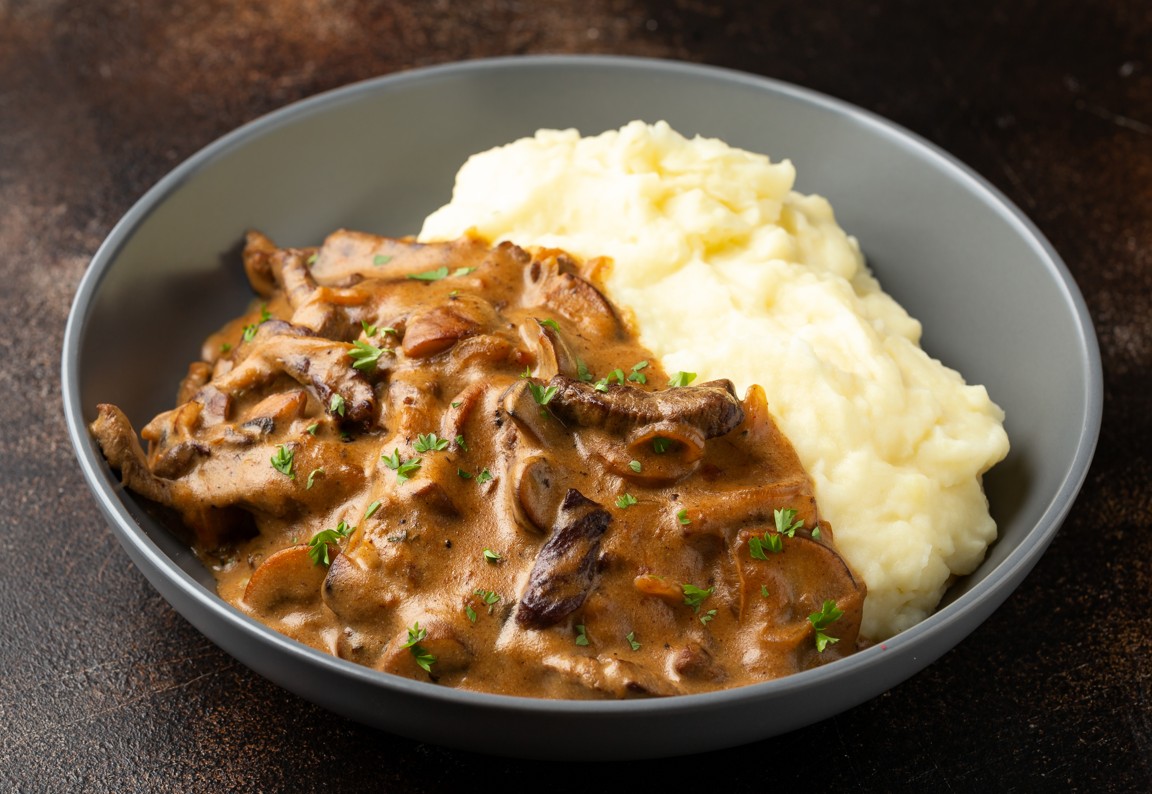
Moscow is closely associated with beef stroganoff, tender strips of beef cooked in a rich sour cream sauce, though the dish’s exact origins remain debated. Another classic is Moscow-style borscht, a hearty beet soup that is often richer and more meat-forward than its Ukrainian counterpart, typically served with smetana and fresh dill.
Kulebyaka is one of the most impressive traditional dishes, an elaborate savory pie layered with fillings such as fish, meat, cabbage, or mushrooms. Okroshka, a refreshing cold soup enjoyed in summer, is made with kvass or kefir and mixed with chopped vegetables, potatoes, eggs, and meat. Seledka pod shuboy, or “herring under a fur coat,” is a beloved layered salad of pickled herring, boiled vegetables, and mayonnaise. Blini, thin pancakes served with toppings ranging from caviar and smetana to jam or tvorog, are a staple across the city. Pelmeni, Siberian meat dumplings, have long been adopted as a Moscow comfort food. Sweet specialties include pastila, a traditional fruit confection often made from apples, and the classic Moscow cake, a layered sponge dessert with creamy frosting. Butterbrod, an open-faced sandwich topped with meats, cheese, or fish, reflects the legacy of Soviet hotel buffets and everyday home cooking.
Everyday Moscow & Russian Food
Breakfast in Moscow often begins with kasha, a warm porridge made from buckwheat, oats, or millet, or syrniki, lightly fried pancakes made from quark. Simple open-faced sandwiches are also common. Lunch is traditionally the main meal of the day and usually starts with soup, such as shchi (cabbage soup) or rassolnik, a pickle-based soup, followed by a meat or fish dish served with potatoes or grechka (buckwheat). Dinner may mirror lunch or be a lighter meal, depending on the household.
Bread, particularly rye, holds a near-sacred place at the table and accompanies almost every meal. Smetana, mayonnaise, and dill are ever-present as condiments and garnishes. In summer, kvas, a lightly fermented rye drink, is widely consumed, while zakuski—a spread of pickles, cured meats, salads, and sometimes caviar—form the heart of any celebration or gathering. Although Moscow’s fast pace has popularized quick business lunches, long, generous dinners with multiple courses and formal toasts remain an important tradition for family events and holidays.
Cultural Fusion: Slavic Foundations, Imperial Influences & Soviet Synthesis
Moscow’s cuisine reflects both its geography and turbulent history. Ancient Slavic traditions laid the groundwork with grains, soups, and fermentation techniques designed for survival in a harsh climate. During the imperial era, French culinary methods and luxury ingredients were introduced, elevating rustic dishes into refined classics and elaborate pies.
The Soviet period reshaped the culinary landscape through standardized public dining in stolovayas, creating a shared Soviet cuisine that blended Russian, Ukrainian, Georgian, and Central Asian influences. Following the collapse of the USSR, Moscow experienced an influx of global ideas alongside a renewed interest in pre-revolutionary recipes. As a result, the city offers a unique culinary experience in which Soviet-era salads, imperial pastries, and modern dishes inspired by global traditions can coexist on the same table. Moscow’s food culture is deeply proud of its past while energetically pushing toward a cosmopolitan future.
Craft Beverage Scene and Local Libations
Moscow’s beverage culture has undergone a dramatic transformation, expanding far beyond its historic association with vodka. While vodka remains the national spirit, traditionally served ice-cold alongside zakuski and accompanied by ritualized toasts, the city has also embraced craft beer, specialty coffee, and inventive cocktails.
The craft beer scene has grown rapidly, with local breweries producing a wide range of high-quality styles. Traditional non-alcoholic and low-alcohol drinks such as mors, made from berries, and kvas remain popular, while sbiten, a hot honey-and-spice drink, is enjoyed in winter. Medovukha, a fermented honey beverage, has also seen a revival. Georgian wines, particularly bold reds, are especially popular and widely available. What truly sets Moscow apart today is the sophistication of its cocktail bars, many of which reinterpret classic Russian flavors using local ingredients and modern techniques.
International Dining and the Contemporary Scene
While traditional Russian cuisine provides a strong foundation, Moscow has firmly established itself as a world-class international dining destination. The city is renowned for its outstanding Georgian restaurants, often considered the best outside Georgia itself, as well as excellent Uzbek, Caucasian, European, and Asian establishments.
Modern Russian fine dining stands at the pinnacle of the scene, with acclaimed restaurants presenting hyper-local, ingredient-driven tasting menus that reinterpret Russian terroir in imaginative ways. At the same time, Moscow’s culinary soul remains alive in its stolovayas, blini cafés, and bustling food markets. The contrast between uncompromising luxury and affordable tradition defines the city’s food culture, making it both exciting and accessible.
Food Customs and Practical Tips
Dining in Moscow ranges from highly formal to casual and efficient. Service in traditional establishments may appear stern but is typically professional and direct, while high-end restaurants offer polished and attentive hospitality. Tipping is now customary, with 10 to 15 percent generally expected.
If invited to a local home, bringing a small gift is customary. During a zakuski spread, it is polite to sample a bit of everything, and refusing a toast at a festive gathering is considered impolite. Visiting a traditional stolovaya offers an authentic and affordable glimpse into Soviet-era dining, while blini are best enjoyed at a dedicated blinnaya.
Exploring different neighborhoods enhances the experience. The city center and Kitay-Gorod are known for historic cafés and upscale dining, Patriarch’s Ponds and Tverskaya offer trendy modern restaurants, and Arbat features traditional options aimed at visitors. Balance visits to legendary institutions with newer avant-garde venues, and consider a food tour of Danilovsky Market to sample cuisines from across the former USSR. While top-tier restaurants can be expensive, Moscow also offers excellent food at reasonable prices. Above all, embrace the city’s culinary spirit: a story of endurance, celebration, and bold ambition to redefine Russian cuisine for the modern world.
This guide covers what to eat in Moscow, from borscht and beef stroganoff to blini, pelmeni, and classic Russian specialties. Use it to plan a culinary exploration of a city where history is served on the plate and the future is actively being tasted.
Check monthly weather averages for
Latest Secret Flying deals to Moscow
Business Class from Tokyo, Japan to Moscow, Russia for only $1406 USD roundtrip (lie-flat seats)
Business Class flights from Tokyo, Japan to Moscow, Russia for only $1406 USD roundtrip with Hainan Airlines.
View DealHong Kong to Moscow, Russia for only $474 USD roundtrip (Mar-May dates)
Cheap flights from Hong Kong to Moscow, Russia for only $474 USD roundtrip with Emirates.
View DealNon-stop from Astana, Kazakhstan to Moscow, Russia for only $250 USD roundtrip (Jan-Oct dates)
Non-stop flights from Astana, Kazakhstan to Moscow, Russia for only $250 USD roundtrip.
View Deal [adblockingdetector id="638efa67113bf"]