


Mumbai Food Guide
Food in Mumbai: What to Eat & Drink
Mumbai’s culinary landscape is a thrilling, chaotic, and deeply flavorful reflection of India’s extraordinary diversity. It is a city where hunger and ambition coexist, where meals are grabbed on the run yet remembered for a lifetime. As India’s financial capital and a historic port city, Mumbai has developed a food culture that is unapologetically democratic, fiercely innovative, and shaped by waves of migration from every corner of the subcontinent. Street food lies at its heart, powering a 24-hour city with bold flavors, sharp contrasts, and ingenious hybrids. Here, ancient recipes collide with the frantic pace of modern life, and a single meal can tell stories of Parsi settlers, Marathi fishermen, Gujarati traders, and Bohra Muslims.
Core ingredients such as rice, wheat, lentils, coconut, seafood, peanuts, and an astonishing variety of spices form the foundation of Mumbai’s multifaceted cuisine. Dishes are defined by explosive combinations of sweet, sour, spicy, and tangy flavors, often served in portable formats designed for life on the move. Mumbai’s geography as a chain of islands reclaimed from the sea, combined with its tropical climate, strongly shapes its food culture. Fresh seafood from the Arabian Sea meets vegetarian traditions from the hinterlands, all consumed amid colonial-era buildings and towering skyscrapers. From legendary street carts in Girgaon to century-old Irani cafés and glittering fine-dining rooms, Mumbai offers a culinary journey rooted as much in survival and hustle as in pleasure and community.
Local Specialities of Mumbai
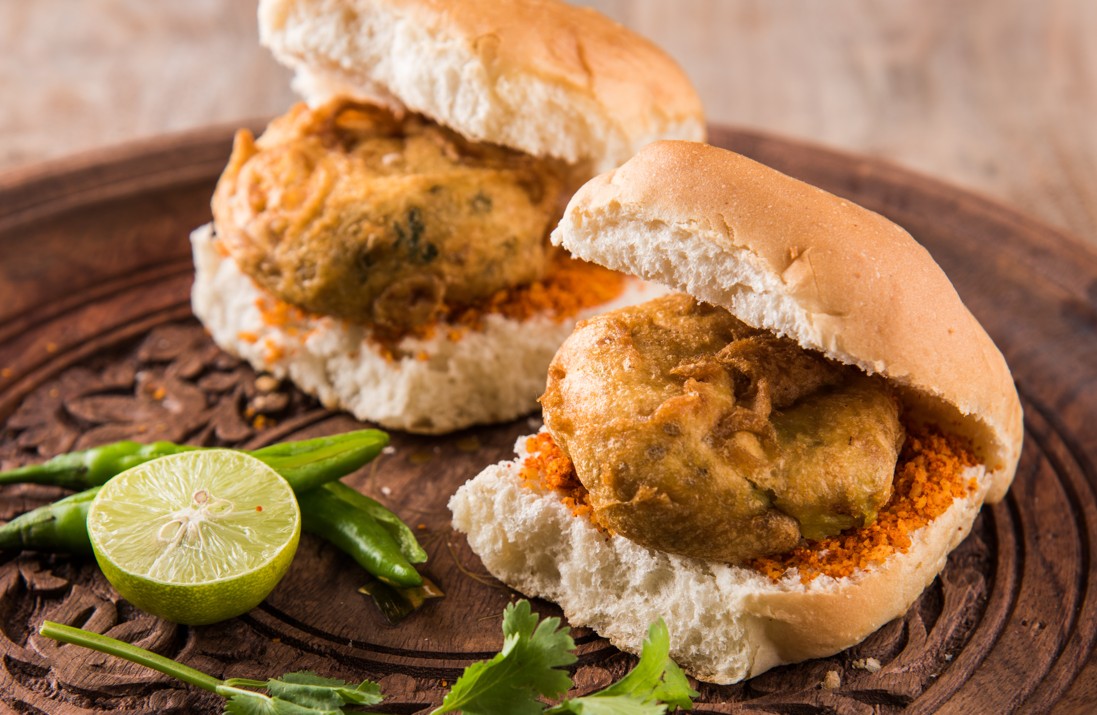
Mumbai is the undisputed home of vada pav, the city’s most iconic street food. A spiced potato fritter, or batata vada, is tucked into a soft bread roll and layered with chutneys, earning it the nickname “India’s burger.” Equally beloved is the Bombay sandwich, a grilled vegetarian creation filled with boiled potatoes, cucumbers, beets, and chutneys between buttered slices of soft bread.
Pav bhaji is a true Mumbai invention, consisting of a rich, buttery mash of spiced vegetables served with toasted bread rolls. Chaat favorites such as bhel puri and sev puri combine crisp puris, puffed rice, potatoes, chutneys, and crunchy sev for a burst of texture and flavor. Ragda pattice pairs spicy yellow pea curry with fried potato patties, while misal pav delivers intense heat through sprouted lentils topped with crispy farsan and served with bread. Bombay duck, locally known as bombil, is a much-loved fish, often fried until crisp or cooked in curries. From the city’s Parsi community come dishes such as dhansak, a sweet-and-sour lentil and meat stew served with caramelized rice, akuri, spiced scrambled eggs on toast, and kheema pav, minced meat paired with buttery bread. Desserts and bakery items from Irani cafés, including mawa cakes and brun maska, remain deeply nostalgic staples.
Everyday Mumbai & Maharashtrian Food
Breakfast in Mumbai is typically quick and filling, often consisting of poha, flattened rice cooked with turmeric and peanuts, or upma, a savory semolina dish, grabbed from a street vendor. Lunch is commonly a thali, a complete platter of rice, bread, lentils, vegetables, and curries, or a packed tiffin delivered by the legendary dabbawalas. Dinner varies widely, ranging from simple home-cooked Maharashtrian meals to ordering in or eating out.
Seafood such as pomfret, prawns, crab, and bombil is a daily staple for many, particularly in coastal communities. Pav, the humble bread roll, is the city’s preferred carbohydrate and accompanies countless dishes. Cutting chai, a small glass of strong, sweet, milky tea, fuels the city throughout the day and is consumed multiple times daily. Chaat culture is omnipresent, offering quick, flavorful energy in between work and travel. Mumbai’s relentless pace means food is fast, affordable, and intensely seasoned, designed to be eaten standing up, on crowded trains, or at shared tables in bustling khanavals.
Cultural Fusion: Marathi Roots, Gujarati Influence, Parsi Legacy & Pan-Indian Migration
Mumbai’s cuisine is anchored in coastal Maharashtrian traditions built around rice, fish, and coconut. A significant Gujarati population introduced a sweeter palate and a wealth of vegetarian snacks and farsan. The Parsi community, which settled in the city centuries ago, contributed distinctive meat dishes, egg-based recipes, and the enduring Irani café culture.
South Indian migrants brought idli, dosa, and filter coffee stalls, while North Indian influences appear in kebabs, breads, and rich curries. British colonial rule introduced bakery traditions and the ritual of tea time. The result is a uniquely Mumbai food culture in which a Maharashtrian seafood curry, a Gujarati chaat, a Parsi dish, and South Indian coffee can all fit seamlessly into one day. In Mumbai, hunger is the city’s most widely spoken language.
Craft Beverage Scene and Local Libations
Mumbai’s beverage culture revolves around daily non-alcoholic rituals, alongside a growing cocktail scene and the lingering influence of colonial-era clubs. Cutting chai is the city’s lifeblood, served at every corner and woven into daily routines.
Filter coffee from South Indian cafés remains popular, as do refreshing drinks such as nimbu pani, kokum sherbet, and sol kadhi, a cooling blend of kokum and coconut milk. Lassi and chaas are widely consumed, particularly in warmer months. Among alcoholic drinks, classic Indian spirits such as rum and locally produced whiskies are common, while modern cocktail bars increasingly showcase local spices and regional ingredients. What truly distinguishes Mumbai is its chai culture, which acts as social glue, caffeine fix, and brief moment of pause amid the city’s relentless energy.
International Dining and Contemporary Scene
While street food defines Mumbai’s soul, the city is also India’s most international dining destination. It offers exceptional five-star hotel restaurants, authentic regional cuisines from every Indian state, and high-quality Italian, Japanese, Chinese, and Middle Eastern dining.
Modern Indian fine dining is flourishing, with chefs reinterpreting traditional dishes and highlighting local produce through contemporary techniques. Despite the glamour, Mumbai’s true culinary heart remains in its crowded streets and no-frills, family-run establishments that have served the same dishes for generations. The city’s food scene mirrors India itself: immensely diverse, full of contrasts, and powered by unstoppable creativity. What sets Mumbai apart is its accessibility and democratic spirit, where billionaires and taxi drivers queue side by side for the same vada pav.
Food Customs and Practical Tips
Dining in Mumbai is immersive, energetic, and sometimes overwhelming. Hygiene standards for street food vary, so it is best to choose busy stalls with high turnover. In restaurants, a 10 percent tip is customary. Eating with the right hand is common, particularly for street food and traditional meals.
Those new to Mumbai’s street food should start with milder options such as vada pav or dosa before moving on to spicier chaat. Visiting an Irani café offers a nostalgic glimpse into old Bombay, while khau gallis, or dedicated food lanes, provide concentrated street food experiences. Exploring different neighborhoods adds depth to any food journey: South Mumbai for historic cafés and Parsi cuisine, Bandra for modern cafés and nightlife, Juhu for beachside snacks and Gujarati food, and Matunga for South Indian vegetarian classics. Guided food walks through areas such as Bhuleshwar or Mohammed Ali Road, especially during Ramadan, offer exceptional insight into the city’s culinary layers.
Mumbai delivers extraordinary value, with unforgettable meals available at almost any price point. Above all, embrace the city’s culinary spirit. Here, food is necessity, comfort, celebration, and adventure all at once, and the most delicious expression of Mumbai’s relentless, beautiful chaos.
This guide covers what to eat in Mumbai, from vada pav and pav bhaji to bhel puri, Bombay duck, and Parsi dhansak. Use it to plan your culinary exploration of India’s dynamic, flavor-packed maximum city.
Check monthly weather averages for
Latest Secret Flying deals to Mumbai
Bucharest, Romania to Mumbai, India for only €397 roundtrip
Cheap flights from Bucharest, Romania to Mumbai, India for only €397 roundtrip with British Airways.
View DealDoha, Qatar to Mumbai, India for only $236 USD roundtrip
Cheap flights from Doha, Qatar to Mumbai, India for only $236 USD roundtrip.
View DealIstanbul, Turkey to Mumbai, India for only €283 roundtrip
Cheap flights from Istanbul, Turkey to Mumbai, India for only €283 roundtrip.
View Deal [adblockingdetector id="638efa67113bf"]