


Penang Food Guide
Food in Penang: What to Eat & Drink
Penang’s culinary landscape is a vibrant, aromatic, and fiercely competitive expression of Malaysia’s most celebrated food paradise, where Chinese, Malay, Indian, and Peranakan (Nyonya) traditions have simmered together for centuries. Often described as the country’s gastronomic capital, Penang has built a food identity that is proudly local, obsessively detailed, and democratically enjoyed at humble plastic tables under the tropical night sky. As a former British Straits Settlement and today a UNESCO World Heritage site centered on George Town, the island’s cuisine reflects its role as a historic trading hub, shaped by migration, commerce, and an unwavering devotion to flavor.
Penang’s food is defined by balance and intensity. Sweet, sour, spicy, salty, and umami elements frequently coexist in a single dish, carefully calibrated rather than overwhelming. Core ingredients such as rice, noodles, coconut milk, tamarind, chili, shrimp paste, fresh seafood, and an extensive palette of herbs and spices form the foundation of its multi-ethnic cooking. Many dishes rely on complex, labor-intensive pastes and stocks, while wok hei, the elusive “breath of the wok,” is treated as a mark of mastery. The island’s geography provides abundant seafood, while its hinterland supplies fruit and vegetables, but the true soul of Penang lives in the bustling streets of George Town, where cooking is competitive, opinionated, and taken extremely seriously.
Local Specialities of Penang
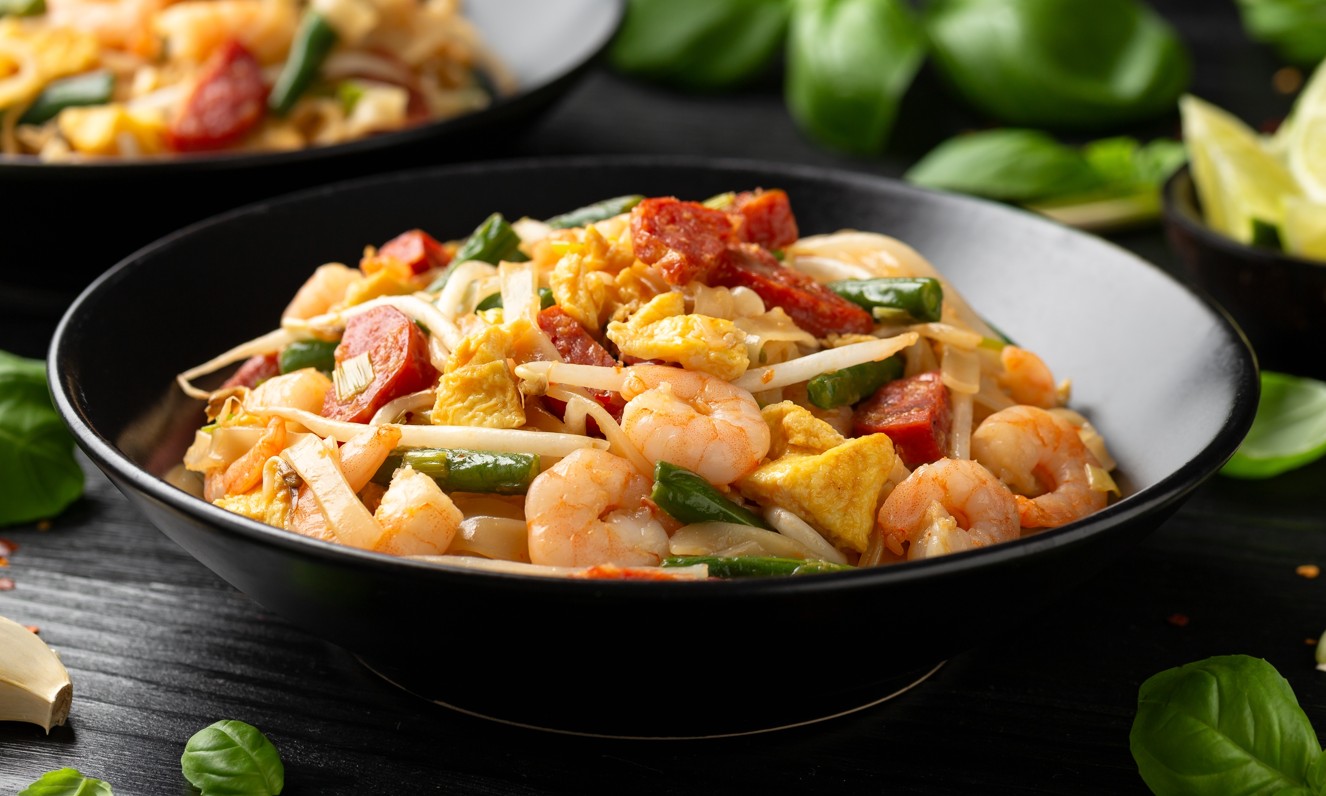
Penang is world-famous for char kway teow, flat rice noodles stir-fried over ferocious heat with shrimp, cockles, Chinese sausage, egg, and bean sprouts, seasoned with dark soy and chili. The goal is intense smokiness and depth, achieved only through experience and precise control of heat. Equally iconic is Penang assam laksa, a sour, spicy noodle soup built on a fish-based broth thickened with tamarind, mackerel, lemongrass, and chili, served with rice noodles, herbs, and pungent shrimp paste.
Hokkien mee, in Penang style, features yellow noodles and rice vermicelli in a rich prawn and pork broth. Nasi kandar, introduced by Indian Muslim traders, consists of steamed rice topped with a selection of richly spiced curries and side dishes, often mixed together for maximum flavor. Roti canai, a flaky, griddle-fried flatbread served with dhal or curry, is a staple breakfast and late-night food.
Penang’s desserts are equally distinctive. Cendol is the island’s most beloved sweet, combining shaved ice, green rice-flour jelly, red beans, coconut milk, and palm sugar syrup. Oh chien, a savory oyster omelette, balances crisp edges with soft, custardy interiors. Pasembur is a mixed salad of vegetables, tofu, and seafood dressed in a sweet-spicy peanut sauce. Curry mee offers a coconut milk-based noodle soup with cockles, tofu, and cuttlefish, while colorful Nyonya kuih showcase Peranakan desserts made from rice flour, coconut, and pandan.
Everyday Penang and Malaysian Food
Daily eating in Penang revolves almost entirely around hawker food. Breakfast may be roti canai, kaya toast with half-boiled eggs, or a bowl of noodles. Lunch is often the most substantial meal of the day, taken at a hawker center or kopitiam, with one or two rice or noodle dishes. Dinner frequently involves visiting several stalls in succession, sampling different specialties in what locals happily describe as a makan crawl.
Hawker culture is central to daily life, and eating out is often cheaper, faster, and better than cooking at home. Kopitiams serve as neighborhood gathering places, offering food throughout the day alongside strong, sweet coffee or tea. Meals are typically shared, with multiple dishes ordered for the table. The heat and humidity encourage bold flavors and frequent iced drinks, and locals are famously opinionated, debating the best version of any dish with unwavering conviction.
Cultural Fusion and Culinary Identity
Penang’s cuisine is the product of sustained cultural exchange. Peranakan or Nyonya cooking emerged from marriages between early Chinese settlers and local Malays, blending Chinese techniques with Malay ingredients and spice pastes. Different Chinese dialect groups, including Hokkien, Teochew, and Cantonese communities, introduced their own noodle, soup, and stir-fry traditions.
Indian Muslim influence is especially strong, visible in nasi kandar, roti canai, and spiced gravies. Over time, these influences blended into a unified food culture in which diverse dishes are not seen as foreign but as fundamentally Penangite. The result is a culinary democracy where people from all backgrounds queue together at the same hawker stall, united by the pursuit of the best possible plate of food.
Beverages and Local Drinks
Penang’s beverage culture is refreshingly straightforward, focused on classic kopitiam drinks and fresh juices designed to cut through spice and heat. Local coffee, known as kopi, is roasted with sugar and margarine, producing a thick, intense brew served hot or iced. Teh tarik, frothy pulled milk tea, is another everyday staple.
White coffee, originally associated with Ipoh but common in Penang, offers a gentler, creamier profile. Fresh sugarcane juice, sour plum juice, and nutmeg juice are popular cooling drinks, while shaved ice desserts such as cendol and ais kacang blur the line between beverage and dessert. Beer is the most common alcoholic drink, widely available at hawker centers and casual bars. Craft beer and cocktail culture remain limited, with the emphasis firmly on refreshment rather than experimentation.
International Dining and the Contemporary Scene
Although street food dominates, George Town’s cosmopolitan history and steady tourism have encouraged a diverse dining scene. Thai, Japanese, Korean, Western, and modern fusion restaurants can be found throughout the city, often housed in beautifully restored heritage shophouses.
Contemporary Malaysian and Nyonya fine dining is slowly emerging, presenting refined versions of classic dishes in more formal settings. However, the heart of Penang’s food culture remains resolutely on the street. Here, culinary progress is less about reinvention and more about preservation and incremental perfection, with hawkers dedicating decades to mastering a single dish.
Food Customs and Practical Tips
Dining at hawker centers is extremely casual. Find a seat, sometimes sharing a table, note your table number, and order directly from individual stalls. Payment is usually made when the food is served. Tipping is not expected, and utensils are typically provided.
Queues are a reliable indicator of quality, and busy stalls generally maintain good hygiene. Exploring multiple hawker centers provides the fullest experience, from well-known areas like Gurney Drive to smaller neighborhood clusters. Dressing lightly and staying hydrated is essential in the tropical climate.
Penang offers remarkable value, with some of the world’s most acclaimed street food available for just a few dollars. More than anything, Penang’s culinary spirit rewards curiosity and appetite. Eating here is not simply about sustenance but about participating in a living food culture where flavor, memory, and pride converge at every table.
This guide covers what to eat in Penang, from char kway teow and assam laksa to nasi kandar, cendol, and Nyonya specialties, helping you plan a memorable culinary journey through Malaysia’s most food-obsessed island.
Check monthly weather averages for
Latest Secret Flying deals to Penang
Perth, Australia to Penang, Malaysia for only $350 AUD roundtrip
Cheap flights from Perth, Australia to Penang, Malaysia for only $350 AUD roundtrip.
View DealLondon, UK to Penang, Malaysia for only £328 roundtrip
Cheap flights from London, UK to Penang, Malaysia for only £328 roundtrip.
View DealDelhi, India to Penang, Malaysia for only $248 USD roundtrip
Cheap flights from Delhi, India to Penang, Malaysia for only $248 USD roundtrip with Singapore Airlines.
View Deal [adblockingdetector id="638efa67113bf"]