


Prague Food Guide
Food in Prague: What to Eat & Drink
Prague’s culinary landscape is a hearty, comforting, and historically rich expression of Bohemia, where medieval tavern culture, Austro-Hungarian refinement, and decades of communist-era pragmatism have simmered together to create a cuisine of substantial delights. As the fairy-tale capital of the Czech Republic, Prague has developed a food culture that is deeply rooted in meat, dumplings, and gravy, yet is undergoing a remarkable renaissance, with a new generation rediscovering local ingredients and modern techniques. Shaped by its landlocked position in Central Europe, its history as a royal capital, and the indelible influence of 40 years of socialism, the city’s cuisine is a satisfying blend of rustic peasant food, classic café culture, and an exciting wave of contemporary bistros and craft beer pubs.
Core ingredients like pork, beef, duck, cabbage, potatoes, flour, caraway, and dill form the foundation of Czech cooking. Dishes are characterized by hearty portions, mastery of braising and roasting, and the sacred combination of a meaty main, a starch (dumplings or potatoes), and a rich sauce or gravy. Prague’s geography in the Vltava River valley provides fertile farmland but no sea, making freshwater fish and preserved meats important. Its identity is one of Gothic spires, cosy pubs (hospoda), and long conversations over a perfectly poured beer. From smoky beer halls in the Old Town to modern restaurants in Karlín and Vinohrady, Prague offers a culinary journey from medieval comfort to modern reinvention.
Local Specialities of Prague
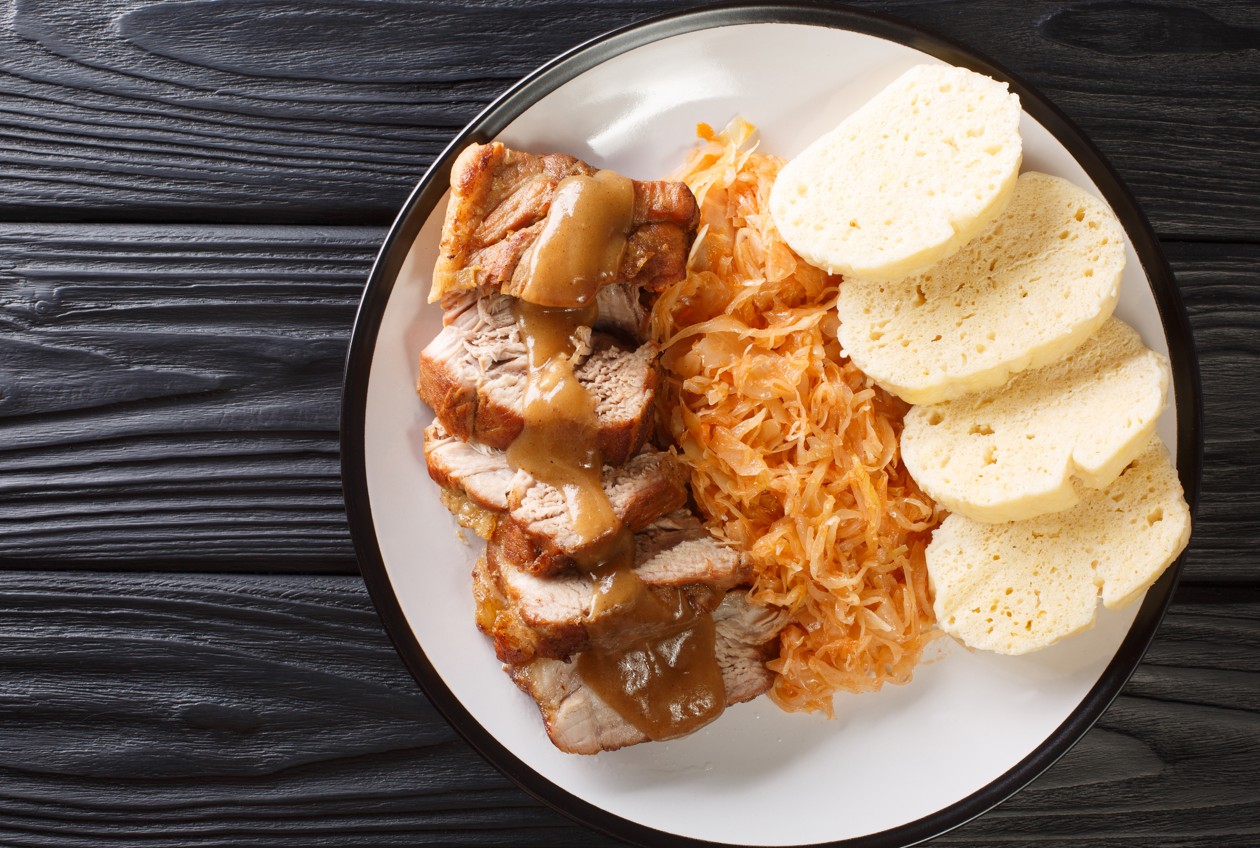
Prague is synonymous with Vepřo Knedlo Zelo, the national dish of roast pork, bread dumplings, and stewed sauerkraut. Svíčková na Smetaně is another essential classic: marinated sirloin served in a creamy vegetable sauce with dumplings, cranberry compote, and a slice of lemon.
Guláš, the Czech interpretation of goulash, is darker and thicker than the Hungarian version and usually served with dumplings or bread. Kulajda is a rich soup of mushrooms, potatoes, dill, cream, and a poached egg. Utopenec (“drowned man”) is a pickled sausage commonly enjoyed as a beer snack. Nakládaný Hermelín is marinated camembert-style cheese served with bread. Pražská Šunka (Prague ham) is a high-quality cured ham often roasted and sliced to order. Smažený Sýr, fried cheese served with potatoes or in a bun, is a beloved pub staple. Koláče are sweet yeast pastries filled with fruit, poppy seeds, or quark. Palačinky are thin pancakes with jam or ice cream. Trdelník, while not historically Czech, is now a ubiquitous sweet street treat.
Everyday Prague & Czech Food
Breakfast is typically light, often bread with butter, cheese, or ham, or a simple pastry. Lunch is the main meal of the day, usually consisting of soup followed by a substantial meat-and-dumplings dish. Dinner can be similar or lighter, sometimes just pub food or a smaller plate.
Beer (pivo) is central to daily life and accompanies meals at all hours. The pub (hospoda or pivnice) is the city’s social heart. Soup is a standard first course, and bread is always on the table. Czech cuisine is designed for cold winters, with summer bringing beer gardens and slightly lighter dishes. Meals are unhurried and deeply social.
Cultural Foundations and Historical Influence
Czech cuisine has Slavic roots based on grains, fermentation, and stews. Centuries under the Austro-Hungarian Empire introduced refined sauces, pastries, and café culture. The communist era simplified the food landscape, emphasizing filling, standardized meals, which reinforced the dominance of meat, dumplings, and gravy.
Since the Velvet Revolution, Prague has seen a revival of pre-war recipes, renewed pride in regional ingredients, and a growing appreciation for culinary craftsmanship. Today, the city’s food scene blends medieval taverns, imperial cafés, and modern bistros into a cohesive and evolving culinary identity.
Craft Beverage Scene and Local Libations
Prague is the undisputed world capital of beer, with the Czech Republic holding the highest beer consumption per capita globally. The city is the birthplace of the Pilsner style, with icons like Pilsner Urquell and Budvar served fresh and unpasteurized in many pubs.
The craft beer scene is thriving, with microbreweries and taprooms throughout the city. Becherovka, a herbal bitter, is the classic digestif, while Slivovice (plum brandy) and other fruit spirits are popular. Moravian wine, especially white varieties, is increasingly appreciated. Prague also boasts a strong coffee culture, combining grand historic cafés with modern specialty roasters.
International Dining and Contemporary Scene
While traditional Czech food anchors the city, Prague offers excellent international dining, including notable Vietnamese cuisine, Italian, French, and modern Asian restaurants.
Modern Czech cuisine is one of the city’s most exciting developments, with chefs reinterpreting classic flavors using seasonal, local produce. Neighborhoods such as Karlín and Holešovice are at the forefront of this movement. Despite this innovation, the soul of Prague’s dining culture remains in its historic pubs, beer halls, and cafés.
Food Customs and Practical Tips
Dining in Prague is casual and communal, particularly in pubs where table sharing is common. Service can be efficient and direct. Tipping is customary; rounding up or adding 5–10% is standard and usually done verbally when paying.
Always order beer with your meal; it is expected and often cheaper than water. Learn basic beer terms such as světlé (light), tmavé (dark), and nefiltrované (unfiltered). For authentic food, avoid menus aimed at tourists around Old Town Square and seek out local pubs filled with Czech speakers.
Explore different neighborhoods: Old Town and Lesser Town for historic settings; Vinohrady and Žižkov for local pubs and casual dining; Karlín and Holešovice for modern Czech cuisine and craft beer bars. Prague offers excellent value, particularly for beer and traditional dishes. Most importantly, embrace Prague’s culinary spirit: warm, convivial, and deeply satisfying, built around shared tables, comforting food, and one of the finest beer cultures in the world.
This guide covers what to eat in Prague, from Vepřo Knedlo Zelo and Svíčková to Guláš, traditional soups, and Czech beer culture. Use it to plan your culinary exploration of the heart of Bohemia.
Check monthly weather averages for
Latest Secret Flying deals to Prague
Seattle to Prague, Czech Republic for only $485 roundtrip
Cheap flights from Seattle to Prague, Czech Republic for only $485 roundtrip.
View Deal🔥 Krabi, Thailand to European cities from only $171 USD one-way
Cheap flights from Krabi, Thailand to European cities from only $171 USD one-way with Etihad Airways.
View DealNew York to Prague, Czech Republic for only $382 roundtrip
Cheap flights from New York to Prague, Czech Republic for only $382 roundtrip.
View Deal [adblockingdetector id="638efa67113bf"]