


Réunion Food Guide
Food in Réunion: What to Eat & Drink
Réunion’s culinary landscape is a volcanic, aromatic, and profoundly creolized expression of the Indian Ocean’s melting pot, where French foundations, Malagasy and African heritage, and the spice-trade influences of Tamil, Chinese, and Gujarati communities combine into a cuisine defined by bold fusion, deep comfort, and a communal rhythm built around rice (riz), slow-simmered carris, and fiery rougails. As a French overseas department on a remote island shaped by plantation history, indentured labor, and extraordinary cultural mixing, Réunion developed a food culture that is administratively French yet unmistakably Créole Réunionnais in spirit—intense, generous, and perfumed with ginger, garlic, turmeric, and chili. Shaped by dramatic volcanic terrain, rich coastal waters, and an unmatched patchwork of microclimates, Réunionese cuisine celebrates rice and beans, fresh seafood, smoked meats, tropical fruit, and an agile spice palette, served everywhere from roadside snacks to family-run tables d’hôtes in the hills. This is an island where food is the most delicious expression of métissage (cultural mixing), and where a single table can naturally hold Tamil-inspired curries, Chinese-style dumplings, and French pastries—unified by Creole heat and hospitality.
Core ingredients reflect Réunion’s fertile volcanic soil and maritime position: rice (the essential staple), beans and pulses (especially haricots rouges and lentilles), fresh seafood (tuna, bonito, swordfish, octopus), smoked meats (boucané—often pork, but also chicken or fish), pork and chicken, chayote (chouchou), breadfruit (fruit à pain), manioc, tomatoes, onions, garlic, ginger, and turmeric (safran péi), plus thyme and the indispensable piment (chili). Dishes are typically aromatic and saucy, often quite spicy, and designed to be mixed with rice. Réunion’s rugged interior and coral-fringed coast create diverse local produce, from vanilla and sugarcane to lychees and pineapple. From a bustling snack in Saint-Denis to a relaxed table d’hôte dinner in the cirques, eating in Réunion is a journey through spice, history, and Creole harmony.
Local Specialties of Réunion
Réunion’s signature food is rooted in everyday Creole home cooking, organized around the carri. A carri is not “curry” in the Indian sense, but a distinctly Réunionese stew of meat, fish, or vegetables, simmered with tomatoes, onions, garlic, ginger, turmeric, and thyme, and served with white rice (often alongside beans and condiments).
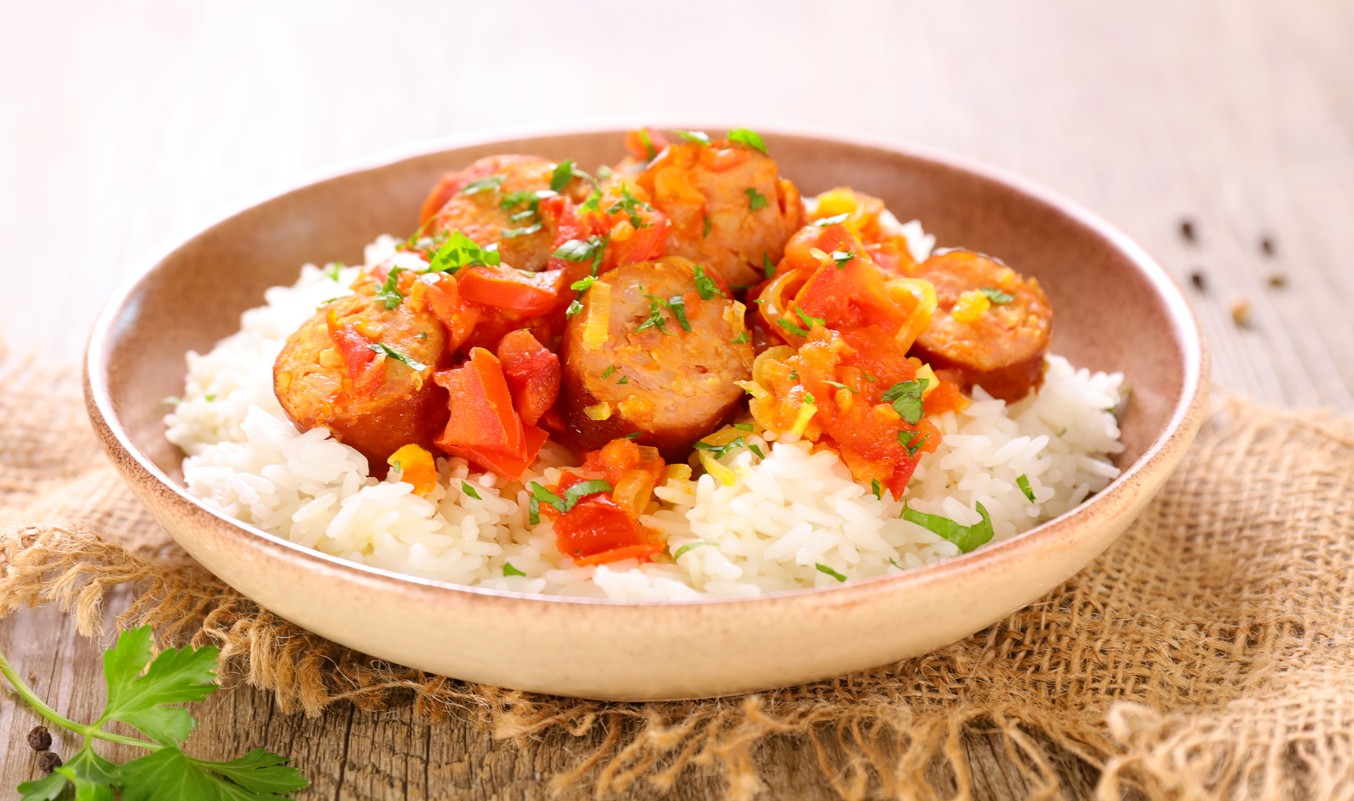
Rougail is the essential fiery accompaniment: a coarse relish of tomatoes, onions, ginger, and chilies, or sometimes made “with” an ingredient such as smoked meat (rougail boucané) or sausage (rougail saucisse). Rougail Saucisse is the island’s most iconic dish for many visitors—smoked sausages stewed in a tomato-based rougail sauce, spicy and intensely savory.
Cari Poulet (chicken) and Cari Poisson (fish) are common staples, while Boucané refers to hot-smoked meats (often pork) smoked over sugarcane wood. For quick bites, look for Bouchons, small steamed dumplings (Chinese influence), typically filled with pork and eaten with chili sauce or soy-based condiments. Samoussas are beloved triangular fried pastries filled with spiced meat, cheese, or vegetables, and Bonbon Piment are fried lentil fritters that make the perfect snack with a cold drink. In season, letchis (lychees) are everywhere, and Vanille de Bourbon (Bourbon vanilla) flavors desserts, coffee, and rum infusions.
Everyday Réunion & Creole Food
Breakfast (petit déjeuner) can be French-style (croissant, baguette, coffee) or Creole (rice with beans, sausage, or leftovers from a carri). Lunch is traditionally the main meal and is often built around a carri served with rice, beans (grains), and a rougail. The goûter (afternoon snack) matters, especially for pastries, fruit, or small fried bites. Dinner may be lighter or another shared Creole meal, especially in family settings.
Everyday eating revolves around a colorful, generous assiette créole—rice plus one or more stewed dishes, beans, and condiments in a mosaic that is meant to be mixed. The culture of the snack (small casual eatery), the casse-croûte (roadside shack), the table d’hôte (family guesthouse meals), and the ever-present boulangerie is central. Meals are social and unhurried, often accompanied by fresh juice, local beer, or a small rum.
Cultural Fusion: French Framework, Malagasy & African Heritage, Tamil, Chinese & Gujarati Influence
Réunion’s culinary base began with the practical foods of early settlers and enslaved African and Malagasy communities—rice, beans, smoked meats, and stews designed to feed many. The 19th-century arrival of indentured laborers transformed the island’s flavor vocabulary: Tamils brought spice blending and vegetarian preparations; Chinese migrants contributed dumplings, stir-frying, and noodle culture; Gujaratis added fritters, sweets, and distinct spice profiles.
These influences blended into a unified Creole repertoire, shaped also by a French structure of meals and the presence of bread, pastry, and café habits. The result is not “international food” sitting side by side, but a fully integrated cuisine where Chinese, Indian, Malagasy, African, and French elements are Creole by default—anchored by chili, ginger, garlic, and the island’s love of sauce and rice.
Craft Beverage Scene and Local Libations
Réunion’s beverage culture is tropical, convivial, and often rum-forward. The signature is Rhum Arrangé, rum infused with local fruits (vanilla, lychee, passion fruit, pineapple), spices, or herbs, aged in jars for months or years and served as a digestif. Families and small producers take real pride in their infusions.
Dodo is the iconic local lager—light, refreshing, and perfect in the heat. Fresh fruit juices are outstanding, including sugarcane, guava, passion fruit, and pineapple. Punch Coco (rum with coconut milk, often with lime) is a classic sweet cocktail. French wine is widely available due to Réunion’s department status, while strong espresso-style coffee is the default end to a meal. What distinguishes Réunion is the ritual of sharing a house-made rhum arrangé and the ease of pairing spicy Creole food with simple, cold refreshment.
International Dining and Contemporary Scene
As a French overseas department, Réunion has excellent bakeries, bistros, pizzerias, and cafés that feel close to mainland standards, especially in Saint-Denis and larger towns. You will also find strong Chinese and Indian dining, often run by long-established local communities, reflecting how deeply those food traditions are woven into everyday island life.
A small but growing modern “Cuisine Réunionnaise” movement applies fine-dining techniques to local ingredients, elevating traditional flavors with refined presentation. Still, the true culinary heart remains in everyday Creole cooking—snacks, markets, family kitchens, and tables d’hôtes—where the island’s fusion is most authentic, generous, and alive.
Food Customs and Practical Tips
Dress is casual, though beachwear is best kept for the beach. Tipping is not customary, but small gestures are appreciated for excellent service. Lunch is the primary meal, and many places close between lunch and dinner. When ordering, always clarify spice level (pimenté or non pimenté)—Réunion can be seriously hot.
For an authentic experience, order an assiette créole at a local snack. Try a table d’hôte dinner in the cirques or small villages for communal, home-style cooking. Do not leave without eating rougail saucisse, and snack often on samoussas, bouchons, and bonbon piment from market stalls. If you can, visit the Saint-Paul market (Friday or Saturday morning) for an exceptional showcase of produce, spices, and street food.
Explore by area: Saint-Denis for the widest variety and a strong bakery/bistro scene; Saint-Pierre for lively seafront dining; the Cirques (Cilaos, Salazie, Mafate) for mountain specialties and memorable tables d’hôtes; and Saint-Gilles-les-Bains for more tourist-oriented beachfront options. Carry cash for smaller snacks and markets, start mild with spice if you are unsure, and embrace the island’s defining culinary trait: warm, communal, boldly mixed heritage expressed through unapologetically flavorful food.
This guide covers what to eat in Réunion Island, from carris and rougails to boucané, samoussas, rhum arrangé, and Dodo beer. Use it to plan your culinary journey into one of the Indian Ocean’s most distinctive Creole cuisines.
Check monthly weather averages for
Latest Secret Flying deals to Réunion
Non-stop from Paris, France to Reunion for only €422 roundtrip
Non-stop flights from Paris, France to Reunion for only €422 roundtrip with Air France.
View DealFrench cities to Reunion from only €280 roundtrip (Nov-Jun dates)
Cheap flights from French cities to Reunion from only €280 roundtrip with Air France.
View DealNew York to Reunion for only $724 roundtrip
Cheap flights from New York to Reunion for only $724 roundtrip.
View Deal [adblockingdetector id="638efa67113bf"]