


Rio de Janeiro Food Guide
Food in Rio de Janeiro: What to Eat & Drink
Rio de Janeiro’s culinary landscape is a spectacular, rhythmic, and deeply sensuous expression of Brazil’s Carioca soul, where Portuguese colonial elegance, profound Afro-Brazilian heritage, and the bounty of tropical mountains and sea converge to create a dining scene defined by vibrant street life, beachfront informality, and a celebratory spirit that infuses everyday eating with joy. As Brazil’s iconic cultural capital—shaped by sugar, gold, and coffee booms, royal-era refinement, and waves of internal migration—Rio developed a food culture that is proudly local in its Carioca identity while also acting as a showcase for the nation’s regional diversity. The city’s table is governed by the rhythms of the boteco (neighborhood bar), the Saturday feijoada, the quiosque (beach kiosk), and an endless parade of fresh fruit juices and ice-cold beer.
Rio’s dramatic geography—lush mountains tumbling into coves and miles of beach—shapes how, where, and what people eat. It is a city where lunch can be a simple rice-and-beans plate in the shade of a street-side restaurant, followed by açaí in flip-flops on the sand, and then a late-night round of petiscos (bar snacks) with friends. From century-old cafés in Centro to plastic chairs at a Copacabana kiosk, eating in Rio is a delicious immersion in alegria (joy) and descontração (relaxation)—a culture of living well, outdoors, and together.
Core ingredients reflect Rio’s coastal-tropical pantry and Portuguese-African foundations: black beans (feijão preto), rice, cassava (flour, starch, and fried forms), fresh seafood (shrimp, squid, fried fish), pork and beef, coconut milk, dendê oil (palm oil), farofa (toasted cassava flour), onions, garlic, cilantro, malagueta peppers, and an astonishing array of tropical fruits (açaí, mango, passion fruit, guava). Dishes are bold and satisfying—rich stews, bright acidic sauces, crispy fried snacks—often designed for sharing. In Rio, the line between a “meal” and a “moment” is intentionally blurry.
Local Specialties of Rio de Janeiro
Rio’s most iconic dishes are national treasures with a distinctly Carioca context. Feijoada Completa is Brazil’s famous black-bean stew, simmered with various cuts of pork and sausages, traditionally served with white rice, collard greens, orange slices, farofa, and cracklings. In Rio, it is especially associated with Saturday lunch, often accompanied by live samba in classic venues.
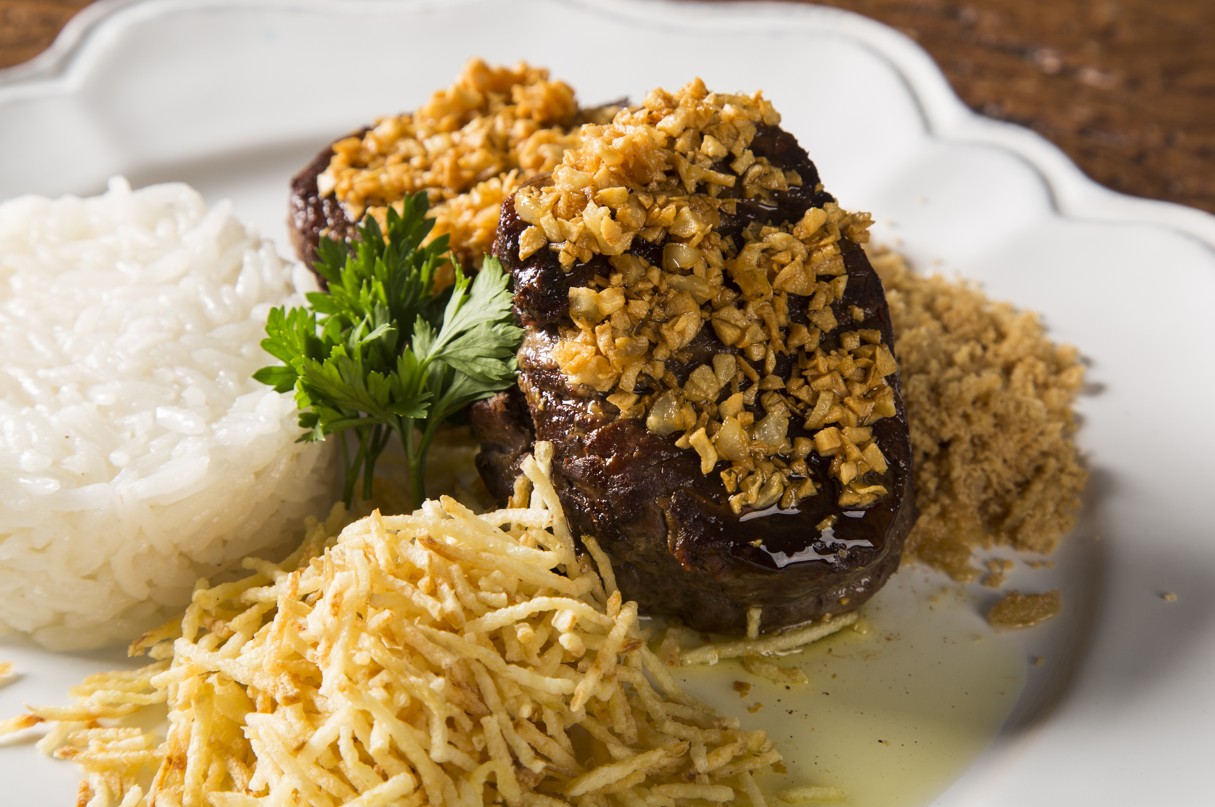
Filé à Oswaldo Aranha is a true Rio classic: a tender steak topped with garlic, served with white rice, shoestring potatoes, and often a fried egg. It is comfort food with old-school restaurant heritage.
Snack culture is central. Coxinha (teardrop-shaped chicken croquettes) is the beloved fried staple of lanchonetes and bakeries, while pão de queijo (cheese bread) is a ubiquitous, addictive bite made with tapioca starch. Pastel (crispy fried pastry pockets), often found at street markets, is another essential quick eat, commonly paired with icy sugarcane juice.
For the beach and post-gym crowd, açaí na tigela is Rio’s signature: thick, frozen açaí served with banana and granola (often with guaraná syrup). Desserts are unapologetically sweet and celebratory: brigadeiro—chocolate fudge balls rolled in sprinkles—is the universal party treat.
Everyday Rio & Carioca Food
Breakfast (café da manhã) is usually simple: French bread (pão francês) with butter, ham, or cheese, plus fruit and strong coffee. Lunch (almoço) is the main meal, frequently a prato feito or PF (rice, beans, a protein, salad, and farofa) or a por quilo buffet where you pay by weight. The afternoon snack (lanche) is taken seriously, and dinner tends to start late—often 8–10 pm.
The true social heart of Rio is the boteco: an unpretentious bar-restaurant hybrid where friends gather around small tables to share petiscos (fried cassava, sausage, cod fritters, shrimp, croquettes) and drink ice-cold beer. Beach kiosks (quiosques) extend this culture to the sand, serving grilled cheese on a stick, fried seafood, cold coconut water, and caipirinhas with your feet in the surf. Service is often friendly but unhurried; lingering is part of the Carioca ethos.
Cultural Fusion: Portuguese Foundations, Afro-Brazilian Power & Indigenous Ingredients
Rio’s culinary DNA begins with Portuguese foodways: stews, sweets, salted cod traditions, and a love of café culture. The defining transformation came through Afro-Brazilian influence, shaped by slavery and the development of Brazil’s most iconic dishes and techniques, including the deep flavors of slow-cooking, the use of palm oil and coconut, and the creation of many bar snacks and stews that define everyday Brazilian eating.
Indigenous contributions are equally foundational, especially cassava in its many forms (farofa, tapioca starch, fried roots) and the rich diversity of tropical fruits. Later waves of migration and internal movement—from Brazil’s Northeast and from immigrant communities—expanded the city’s palate further, making Rio a place where classic Brazilian staples coexist naturally with pizza, Middle Eastern snacks, and high-quality Japanese-Brazilian dining.
Craft Beverage Scene and Local Libations
Rio’s beverage culture is social, refreshing, and made for heat. Chopp (draft beer), typically a light lager served in small glasses to keep it cold, is the lifeblood of botecos. Ordering rounds of chopp with snacks is a core ritual of city life.
Caipirinha is the national cocktail and a Rio essential: cachaça, lime, sugar, and ice, often customized with fruits like passion fruit (maracujá) or strawberry. Fresh juices (sucos) are an everyday obsession, with juice bars blending dozens of fruit combinations—think mango, acerola, guava, cashew fruit, and soursop. Mate gelado, a sweet iced tea sold on beaches, is another Carioca classic. Coffee is usually a tiny, strong cafézinho, served sweet and fast.
International Dining and Contemporary Scene
Rio offers a wide spectrum, from hyper-casual to refined. Upscale neighborhoods like Leblon, Ipanema, and Jardim Botânico feature sophisticated international dining—Italian, French, Japanese, and modern fusion—while the city also excels at approachable, chef-driven Brazilian cuisine that reinterprets regional ingredients with contemporary techniques.
Still, the soul of Rio’s everyday food culture remains in botecos, bakeries, street markets, and beach kiosks. The city’s culinary magic lies in this full range: the ability to move seamlessly from a world-class tasting menu to a paper-plate snack eaten standing on the sidewalk, with equal satisfaction.
Food Customs and Practical Tips
Dress is casual, but beachwear belongs on the beach—throw on a cover-up or a shirt when you step off the sand. A 10% service charge (serviço) is commonly included in restaurant bills; check before tipping extra. Feijoada is most traditionally eaten at Saturday lunch, and many places center their best offering around that schedule.
For an authentic experience, spend time in a classic boteco: order chopp and a mix of petiscos, and settle in. Try a proper prato feito at lunch for everyday Rio eating at its best. Sample açaí from a dedicated spot rather than a generic stand if you want the most balanced version. Visit a street market (feira) for pastel and sugarcane juice. If you want a deeper dive into regional Brazilian flavors, seek out the Feira de São Cristóvão for a concentrated taste of Northeastern Brazilian food and culture.
Explore by neighborhood: Ipanema and Leblon for polished dining and excellent juice bars; Copacabana and Leme for classic old-guard botecos and beachfront staples; Santa Teresa for bohemian charm and traditional spots; Centro for historic cafés and lunchtime institutions; and Lapa for nightlife and late-night eating. Try both a churrascaria (rodízio barbecue) for the full Brazilian carnivore spectacle and a humble PF for the true daily rhythm. Most importantly, embrace Rio’s culinary spirit: joyful, generous, unpretentiously delicious, and best experienced slowly, outdoors, and in good company.
This guide covers what to eat in Rio de Janeiro, Brazil, from feijoada and pão de queijo to açaí na tigela, caipirinhas, and classic boteco culture. Use it to plan your culinary journey into the heart of Carioca flavor and life.
Check monthly weather averages for
Latest Secret Flying deals to Rio de Janeiro

Tampa, Florida to Rio de Janeiro, Brazil for only $490 roundtrip
Cheap flights from Tampa, Florida to Rio de Janeiro, Brazil for only $490 roundtrip with Copa Airlines.
View DealNew York to Rio de Janeiro, Brazil for only $492 roundtrip
Cheap flights from New York to Rio de Janeiro, Brazil for only $492 roundtrip with American Airlines.
View Deal [adblockingdetector id="638efa67113bf"]