


Tehran Food Guide
Food in Tehran: What to Eat & Drink
Tehran’s culinary landscape is a sophisticated, aromatic, and deeply historical expression of Persian culture, where ancient imperial recipes, regional diversity from across Iran, and modern urban energy converge to create a cuisine defined by its intricate balance of sweet and sour, its generous use of fresh herbs and delicate spices, and its deeply ceremonial hospitality. As Iran’s sprawling capital at the foot of the Alborz Mountains, Tehran has developed a food culture that simultaneously safeguards millennia-old traditions and acts as a testing ground for contemporary tastes, shaped by Persian festivals, traditional dietary principles of “hot” and “cold” foods, and a young, educated population eager to reinterpret the classics. Influenced by its high-altitude climate, its legacy as a Qajar-era capital, and its role as a national melting pot, Tehran’s cuisine is a celebration of kebabs, rice dishes (polo), slow-cooked stews (khoresh), fresh herbs (sabzi), and yogurt, all presented with a poetic grace that reflects Iran’s long and refined civilization. This is a city where food is art, philosophy, and social currency, where traditional teahouses sit beside sleek modern cafés, and where every meal offers insight into Iran’s complex cultural soul.
Core ingredients such as rice (notably basmati and the darker domsiah varieties), lamb, chicken, legumes, eggplant, walnuts, pomegranates, dried limes (limoo amani), saffron, turmeric, and abundant fresh herbs—including parsley, cilantro, mint, tarragon, and fenugreek—form the backbone of Persian cooking. Dishes are marked by layered, nuanced flavors: sweetness from fruit, acidity from limes or pomegranate molasses, and savory depth from slow-cooked meats and legumes. Rice serves as the central canvas of the meal, prized for its fragrance and texture. From bustling kebab shops near Tajrish Square to refined restaurants in the northern districts, eating in Tehran is both a sensory pleasure and a cultural immersion.
Local Specialties of Tehran
Tehran’s most iconic dishes represent the pinnacle of Persian culinary craftsmanship. Chelow Kabab is the national dish of Iran, consisting of perfectly steamed saffron rice served with marinated, charcoal-grilled meat—most famously kabab koobideh (minced lamb or beef) or jujeh kabab (saffron-marinated chicken). It is traditionally accompanied by grilled tomatoes, raw onion, buttered rice, and sumac.
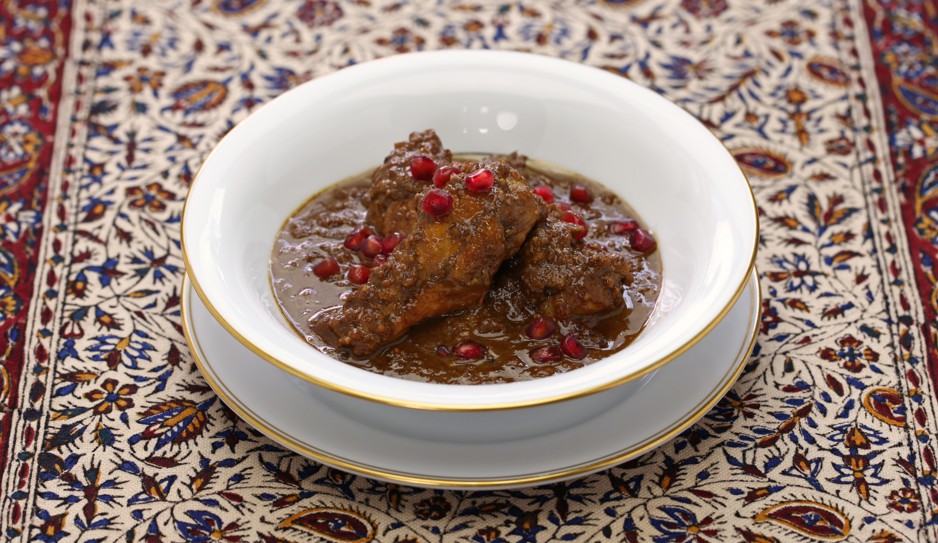
Fesenjan is a legendary stew made with duck, chicken, or meatballs simmered in a rich sauce of ground walnuts and pomegranate molasses, achieving a signature sweet-sour balance. Ghormeh Sabzi, often considered the soul of Persian home cooking, is a dark, intensely aromatic stew of sautéed herbs, kidney beans, and meat, flavored with dried limes. Baghali Polo combines rice with dill and fava beans, commonly served alongside lamb shank. Tahchin is a dramatic saffron-infused rice cake layered with yogurt and chicken, baked until golden and crisp.
Dizi (also known as abgoosht) is a rustic lamb and chickpea stew traditionally eaten in two stages: first the broth with bread, then the solids mashed together. Ash Reshteh is a thick noodle and bean soup topped with fried mint and kashk (whey). Popular appetizers include Mirza Ghasemi, a smoky eggplant and tomato dip, and Kashk-e Bademjan, a creamy eggplant dish. Persian sweets such as baklava, gaz (nougat), and sohan (saffron brittle) round out the table.
Everyday Tehran & Persian Food
Breakfast in Tehran is simple yet satisfying, typically featuring fresh flatbreads like barbari or sangak served with feta cheese, walnuts, herbs, and strong black tea. Lunch is the primary social and business meal and often the most elaborate, while dinner tends to be lighter. The culture of the traditional restaurant, the kebab house, and the modern café plays a central role in daily life.
Eating is inherently communal. Rice anchors the meal, and plates of fresh herbs (sabzi khordan) are ever-present. Meals are unhurried, emphasizing conversation and hospitality, and service ranges from brisk efficiency to attentive formality depending on the setting. The food calendar is closely tied to Persian festivals such as Nowruz, when special dishes and sweets are prepared.
Cultural Fusion: Ancient Persian Foundations & Regional Diversity
Persian cuisine is among the world’s oldest continuous culinary traditions, with roots tracing back to the Achaemenid Empire. As Iran’s capital for more than two centuries, Tehran has become a showcase for regional specialties from across the country, bringing together Caspian rice dishes, northwestern kebabs, central stews, and southern flavors.
Historic trade routes introduced ingredients such as rice and citrus, while the 20th century added subtle European and global influences. The result is a culinary landscape where ancient techniques coexist with modern sensibilities, unified by Persian ideals of balance, aesthetics, and hospitality.
Craft Beverage Scene and Local Libations
Because alcohol is prohibited under Islamic law, Tehran’s beverage culture focuses entirely on non-alcoholic traditions. Tea (Chai) is central to daily life, served strong in small glasses and often accompanied by a sugar cube held in the mouth while sipping.
Doogh, a lightly carbonated yogurt drink flavored with mint, is the classic accompaniment to kebabs. Fresh fruit juices—especially pomegranate, sour cherry, and carrot—are widely available and exceptional. Traditional syrups known as sharbat, such as sekanjebin (mint and vinegar), are diluted with water for refreshment. In recent years, Tehran’s coffee culture has flourished, with modern cafés serving high-quality espresso and specialty brews, especially popular among younger Iranians.
International Dining and Contemporary Scene
Tehran offers a modest but growing selection of international restaurants, including Lebanese, Turkish, Italian, Chinese, and Korean cuisine, adapted to local regulations and tastes.
Modern Persian and fusion restaurants are emerging in northern Tehran, where chefs reinterpret classic dishes with contemporary presentation. Still, the heart of Tehran’s dining culture remains firmly rooted in traditional kababi restaurants, historic teahouses, and family kitchens. The city’s food scene reflects a dynamic tension between deep respect for tradition and a youthful drive for innovation.
Food Customs and Practical Tips
Etiquette plays an important role in Iranian dining. Accept offers of food and drink graciously, compliment the host, and avoid wasting food. Meals are often shared, and generosity is a cultural norm. Tipping around 10 percent is common in restaurants.
For an authentic experience, enjoy chelow kabab at a well-known kababi, sample snacks and produce at Tajrish Bazaar, and visit a traditional teahouse for atmosphere and simple fare. Try dizi at a specialist restaurant, and explore the café culture in northern neighborhoods such as Darband and Elahieh. Carry small bills for everyday payments.
Explore different districts: Tajrish and Darband for a blend of tradition and modern cafés, the Grand Bazaar area for classic eateries and teahouses, and Elahieh or Zafaraniyeh for contemporary dining. Tehran offers excellent value for the quality and depth of its cuisine. Above all, embrace its culinary spirit—poetic, generous, and intellectually rich—rooted in a civilization that regards the shared meal as one of life’s highest arts.
This guide covers what to eat in Tehran, from chelow kabab and fesenjan to tahchin, dizi, and essential Persian classics. Use it to plan your culinary exploration of Iran’s captivating capital.
Check monthly weather averages for
Latest Secret Flying deals to Tehran
London, UK to Iranian cities from only £147 roundtrip
Cheap flights from London, UK to Iranian cities from only £147 roundtrip.
View DealSeville, Spain to Tehran, Iran for only €77 one-way
Cheap flights from Seville, Spain to Tehran, Iran for only €77 one-way.
View DealBudapest, Hungary to Tehran, Iran for only €135 roundtrip
Cheap flights from Budapest, Hungary to Tehran, Iran for only €135 roundtrip.
View Deal [adblockingdetector id="638efa67113bf"]