


Abu Dhabi Food Guide
Food in Abu Dhabi: What to Eat & Drink
Abu Dhabi’s culinary landscape is a luxurious, cosmopolitan, yet deeply traditional expression of the capital of the United Arab Emirates. It is shaped by Bedouin heritage, the bounty of the Arabian Gulf, and an extraordinary influx of global talent and wealth, all converging to create a dining scene defined by diversity, generosity, and a refined sense of hospitality (diyafah). As the political and cultural heart of the UAE, a city built on pearl diving and transformed by oil, Abu Dhabi has developed a food culture that remains firmly rooted in Emirati traditions while confidently embracing global influences. Family gatherings (majlis), hotel dining, and an unwavering commitment to quality govern how food is prepared, shared, and enjoyed.
Shaped by its Arab and Islamic identity, its position as a global crossroads, and the presence of large South Asian, Levantine, and Western expatriate communities, Abu Dhabi’s cuisine celebrates spiced meats, fragrant rice, fresh seafood, dates, and cardamom-infused coffee. These traditional flavors sit comfortably alongside world-class fine dining and contemporary global cuisine. This is a city where food expresses both generosity and ambition, where Friday brunch is a social institution, and where every meal reflects the layered and ever-evolving story of the Gulf.
Core ingredients such as lamb and chicken, Gulf seafood like hamour, shrimp, and lobster, basmati rice, lentils, chickpeas, dates, honey, rose water, saffron, cardamom, turmeric, cumin, coriander, thyme (za’atar), yogurt, and flatbreads form the foundation of the local cuisine. Dishes are known for their aromatic, savory, and gently sweet profiles, a mastery of slow-cooking techniques such as mandi and harees, and a strong emphasis on sharing. Abu Dhabi’s island geography ties it closely to the sea, while its skyline of grand mosques and futuristic towers reflects a city where traditional souks coexist with polished food halls. From modest Lebanese cafeterias to internationally acclaimed chef-driven restaurants, eating in Abu Dhabi is a journey through taste, tradition, and spectacle.
Local Specialties of Abu Dhabi
Abu Dhabi’s most iconic dishes are rooted in Emirati and broader Gulf traditions. Harees is a celebratory staple made from cracked wheat slowly cooked with chicken or lamb, then beaten into a smooth, porridge-like consistency that is rich, comforting, and deeply satisfying.
Machboos, also known as kabsa, is the Gulf’s signature rice dish. Fragrant rice is cooked with meat such as chicken, lamb, goat, or fish, and spiced with baharat, loomi, and saffron before being finished with fried onions, raisins, and nuts. Madrooba is a thick, savory porridge traditionally made with salt-cured fish (maleh) or meat, blended with flour into a hearty, rustic dish.
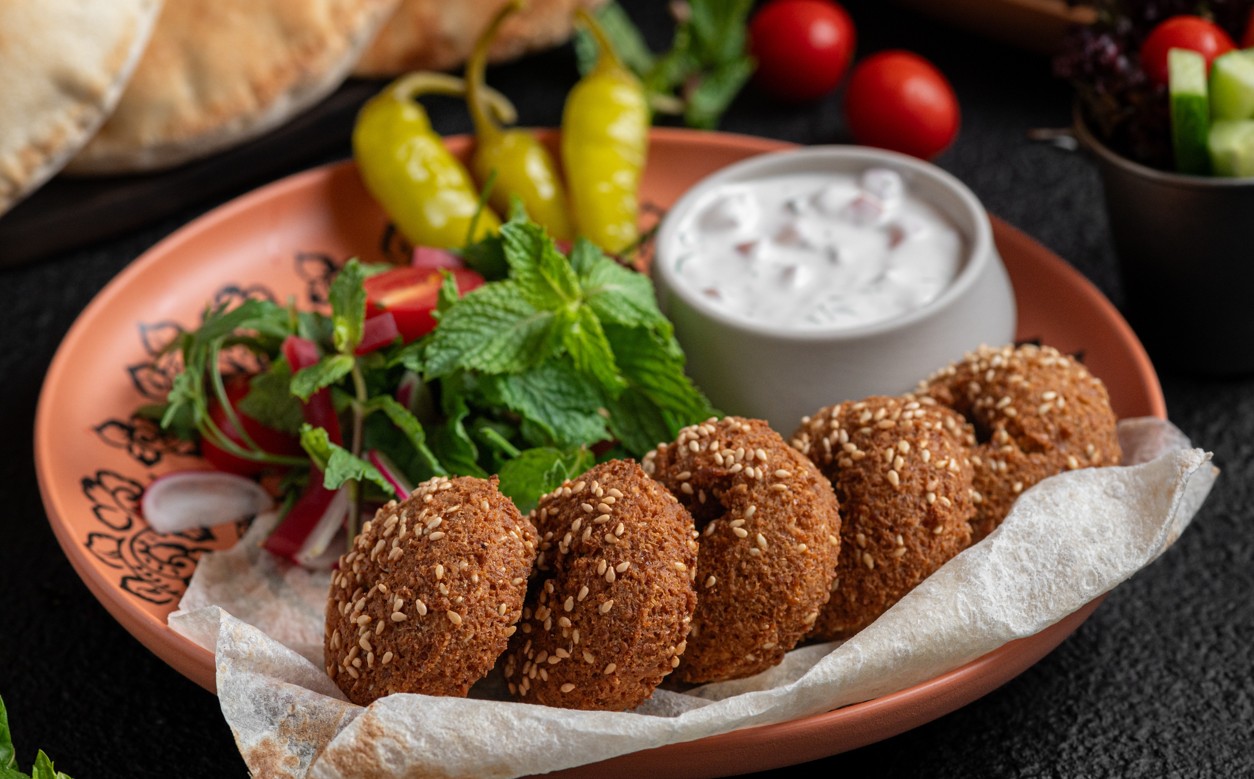
Grilled hamour is the local fish of choice and is typically prepared simply, either grilled or fried whole to showcase its freshness. Shawarma and falafel, while Levantine in origin, are omnipresent and exceptionally good street-food staples. For dessert, luqaimat are beloved deep-fried dough dumplings drizzled with date syrup (dibs) or honey, offering a light yet addictive sweetness.
Balaleet is a distinctive sweet-and-savory breakfast dish made from vermicelli noodles cooked with sugar, cardamom, rose water, and saffron, often topped with a thin omelet. Dates (tamar) are a symbol of hospitality and are traditionally served with Arabic coffee. Gahwa, a lightly roasted coffee infused with cardamom, is poured into small handleless cups and offered as a ritual of welcome.
Everyday Abu Dhabi & Emirati Food
Breakfast may be simple, featuring labneh, olives, and bread, or more substantial with dishes such as balaleet and eggs. Lunch is often the main meal of the day, particularly on weekends, while dinner tends to be a later, social occasion. Dining culture revolves around hotel restaurants for fine dining and brunch, local cafeterias (mat’am) for affordable shawarma and juices, Lebanese and Syrian restaurants for mezze, Iranian eateries for grills and rice dishes, and private homes, where the most authentic Emirati food is often shared by invitation.
Meals are communal and generous, with sharing at the heart of the experience. Mezze-style dining is widespread, service in hotels is polished and professional, and drinks typically include fresh juices, laban, karak chai, or other non-alcoholic beverages. Alcohol is available only in licensed hotel venues. Dining is unhurried, designed for conversation and connection rather than speed.
Cultural Fusion: Bedouin & Coastal Roots, Persian, Indian, Levantine, and Global Influences
Abu Dhabi’s culinary foundations are Bedouin and coastal, shaped by dates, camel products, simple breads, fish, and rice traded across ancient maritime routes. Persian influences introduced refined rice dishes, subtle spice blends, and kebabs, while long-standing trade links and labor migration from the Indian subcontinent brought biryanis, curries, and bold spice profiles.
The Levantine influence is especially strong, contributing mezze culture and everyday street food, while the modern era has layered on a global fine-dining scene. The result is a table where Bedouin coffee and dates, Persian-inspired rice, Indian biryani, and European haute cuisine coexist seamlessly, reflecting the city’s multicultural identity.
Craft Beverage Scene and Local Libations
Due to local regulations, Abu Dhabi’s public beverage culture focuses primarily on non-alcoholic specialties. Arabic coffee (gahwa) sits at its ceremonial heart, continuously offered to guests as a sign of welcome and respect.
Karak chai is the city’s everyday essential: a strong, sweet, milky tea infused with cardamom and spices, sold at countless roadside cafeterias. Fresh fruit juices and smoothies are outstanding, with popular combinations such as avocado and mango. Labaan, a savory yogurt drink similar to ayran, is widely consumed, while jallab, made from dates, grape molasses, and rose water, offers a traditional sweet refreshment.
Licensed hotel venues feature extensive wine lists, cocktails, and craft beers, often at premium prices. What truly defines Abu Dhabi, however, is the simple rhythm of daily rituals: dates and gahwa offered in welcome, followed by a takeaway cup of karak chai from a neighborhood café, blending ancient tradition with modern urban life.
International Dining and Contemporary Scene
Abu Dhabi boasts a diverse and luxurious international dining scene, concentrated in its five-star hotels and developments such as Yas Island and Saadiyat Island. Italian, Japanese, French, Peruvian, and pan-Asian restaurants are widely available, many led by internationally recognized chefs.
A small but growing modern Emirati movement seeks to reinterpret traditional dishes in fine-dining settings, though it remains niche. For everyday eating, the heart of the city lies in its affordable and authentic Levantine, Iranian, Indian, South Asian, and Filipino restaurants. Abu Dhabi’s dining culture is defined by its extremes: opulent global cuisine at one end and deeply rooted, homely food at the other. For visitors, this contrast offers a uniquely rich and rewarding culinary experience.
Food Customs and Practical Tips
Modest dress is recommended outside hotel venues, and a service charge or tip of around 10 percent is appreciated in restaurants. Friday brunch is a major social institution, typically starting around midday, and advance reservations are essential. Alcohol is available only in licensed hotel bars and restaurants.
For a more authentic experience, sample home-cooked Emirati food if invited or visit a cultural heritage restaurant such as Al Fanar. Enjoy karak chai from a busy local cafeteria, explore the date market at Al Mina Port, and indulge in a generous Lebanese mezze meal. Experiencing at least one Friday brunch provides insight into Abu Dhabi’s distinctive dining culture and sense of occasion.
Different neighborhoods offer different culinary experiences. The Corniche and hotel strip are ideal for fine dining with views, Al Maryah Island and Sowwah Square for upscale restaurants and cafés, Khalidiya and the Tourist Club Area for a dense mix of mid-range international and local eateries, and the Mina port area for fish markets and long-established Iranian and Afghan restaurants. Balance a lavish hotel meal with a simple lunch at a neighborhood eatery, and consider a food-focused visit to the Mina Fish Market. While Abu Dhabi can be expensive, excellent value exists in its ethnic enclaves. Above all, embrace the city’s culinary spirit, which is generous, diverse, refined yet traditional, and always grounded in hospitality.
This guide covers what to eat in Abu Dhabi, from harees and machboos to karak chai, luqaimat, and world-class international dining. Use it to plan a culinary journey through Emirati culture and the global sophistication of the UAE’s capital.
Check monthly weather averages for
Latest Secret Flying deals to Abu Dhabi
Non-stop from Colombo, Sri Lanka to Abu Dhabi, UAE for only $262 USD roundtrip
Non-stop flights from Colombo, Sri Lanka to Abu Dhabi, UAE for only $262 USD roundtrip with Etihad Airways.
View DealSarajevo, Bosnia and Herzegovina to Abu Dhabi, UAE for only €291 roundtrip
Cheap flights from Sarajevo, Bosnia and Herzegovina to Abu Dhabi, UAE for only €291 roundtrip.
View DealNew York to Abu Dhabi, UAE for only $675 roundtrip
Cheap flights from New York to Abu Dhabi, UAE for only $675 roundtrip.
View Deal [adblockingdetector id="638efa67113bf"]