


Agadir Food Guide
Food in Agadir: What to Eat & Drink
Agadir’s culinary scene is a vibrant fusion of Berber traditions, Arab influences, and fresh Atlantic seafood, shaped by its identity as Morocco’s leading beach resort. Rebuilt almost entirely after the devastating 1960 earthquake, modern Agadir has developed a food culture that balances deeply rooted Moroccan hospitality with the expectations of international tourism. The result is a dining landscape where ancient tagine cooking methods sit comfortably alongside beachfront grills, seafood restaurants, and lively markets.
Agadir’s location between the fertile Souss Valley and the nutrient-rich Atlantic Ocean ensures a steady supply of exceptional ingredients, from just-caught fish and sardines to argan oil, citrus fruits, and saffron grown in nearby Taliouine. Preserved lemons, olives, ras el hanout spice blends, and fresh herbs form the backbone of the local cuisine. While Agadir’s large Berber population continues to preserve traditional cooking techniques, particularly slow-cooked stews and tagines, the city’s resort status has encouraged seafood-focused dining and international influences. From family-run eateries in the Talborjt district to polished beach clubs along the corniche, Agadir offers a culinary experience that reflects both Morocco’s heritage and its modern coastal lifestyle.
Local Specialities of Agadir
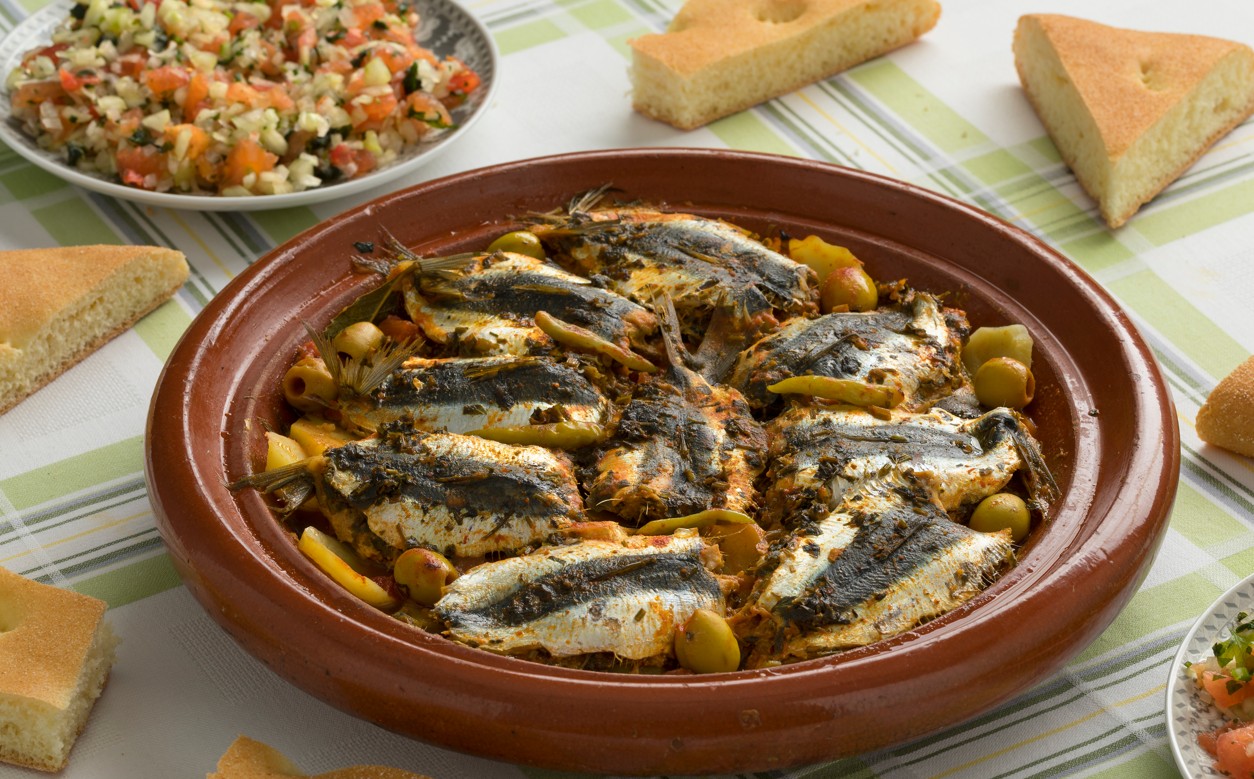
Agadir is especially known for its seafood tagine, a coastal interpretation of Morocco’s most iconic dish. Fresh fish, shrimp, or squid are gently cooked with preserved lemons, olives, tomatoes, and herbs in a conical clay pot, allowing the flavors to develop slowly and naturally. Another local favorite is fish chermoula, which features locally caught fish marinated in a fragrant paste of cilantro, garlic, paprika, cumin, and lemon before being grilled over charcoal and served with bread and simple salads.
The Berber omelette, cooked directly in a tagine with tomatoes, onions, herbs, and spices, reflects the region’s indigenous roots and is commonly enjoyed for breakfast or as a light meal. Tanjia, originally associated with Marrakech, has also gained popularity in Agadir. This slow-cooked meat dish is traditionally prepared in a clay urn and cooked for hours in the ashes of a hammam furnace, resulting in tender, deeply flavored meat. Fresh sardines, abundant in Agadir’s waters, are another staple, typically grilled with little more than salt and served with bread and harissa, capturing the simplicity of coastal Moroccan cooking.
Everyday Moroccan Food
Beyond seafood, Agadir serves classic Moroccan dishes made with regional ingredients. Couscous, traditionally eaten on Fridays, consists of steamed semolina served with vegetables and meat, and in Agadir it is not uncommon to find versions featuring fish or seafood. Harira, a rich tomato-based soup with lentils and chickpeas, is especially popular during Ramadan but remains a comforting and widely available dish throughout the year.
Pastilla showcases Morocco’s mastery of sweet-and-savory flavors. While traditionally made with pigeon, Agadir versions often use chicken or seafood, wrapped in delicate layers of warqa pastry and finished with almonds, cinnamon, and powdered sugar. Grilled meats, particularly lamb and chicken brochettes, are common at casual restaurants and beachfront cafés. Most meals are accompanied by an assortment of Moroccan salads such as zaalouk, taktouka, and carrot salad, which add freshness and balance to richer dishes.
Street Food and Market Eats
Agadir’s street food culture revolves around Souk El Had, one of North Africa’s largest markets, home to thousands of stalls. Here, visitors can sample freshly squeezed orange juice, grilled corn, msemen flatbreads, and baghrir pancakes drizzled with honey. Food stalls throughout the market serve everything from harira and bissara, a thick fava bean soup, to grilled meats and fried fish.
As evening approaches, food vendors appear along the beachfront and in city squares, offering snails in spiced broth, boiled eggs sprinkled with cumin, and sweet treats such as sfenj doughnuts and chebakia, sesame cookies soaked in honey. Fruit stalls display seasonal produce from the Souss Valley, including melons, strawberries, and citrus. Argan oil cooperatives, many run by women’s collectives, welcome visitors to taste this prized oil, which is used both in cooking and traditional cosmetics.
International Dining and Beachfront Restaurants
As Morocco’s premier beach resort, Agadir offers a wide range of international dining options aimed at visitors from Europe and beyond. The corniche is lined with restaurants serving French and Italian cuisine, steakhouse classics, and various Asian-inspired menus. Many beach clubs provide all-day dining with Mediterranean-style dishes, seafood platters, and panoramic views of the Atlantic.
French cafés and patisseries reflect Morocco’s colonial past, offering quality pastries, coffee, and baguette sandwiches. International hotels often feature buffet-style restaurants combining Moroccan and global dishes, appealing to families and travelers seeking variety. Even in these international settings, local ingredients and Moroccan flavors remain prominent, giving Agadir’s dining scene a distinctive coastal identity.
Traditional Beverages and Modern Drinks
Moroccan mint tea is the cornerstone of hospitality in Agadir and is traditionally poured from a height to create a light foam. Fresh orange juice made from local Souss Valley fruit is widely available and notably sweet. Avocado smoothies, blended with milk and sugar, are especially popular in the warm coastal climate.
Although Morocco produces wine, alcohol is mainly available in hotels, licensed restaurants, and tourist-focused establishments. Non-alcoholic drinks include leben, a refreshing yogurt-based beverage, freshly pressed pomegranate juice, and a variety of seasonal fruit smoothies. Traditional Berber teas made with wild thyme or mountain herbs offer an alternative to mint tea and reflect the region’s indigenous heritage.
Food Customs and Practical Tips
Dining in Agadir follows traditional Moroccan customs. Meals often begin with hand-washing, and bread is used as the primary utensil for scooping food. Eating with the right hand is customary. A typical meal starts with salads and bread, followed by a main dish such as tagine or grilled fish, and concludes with fresh fruit and mint tea.
Lunch is generally the main meal of the day, eaten between 1 and 3 PM, while dinner tends to be lighter and later, especially during the summer months. Tipping of around 10 to 15 percent is expected in restaurants, although some tourist establishments include a service charge. Bargaining is common in markets but not in restaurants with fixed prices.
When eating street food, choose busy stalls with high turnover and stick to bottled water, avoiding ice from uncertain sources. Many restaurants offer set lunchtime menus that provide excellent value. For a deeper appreciation of the cuisine, consider taking a cooking class focused on traditional Moroccan techniques such as tagine cooking and bread making.
This guide covers what to eat in Agadir, from traditional Moroccan tagines and fresh seafood to street food, market specialties, and beachfront dining. Use it alongside our Agadir Travel Guide to plan your culinary exploration of Morocco’s Atlantic coast.
Check monthly weather averages for
Latest Secret Flying deals to Agadir
Non-stop from Lyon, France to Agadir, Morocco for only €67 roundtrip
Non-stop flights from Lyon, France to Agadir, Morocco for only €67 roundtrip.
View DealToronto, Canada to Agadir, Morocco for only $604 CAD roundtrip
Cheap flights from Toronto, Canada to Agadir, Morocco for only $604 CAD roundtrip with Scandinavian Airlines.
View DealLondon, UK to Agadir, Morocco for only £33 roundtrip
Non-stop flights from London, UK to Agadir, Morocco for only £33 roundtrip.
View Deal [adblockingdetector id="638efa67113bf"]