


Berlin Food Guide
Food in Berlin: What to Eat & Drink
Berlin’s culinary landscape is a dynamic, defiant, and deeply historical expression of Germany’s reunified capital, where Prussian austerity, Cold War division, and a staggering post-Wall influx of global creativity converge to create a dining scene defined by rebellious innovation, stark contrasts, and a constant dialogue between heavy tradition and bleeding-edge modernity. As the political and cultural heart of modern Germany, shaped by hardship and transformed by waves of immigration, Berlin has developed a food culture that is both unflinchingly honest in its German roots and radically international in its execution.
Governed by the rhythms of the corner Imbiss (snack stand), the weekend market, and a relentless pursuit of the new, Berlin’s cuisine reflects its position at the crossroads of Europe, its history as a divided city, and the influence of its large Turkish, Middle Eastern, and global expatriate communities. It is a city where hearty meats, root vegetables, rye bread, tangy pickles, and inventive vegetarian fare coexist with world-class street food and Michelin-starred experimentation. Food in Berlin is an expression of historical memory and futuristic vision—where Sunday brunch is an institution, and every meal tells the story of a city constantly reinventing itself.
Core ingredients like pork (especially for sausages and schnitzel), potatoes, rye and wheat flour, cabbage, root vegetables, apples, onions, mustard, caraway, marjoram, vinegar, and dill form the foundation of traditional Berlin cuisine. Dishes are hearty, savory, and often sour or pickled, shaped by a mastery of braising and roasting and a no-nonsense presentation. From a gritty Currywurst stand beneath U-Bahn tracks to a zero-waste fine-dining restaurant in a converted factory, eating in Berlin is a journey through history, counterculture, and culinary audacity.
Local Specialties of Berlin
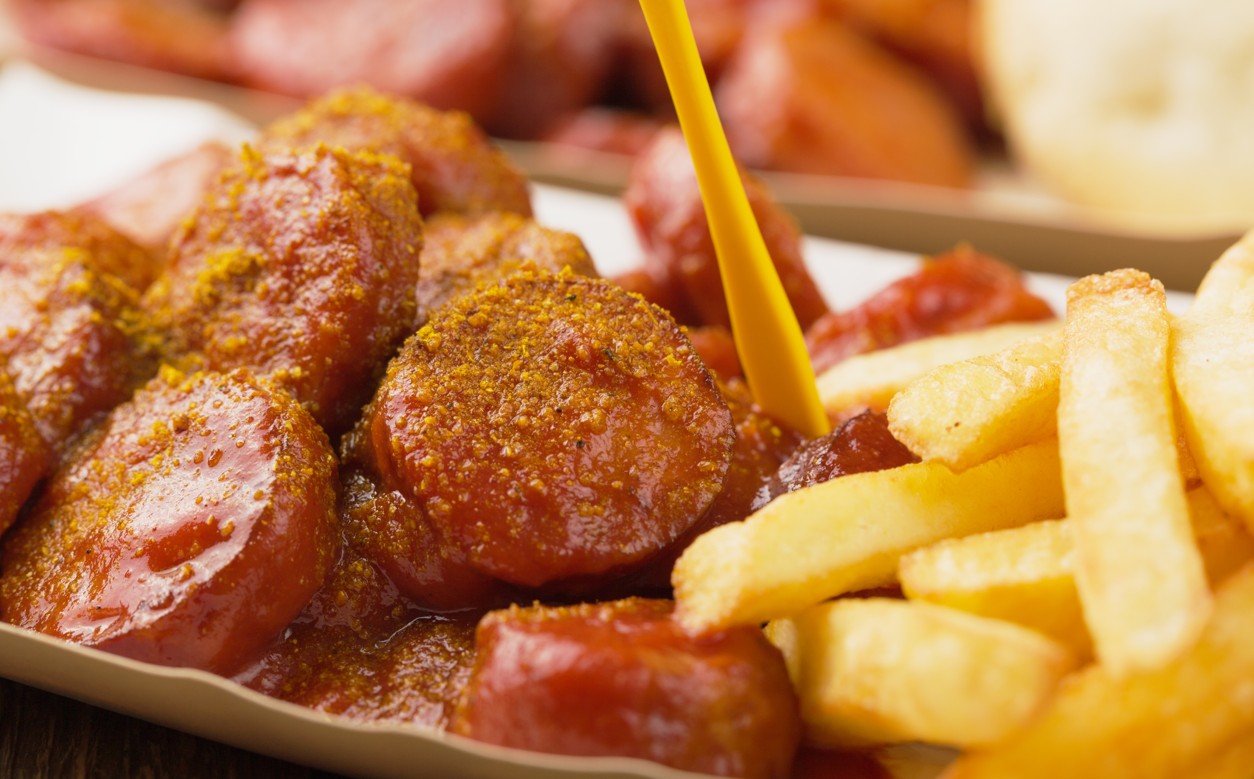
Berlin’s iconic dishes are rooted in its working-class and Prussian history. Currywurst is the city’s most famous street food: a steamed then fried pork sausage, sliced and smothered in spiced ketchup and curry powder, served with a Brötchen or fries.
Eisbein is a monumental dish of boiled or roasted ham hock, typically served with sauerkraut and mashed peas (Erbspüree). Berliner Pfannkuchen—known simply as Berliner—is a jam-filled doughnut without a hole, dusted with sugar and traditionally eaten on New Year’s Eve.
Bouletten are Berlin’s version of meatballs: pan-fried and often served with potato salad and pickles. Königsberger Klopse, originally from East Prussia, feature veal or pork meatballs in a creamy white sauce with capers and lemon. Kartoffelsuppe (potato soup) remains a simple, sustaining classic.
Berliner Weisse mit Schuss is the city’s signature sour wheat beer, traditionally served rot (with raspberry syrup) or grün (with woodruff syrup). Sharp Senf (mustard) is a quintessential condiment.
Everyday Berlin & German Food
Breakfast (Frühstück) is often a generous spread of breads, rolls, cold cuts, cheeses, jams, and boiled eggs. Lunch (Mittagessen) was traditionally the main hot meal of the day, while dinner (Abendbrot) is lighter—typically bread with cold cuts and cheese.
The culture of the Imbiss, Kneipe (pub), Biergarten, Bäckerei, and Markthalle is central to daily life. Meals are informal and efficient, guided by the concept of Gemütlichkeit (coziness). Drinks include beer, sparkling water (Mineralwasser), apple spritzer (Apfelschorle), and excellent coffee. Pace ranges from fast at an Imbiss to leisurely during weekend brunch.
Cultural Fusion: Prussian Roots, Turkish, Middle Eastern & Vietnamese Influences
Berlin’s culinary foundation lies in the simple, hearty fare of Prussia and Brandenburg. The most profound modern influence came after World War II, when Turkish Gastarbeiter introduced what would become the city’s most iconic everyday food: the Döner Kebab, widely believed to have been popularized in Berlin.
Vietnamese communities, particularly from former East Germany guest-worker programs, added another defining layer. The fall of the Wall transformed Berlin into a global culinary magnet, where Prussian pork knuckle, Berlin-style döner, authentic Vietnamese pho, and foraged modern tasting menus coexist within the same neighborhoods.
Craft Beverage Scene and Local Libations
Berlin’s beverage culture is as diverse as its food. Beer is central, from classic German styles to the city’s unique Berliner Weisse. The craft beer movement is strong, with countless local breweries and taprooms.
Club-Mate and other caffeinated mate drinks fuel Berlin’s nightlife and creative scenes. Berliner Luft, a peppermint schnapps, is a local curiosity. The city also boasts one of Europe’s strongest specialty coffee cultures, with third-wave cafés in nearly every district.
German wines, especially Riesling and Spätburgunder, are widely appreciated, and herbal liqueurs like Jägermeister remain popular digestifs. What defines Berlin is contrast: a flawless espresso in a leafy courtyard one moment, a late-night döner or currywurst the next.
International Dining and Contemporary Scene
Berlin offers one of Europe’s most exciting, diverse, and affordable international dining scenes, particularly in Kreuzberg, Neukölln, Prenzlauer Berg, and Mitte. Turkish, Vietnamese, Syrian, Korean, Italian, and modern European cuisines thrive.
A contemporary movement known as Neue Deutsche Küche reinterprets regional ingredients with precision and creativity. Still, the soul of Berlin dining lies in its street food culture and egalitarian ethos: exceptional food does not require formality. Michelin-starred restaurants and world-class street stalls exist side by side, united by a spirit of experimentation and accessibility.
Food Customs and Practical Tips
Dress is casual almost everywhere. Tipping is customary—round up or add 5–10% for good service. Cash (Bargeld) is still widely preferred in smaller eateries. Sunday brunch is a major social ritual, and reservations are essential.
For an authentic experience, eat Currywurst at a classic Imbiss like Konnopke’s or Curry 36. Try a Döner in Kreuzberg or Neukölln where queues signal quality. Visit Markthalle Neun or the Türkenmarkt for market culture. Enjoy a traditional breakfast at an old café such as Café Einstein. Explore Vietnamese dining in former East Berlin, including the Dong Xuan Center. Book a table at a modern German restaurant to experience Neue Deutsche Küche.
Each neighborhood offers something different: Kreuzberg and Neukölln for street food and multicultural energy; Prenzlauer Berg for cafés and bistros; Mitte for historic beer halls and upscale dining; Charlottenburg for classic German restaurants and patisseries. Try both sit-down meals and standing snacks at an Imbiss, stop by a Späti late at night, and embrace Berlin’s unpretentious, inventive culinary spirit.
This guide covers what to eat in Berlin, from Currywurst and Eisbein to Döner Kebab, Berliner Pfannkuchen, and world-class international dining. Use it to plan your culinary journey through one of Europe’s most creatively charged cities.
Check monthly weather averages for
Latest Secret Flying deals to Berlin
Tunis, Tunisia to Berlin, Germany for only $191 USD roundtrip
Cheap flights from Tunis, Tunisia to Berlin, Germany for only $191 USD roundtrip with Air France.
View DealBanjul, Gambia to Berlin, Germany for only $386 USD roundtrip
Cheap flights from Banjul, Gambia to Berlin, Germany for only $386 USD roundtrip.
View DealSeattle to Berlin, Germany for only $456 roundtrip
Cheap flights from Seattle to Berlin, Germany for only $456 roundtrip.
View Deal [adblockingdetector id="638efa67113bf"]