


Bilbao Food Guide
Food in Bilbao: What to Eat & Drink
Bilbao’s culinary landscape is a refined celebration of Basque tradition, where ancient fishing and farming heritage meets the creative confidence of a post-industrial cultural capital. As the largest city in Spain’s Basque Country and an industrial powerhouse transformed by the Guggenheim era, Bilbao has developed a food culture that balances time-honored pintxo bar rituals with Michelin-starred innovation. The city’s cuisine reflects its position between mountains and sea, its proud industrial past, and its role as the beating heart of Basque gastronomy.
Core ingredients such as cod, anchovies, txakoli (local white wine), Idiazabal cheese, peppers, and olive oil define Bilbao’s cooking philosophy: absolute respect for ingredients, technical precision, and seasonality. Proximity to the Cantabrian Sea and fertile inland valleys ensures exceptional seafood and produce. From the historic pintxo bars of the casco viejo to cutting-edge restaurants in Abando and Abandoibarra, Bilbao offers a culinary journey through one of Europe’s most serious food cultures.
Local Specialities of Bilbao
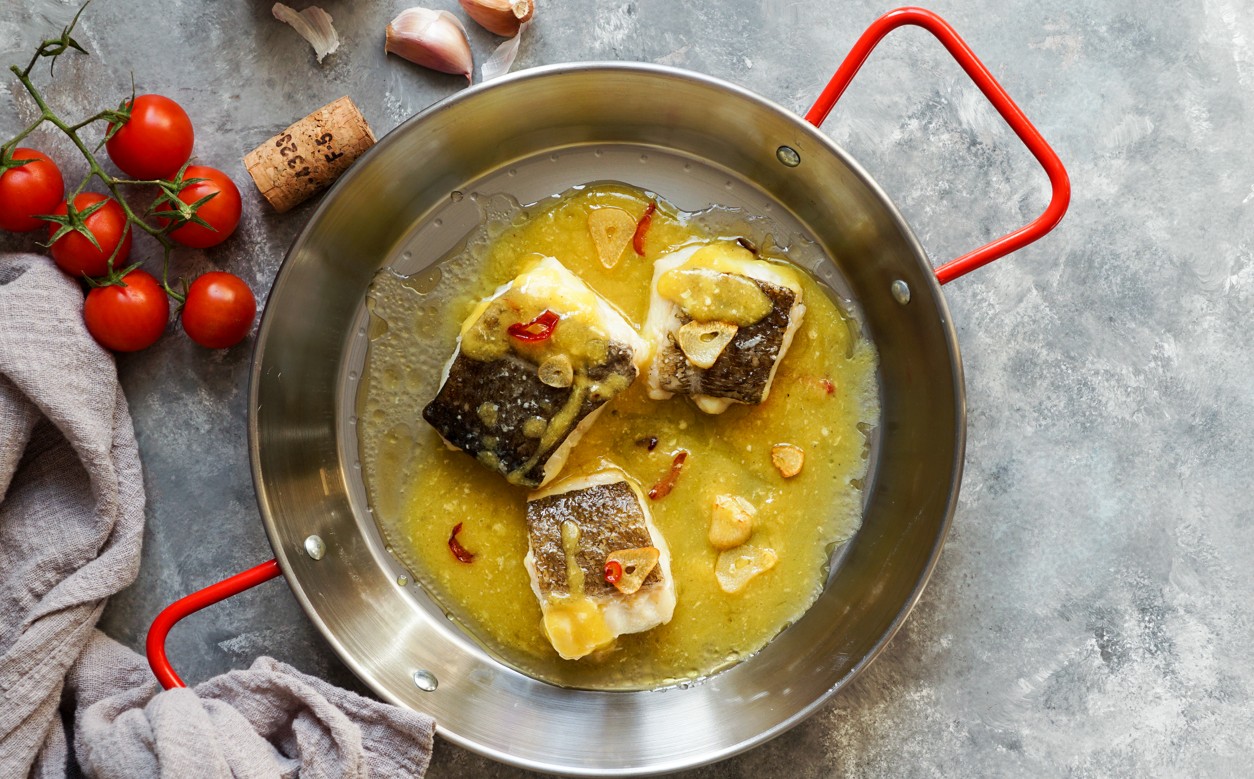
Bilbao is celebrated for bacalao al pil-pil, salt cod cooked slowly in olive oil with garlic and chili until the fish’s natural gelatin emulsifies the sauce—an iconic demonstration of Basque culinary technique. The city’s most famous pintxo, the gilda, combines anchovy, olive, and pickled pepper on a toothpick. Named after Rita Hayworth’s character, it perfectly balances salt, acidity, and heat.
Marmitako, a tuna and potato stew originally prepared by fishermen at sea, reflects Bilbao’s deep maritime roots. Txangurro (spider crab) appears stuffed, baked, or in salads. Kokotxas (hake cheeks), prized for their silky texture, are served in green sauce or pil-pil style. Piperrada, a comforting scramble of peppers, onions, tomato, and eggs, represents simple Basque home cooking. Idiazabal cheese, a smoked sheep’s milk cheese from nearby mountain pastures, anchors the region’s dairy tradition.
Everyday Basque Food
Breakfast in Bilbao is light, typically café con leche with toast or pastry. Lunch is the main meal, often taken as a menú del día offering multiple courses at excellent value. Dinner is later and lighter, frequently centered around pintxo hopping. Merienda, the afternoon snack, often blends seamlessly into early evening pintxo culture.
Seafood dominates everyday dining: merluza (hake), rodaballo (turbot), and besugo (sea bream) are prepared simply to highlight freshness. Meat dishes like txuleta (aged rib steak) and lamb showcase the Basque Country’s exceptional livestock. Seasonal vegetables—piquillo peppers, white asparagus, and tender local beans—play a central role. Traditional cider houses (sidrerías) operate during cider season (January–April), serving fixed menus built around cod, steak, and cider.
Pintxo Culture and Bar Hopping
Pintxo culture is fundamental to Bilbao’s social life. The ritual involves moving from bar to bar—particularly in the casco viejo—ordering one pintxo and a small drink at each stop. Counters display elaborate cold pintxos, while hot options are cooked to order.
Classic pintxos include tortilla de patatas, croquetas, anchovies, and seafood-topped bread. Modern pintxos push creativity, becoming miniature culinary compositions. Understanding the difference between pintxo (small, often bread-based) and ración (larger shared plate) helps when ordering. Many bars are standing-room only, reinforcing the lively, communal atmosphere.
Seafood Culture and Cantabrian Traditions
Bilbao’s seafood culture reflects its history as a major port city. Markets—especially Mercado de la Ribera, one of Europe’s largest covered markets—showcase the extraordinary diversity of Cantabrian fish and shellfish. Traditional preparations emphasize restraint: grilling, gentle braising, and emulsified sauces.
Bacalao appears in multiple regional styles beyond pil-pil, including vizcaína (with red pepper sauce), ajoarriero, and club ranero. Cantabrian anchovies are prized nationwide, and spider crab is closely associated with Bilbao’s festive cuisine. Many restaurants source directly from nearby fishing ports.
Wine and Cider Culture
Txakoli is Bilbao’s signature wine—a dry, lightly effervescent white poured from height to aerate and awaken its acidity. Rioja wines from neighboring La Rioja are also widely consumed. Basque cider (sidra) plays a central role during cider season, served with traditional pouring rituals.
Pacharán, a sloe berry liqueur, is the classic digestif. Kalimotxo (red wine with cola), though polarizing, remains a popular casual drink. Craft beer has grown in popularity, while non-alcoholic options include mosto (grape juice). Vinotecas throughout the city offer extensive by-the-glass selections.
Contemporary Dining and Innovation
Bilbao has become a destination for modern gastronomy alongside its traditional strengths. The city hosts several Michelin-starred restaurants that push Basque cuisine forward while remaining anchored in local ingredients. Contemporary pintxo bars experiment with global techniques and flavors.
Urban renewal following the Guggenheim transformation attracted international chefs and investment, particularly in Abandoibarra. Cooking schools, food festivals, and chef-led projects reinforce Bilbao’s role as a laboratory for modern Basque cuisine—without losing respect for tradition.
Food Customs and Practical Tips
Dining in Bilbao follows Spanish rhythms with distinct Basque customs: breakfast (9–11 AM), lunch (2–4 PM), pintxo time (7–9 PM), and late dinner (9–11 PM or later). Tipping is not expected but appreciated—rounding up or leaving small change is sufficient.
When pintxo hopping, stand at the bar rather than sitting unless ordering full meals. Napkins and toothpicks are often counted at payment. Try txakoli poured from height—it’s part of the ritual. Learning a few Basque phrases is appreciated in this identity-conscious region.
Visit Mercado de la Ribera for an unmatched food experience. Try both traditional and modern pintxo bars. Don’t miss sidrerías during cider season. Consider a guided pintxo tour to uncover historic bars and hidden favorites. Dress smart-casual and remember that many restaurants close between lunch and dinner.
This guide covers what to eat in Bilbao, from pintxos and Basque classics to seafood, txakoli, and contemporary dining. Use it alongside our Bilbao Travel Guide to plan your culinary exploration of the Basque Country’s largest city.
Check monthly weather averages for
Latest Secret Flying deals to Bilbao
Milan, Italy to Bilbao, Spain for only €25 roundtrip
Non-stop flights from Milan, Italy to Bilbao, Spain for only €25 roundtrip.
View DealCape Town, South Africa to Bilbao, Spain for only $250 USD one-way
Cheap flights from Cape Town, South Africa to Bilbao, Spain for only $250 USD one-way.
View DealSao Paulo, Brazil to Bilbao, Spain for only $515 USD roundtrip
Cheap flights from Sao Paulo, Brazil to Bilbao, Spain for only $515 USD roundtrip with Avianca and Iberia.
View Deal [adblockingdetector id="638efa67113bf"]