


Brussels Food Guide
Food in Brussels: What to Eat & Drink
Brussels’ culinary landscape is a refined expression of Belgian tradition, European influence, and the city’s unique role as both national capital and international crossroads. As the capital of Belgium and the de facto capital of the European Union, Brussels has developed a food culture that balances hearty Flemish cooking with French culinary technique and the cosmopolitan tastes of diplomats, civil servants, and expatriates.
The city’s cuisine reflects its bilingual identity (French and Dutch), its medieval trading history, and its modern political significance. Rich stews, seafood, potatoes, chocolate, and beer dominate local tables, creating dishes that are deeply comforting yet surprisingly elegant. From traditional estaminets (taverns) in historic neighbourhoods to Michelin-starred restaurants near EU institutions, Brussels offers one of Europe’s most rewarding food experiences.
Local Specialities of Brussels
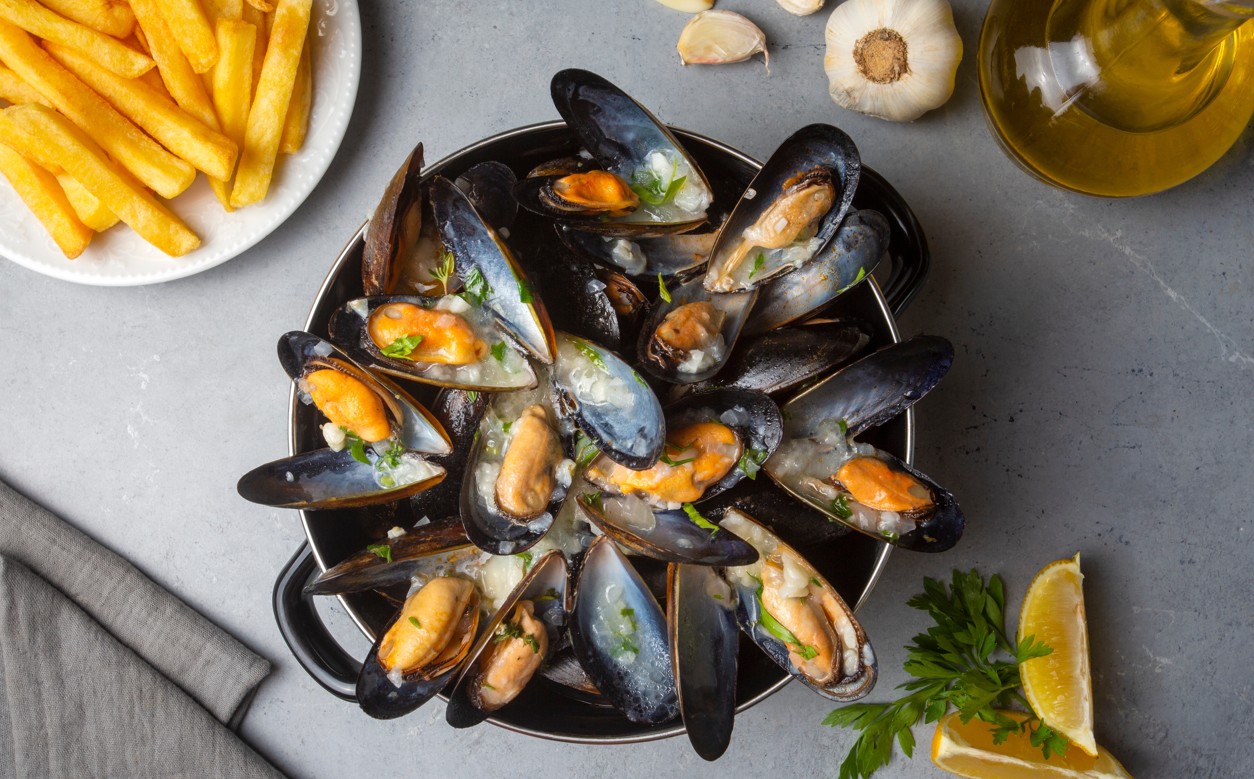
Brussels is world-famous for moules-frites, mussels steamed in white wine with shallots and celery, served with crisp Belgian fries. This deceptively simple dish is the city’s culinary icon and a benchmark of Belgian quality. Carbonade flamande, a slow-cooked Flemish beef stew made with Belgian beer, onions, and spices, showcases the country’s mastery of beer-based cooking.
Waterzooi, though originally from Ghent, is commonly found in Brussels as a creamy chicken or fish stew with vegetables. Chicons au gratin (Belgian endive wrapped in ham and baked in cheese sauce) highlights Belgium’s distinctive approach to vegetables. Belgian waffles, particularly the Brussels style—large, rectangular, and light—are typically topped with whipped cream, fruit, or chocolate.
Brussels is also synonymous with Belgian chocolate, home to historic chocolatiers and the birthplace of the praline. Speculoos, spiced biscuits traditionally served with coffee, appear throughout the city and in modern dessert interpretations.
Everyday Belgian & Brussels Food
Breakfast in Brussels is generally light, consisting of fresh bread with butter, jam, or cheese, accompanied by coffee. Lunch often features sandwiches, croque monsieur, or simple bistro fare. Dinner is the main meal and typically includes traditional Belgian dishes served in generous portions.
Frites are taken seriously in Brussels, with dedicated friteries serving them in paper cones and offering a wide range of sauces—mayonnaise being the classic choice. Beyond mussels, seafood includes North Sea fish and dishes like anguilles au vert (eels in green herb sauce). Meat dishes such as boudin (blood sausage) and rabbit cooked in beer reflect rural Belgian traditions. Belgian cheeses, including Herve and Passendale, are widely enjoyed alongside excellent local bread.
Beer Culture and Brewing Heritage
Belgian beer culture reaches its peak in Brussels, with hundreds of varieties available across styles. The city is particularly associated with lambic beers, which are spontaneously fermented, as well as gueuze (blended lambic) and fruit lambics such as kriek (cherry) and framboise (raspberry).
Traditional beer cafés maintain extensive beer lists and serve each style in its correct glassware. Historic breweries such as Cantillon preserve centuries-old brewing methods. Beer plays a major role in Belgian cooking, appearing in stews, sauces, and even desserts. Drinking beer in Brussels is ritualistic—meant to be savoured slowly, often paired carefully with food.
Chocolate and Confectionery Excellence
Brussels is one of the world’s great chocolate capitals. Iconic chocolatiers such as Neuhaus (inventor of the praline), Godiva, and Pierre Marcolini have roots in the city, while the Grand Sablon district is lined with premium chocolate shops.
Belgian chocolate is known for its high cocoa content, smooth texture, and refined fillings. Pralines come in endless variations, from classic ganache to inventive flavours. Beyond chocolate, Brussels excels in desserts like dame blanche (vanilla ice cream with hot chocolate sauce) and marzipan-based sweets. Smaller artisanal chocolatiers often provide the highest quality and creativity.
International Dining and EU Influence
As an international political hub, Brussels offers exceptional global dining. The European Quarter features restaurants representing cuisines from across the EU, while the city’s immigrant communities contribute outstanding Moroccan, Turkish, Congolese, and other African restaurants.
French brasseries, Italian trattorias, Greek tavernas, and Asian eateries coexist comfortably. Despite the diversity, many restaurants incorporate Belgian ingredients and techniques. The EU presence has raised culinary standards across the city, particularly in business and diplomatic districts.
Food Customs and Practical Tips
Dining in Brussels blends Belgian and French customs. Typical meal times are lunch between 12–2 PM and dinner from 7–10 PM. Service is included in restaurant bills, though rounding up or leaving a small extra tip is appreciated. Reservations are recommended for popular restaurants.
When eating mussels, use an empty shell as tongs. Fries are traditionally eaten with mayonnaise rather than ketchup. Beer should always be served in its proper glass—this matters culturally. Buy chocolate from specialist shops rather than souvenir stores for best quality.
Visit traditional estaminets for authentic atmosphere. Try both Brussels and Liège waffles to appreciate the difference. Explore Place Sainte-Catherine for seafood and fish markets. Beer and chocolate tours offer excellent insight into local traditions. Note that many restaurants close between lunch and dinner service, and menus may appear in either French or Dutch.
This guide covers what to eat in Brussels, from Belgian classics and seafood to chocolate, beer, and international cuisine. Use it alongside our Brussels Travel Guide to plan your culinary exploration of Belgium’s capital.
Check monthly weather averages for
Latest Secret Flying deals to Brussels
XMAS & NEW YEAR: Non-stop from Chongqing, China to Brussels, Belgium for only $527 USD roundtrip
Non-stop, Christmas and New Year flights from Chongqing, China to Brussels, Belgium for only $527 USD roundtrip with Hainan Airlines.
View DealBoston to Brussels, Belgium for only $389 roundtrip
Cheap flights from Boston to Brussels, Belgium for only $389 roundtrip with Scandinavian Airlines.
View DealNew York to Brussels, Belgium for only $360 roundtrip
Cheap flights from New York to Brussels, Belgium for only $360 roundtrip with Scandinavian Airlines.
View Deal [adblockingdetector id="638efa67113bf"]