


Chengdu Food Guide
Food in Chengdu: What to Eat & Drink
Chengdu’s culinary landscape is a powerful celebration of Sichuan traditions, where ancient techniques, fearless seasoning, and a UNESCO-recognized food culture converge in one of China’s most gastronomically important cities. As the capital of Sichuan province and the gateway to Western China, Chengdu has developed a food identity defined by má là—the iconic numbing-spicy sensation that balances heat with depth, fragrance, and complexity.
The city’s cuisine reflects its location in the fertile Sichuan Basin, its long history as a prosperous trading center, and its modern reputation as China’s most relaxed yet food-obsessed metropolis. Chengdu cooking is bold but nuanced, indulgent yet precise, with dishes designed to stimulate every part of the palate. From bubbling hot pot halls to humble street stalls and teahouse snacks, Chengdu offers a culinary journey through one of the world’s most influential regional cuisines.
Local Specialities of Chengdu
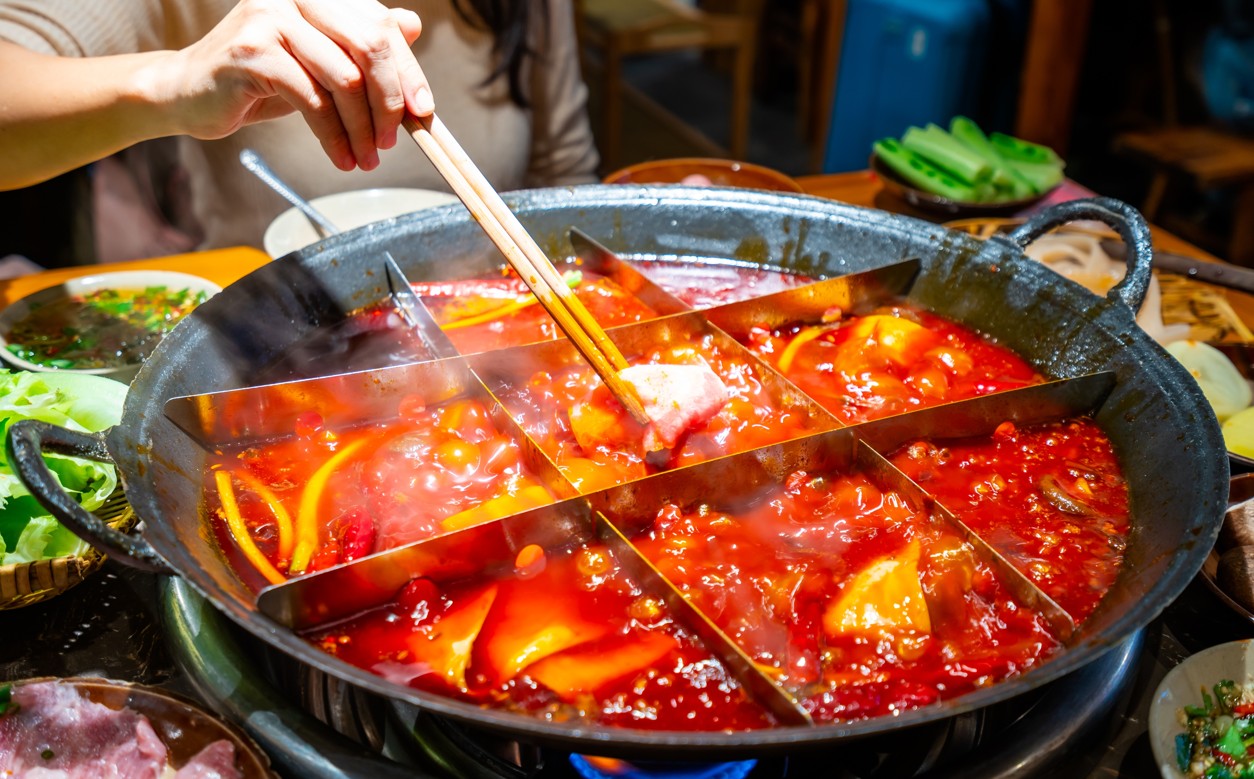
Chengdu is world-famous for Sichuan hot pot, the city’s defining dining experience. Ingredients are cooked tableside in a fiercely spiced broth infused with dried chilies and Sichuan peppercorns, then dipped into sesame-oil sauces mixed with garlic and herbs. Hot pot is deeply social, communal, and central to daily life in Chengdu.
Mapo tofu is the city’s most iconic dish—silken tofu braised in chili bean paste with minced pork, garlic, and Sichuan peppercorns, delivering perfect balance between heat, numbing spice, and richness. Kung pao chicken, often misunderstood abroad, originates in Chengdu and combines diced chicken, peanuts, dried chilies, and vinegar-sweet sauce with remarkable restraint.
Dan dan noodles, tossed with minced pork, preserved vegetables, chili oil, and peppercorns, are quintessential Chengdu street food. Twice-cooked pork showcases Sichuan technique: pork belly is boiled, then stir-fried with leeks and fermented bean paste. Fuqi feipian (“husband-and-wife lung slices”), made with sliced beef and offal in chili oil, represents authentic Chengdu flavor for adventurous eaters. Zhong dumplings are served in a sweet-spicy chili sauce, while la zi ji (Sichuan pepper chicken) features crispy chicken buried beneath a dramatic mountain of dried chilies.
Everyday Sichuan & Chengdu Food
Breakfast in Chengdu is often savory and filling, featuring dan dan noodles, wonton soup, or soybean milk with youtiao (fried dough). Lunch favors quick noodle dishes or small shared plates, while dinner is more elaborate, commonly involving hot pot or multiple communal dishes. Rice accompanies most meals, helping balance the intensity of Sichuan flavors.
Sichuan cuisine goes far beyond spice. Flavor profiles such as yu xiang (“fish-fragrant,” without fish) emphasize garlic, ginger, and pickled chilies, while guai wei (“strange flavor”) blends sweet, sour, spicy, numbing, and aromatic notes in a single dish. Bamboo shoots, wood-ear mushrooms, leafy greens, tofu, and bean products appear frequently. Preserved vegetables and fermented bean pastes add depth, while cold dishes provide contrast. Tea culture, deeply rooted in Chengdu’s historic teahouses, plays an essential role in cooling the palate between spicy meals.
Hot Pot Culture and Social Dining
Hot pot in Chengdu is more than a meal—it is a social ritual that can last for hours. Most tables order a yuan yang guo (split pot), with one side intensely spicy and the other mild. Ingredients range from thinly sliced meats and seafood to vegetables, tofu products, mushrooms, and offal.
The process is interactive: diners cook ingredients briefly, then dip them into personalized sauces. Overcooking is frowned upon—seconds are often enough. Hot pot restaurants range from no-frills neighborhood spots to massive, theatrical chains. Variations include skewer hot pot, fish head hot pot, and specialty broths. The addictive combination of heat and numbing spice is central to Chengdu’s social life.
Street Food and Market Culture
Chengdu’s street food scene is legendary. Vendors sell dan dan noodles, cold dishes dressed in chili oil, grilled meats, and chuan chuan—skewers cooked in hot pot broth and priced per stick. While areas like Jinli Ancient Street and Kuanzhai Alley offer accessible introductions, they are more tourist-oriented.
Local markets reveal the true depth of Sichuan cuisine, displaying dozens of chili varieties, Sichuan peppercorns, fermented bean pastes, and preserved vegetables. Many of the best street food experiences are found in residential neighborhoods, requiring curiosity and a willingness to explore beyond main attractions.
International Dining and Contemporary Scene
As a major Chinese metropolis, Chengdu offers a growing international dining scene, with Japanese, Korean, Western, and Southeast Asian restaurants serving both locals and expatriates. The city’s café culture has expanded rapidly, with specialty coffee shops and modern dessert cafés appearing throughout central districts.
Contemporary Sichuan restaurants reinterpret traditional dishes with refined techniques and presentation while preserving core flavors. Chengdu’s designation as a UNESCO City of Gastronomy has encouraged both innovation and the protection of culinary heritage, ensuring traditions continue alongside modern expression.
Food Customs and Practical Tips
Dining in Chengdu follows Chinese customs with local nuance. Typical meal times are breakfast (7–9 AM), lunch (11:30 AM–1:30 PM), and dinner (6–9 PM). Tipping is not expected. Reservations are advisable for popular hot pot restaurants, especially in the evenings.
When eating hot pot, use shared utensils and avoid overcooking. Expect intense spice—many dishes can be adjusted, but Chengdu cuisine is unapologetically bold. The numbing sensation from Sichuan peppercorns is normal and temporary. Tea and light beer are common accompaniments.
Explore both tourist food streets and residential neighborhoods for contrast. Visit traditional teahouses—they are social institutions as much as culinary ones. Be adventurous with offal and unfamiliar ingredients; they are central to Sichuan cooking. A food tour or cooking class is highly recommended for understanding Sichuan flavor logic and technique. Note that many restaurants close between lunch and dinner (approximately 2–5 PM).
This guide covers what to eat in Chengdu, from Sichuan classics and hot pot to street food and contemporary dining. Use it alongside our Chengdu Travel Guide to plan your culinary exploration of China’s spice capital.
Check monthly weather averages for
Latest Secret Flying deals to Chengdu
XMAS & NEW YEAR: Non-stop from Istanbul, Turkey to Chengdu, China for only €411 roundtrip
Non-stop, Christmas and New Year flights from Istanbul, Turkey to Chengdu, China for only €411 roundtrip with Turkish Airlines.
View Deal
 [adblockingdetector id="638efa67113bf"]