


Colombo Food Guide
Food in Colombo: What to Eat & Drink
has one of South Asia’s most complex and rewarding food scenes, shaped by ancient Sri Lankan traditions, centuries of colonial influence, and the island’s role as a historic Indian Ocean spice hub. As Sri Lanka’s largest city and commercial capital, Colombo has developed a cuisine that blends Sinhalese and Tamil cooking with Portuguese, Dutch, British, Malay, and Indian influences, creating flavors found nowhere else in the region.
The city’s food reflects its multicultural population, tropical geography, and access to some of the world’s finest spices. Rice, coconut, seafood, chili, curry leaves, and cinnamon form the backbone of daily cooking, while dishes are defined by layered heat, aromatic depth, and a careful balance of sweet, sour, salty, and spicy. From humble neighborhood kades to elegant restaurants in colonial-era buildings, Colombo offers a culinary journey through the heart of Sri Lanka.
Local Specialities of Colombo
Colombo is best known for rice and curry, the city’s signature meal and everyday staple. A typical plate features steamed rice served with multiple curries—often fish, chicken, or vegetable—alongside sambols, pickles, and fried accompaniments. Each meal reflects regional, family, and seasonal variation, making rice and curry endlessly diverse.
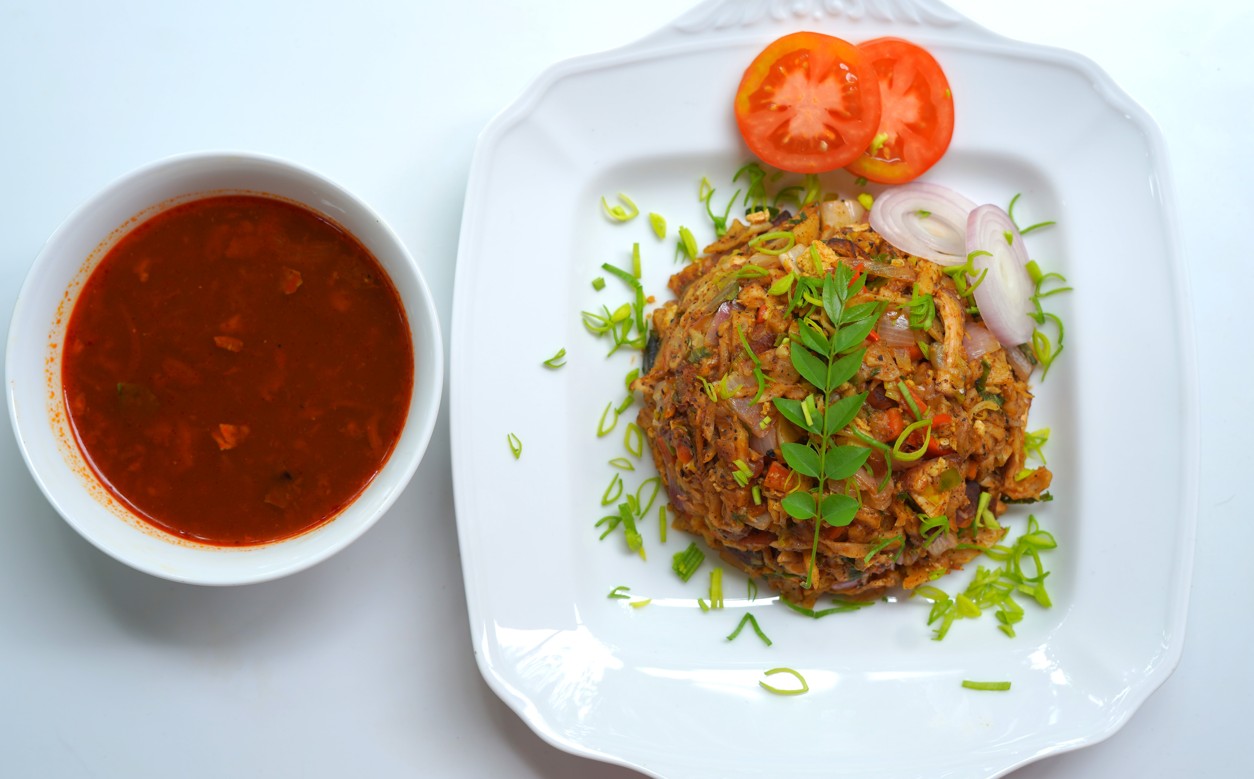
Kottu roti is Colombo’s most iconic street food: chopped flatbread stir-fried with vegetables, egg, and meat on a large griddle, accompanied by the rhythmic clatter of metal blades. Hoppers (appa), bowl-shaped fermented rice pancakes with crisp edges, appear at breakfast and dinner, often with an egg cooked into the center.
Lamprais, a legacy of the Dutch Burgher community, combines rice cooked in meat stock with curries, sambols, and fried accompaniments, all wrapped in a banana leaf and baked. Coastal specialties include ambul thiyal (sour black fish curry) and prawn curry. For dessert, watalappan—a steamed coconut custard flavored with jaggery, cardamom, and nutmeg—is Colombo’s most beloved sweet. Ceylon tea, served strong with milk and sugar, remains the national drink.
Everyday Sri Lankan & Colombo Food
Breakfast in Colombo often includes hoppers, string hoppers (steamed rice noodles) with curry, or simple rice and sambol. Lunch is commonly rice and curry or quick dishes such as kottu roti. Dinner is typically more elaborate, with multiple curries and shared accompaniments.
Coconut is omnipresent—used as milk in curries, grated into sambols, pressed for oil, and drunk as refreshing coconut water. Rice varieties such as samba and red rice form the foundation of meals. Vegetables like jackfruit, breadfruit, pumpkin, and leafy greens appear in curries and mallums. Sri Lanka’s spice profile—cinnamon, clove, cardamom, black pepper, turmeric, and chili—defines the island’s unmistakable flavor identity.
Rice and Curry Culture and Home-Style Cooking
Rice and curry is more than a meal in Colombo—it is a daily ritual and expression of cultural identity. A traditional spread includes rice, two or three curries (often one fish, one meat, one vegetable), sambols such as pol sambol (coconut and chili), mallum (finely chopped greens), and pickles or chutneys.
Home-style cooking emphasizes balance rather than intensity, with contrasting textures and flavors on a single plate. Many Colombo restaurants offer lunchtime rice and curry buffets, allowing diners to sample a wide range of dishes. Traditionally eaten with the right hand, mixing rice and curry enhances flavor and texture, though utensils are widely accepted. Trying rice and curry at different establishments reveals remarkable variation.
Street Food and Market Culture
Colombo’s street food scene is lively and deeply embedded in daily life. Kottu roti stalls dominate evenings, while bakeries and kiosks sell short eats—savory pastries such as patties, rolls, cutlets, and vadai. Fruit vendors offer mango, papaya, wood apple, rambutan, and other tropical produce, often blended into fresh juices.
Pettah Market is the city’s most intense food marketplace, selling spices, rice, tea, dried fish, and produce in tightly packed lanes. Smaller neighborhood markets and modern shopping malls offer more relaxed dining environments. Street food hygiene has improved significantly, especially at busy, well-established stalls.
International Dining and Contemporary Scene
As Sri Lanka’s commercial and diplomatic center, Colombo supports a wide range of international dining. Indian, Chinese, Thai, and Malay cuisines are particularly strong, alongside Middle Eastern and European restaurants. British colonial influences remain visible in bakeries, cafés, and hotel dining rooms.
Modern Sri Lankan restaurants reinterpret traditional dishes with contemporary techniques and refined presentation. The city’s café culture has expanded rapidly, with specialty coffee shops and dessert cafés across neighborhoods such as Cinnamon Gardens and Colombo 07. Despite international influences, most kitchens emphasize local ingredients and Sri Lankan flavor foundations.
Food Customs and Practical Tips
Dining in Colombo ranges from ultra-casual to refined. A 10% tip is appreciated in restaurants, and service charges are often included. Reservations are recommended for popular restaurants, especially on weekends.
When eating with hands, use only the right hand. Street food is generally safe when freshly cooked—busy stalls are the best indicator. Drink bottled water and be cautious with ice in informal settings. Sri Lankan food can be very spicy; request mild curries if needed.
Try rice and curry in both simple kades and upscale restaurants for contrast. Don’t miss kottu roti—it is uniquely Sri Lankan. Visit markets for spices and tea, and sample tropical fruits you may not find elsewhere. Cooking classes and food tours offer valuable insight into Sri Lankan culinary techniques. Note that many restaurants close between lunch and dinner service (roughly 3–7 PM).
This guide covers what to eat in Colombo, from Sri Lankan classics and street food to international cuisine and modern dining. Use it alongside our Colombo Travel Guide to plan your culinary exploration of Sri Lanka’s vibrant capital.
Check monthly weather averages for
Latest Secret Flying deals to Colombo
Toronto, Canada to Colombo, Sri Lanka for only $924 CAD roundtrip
Cheap flights from Toronto, Canada to Colombo, Sri Lanka for only $924 CAD roundtrip.
View DealVienna, Austria to Colombo, Sri Lanka for only €327 roundtrip
Cheap flights from Vienna, Austria to Colombo, Sri Lanka for only €327 roundtrip with Etihad Airways.
View Deal
 [adblockingdetector id="638efa67113bf"]