


Delhi Food Guide
Food in Delhi: What to Eat & Drink
The culinary landscape of is one of the world’s most layered, historic, and rewarding food cultures, shaped by centuries of empire, migration, and everyday street-level innovation. As India’s capital and the former seat of multiple dynasties, Delhi has developed a cuisine that seamlessly blends Mughal imperial cooking, Punjabi heartland flavours, refugee ingenuity, and contemporary global influences.
Delhi’s food culture reflects its evolution as seven successive cities, its position as the political and cultural heart of North India, and its modern identity as a megacity of more than 30 million people. Royal recipes coexist with chaotic street stalls, ancient techniques meet modern gastronomy, and regional Indian cuisines intersect daily, creating a city where food is both history lesson and living ritual.
Local Specialities of Delhi
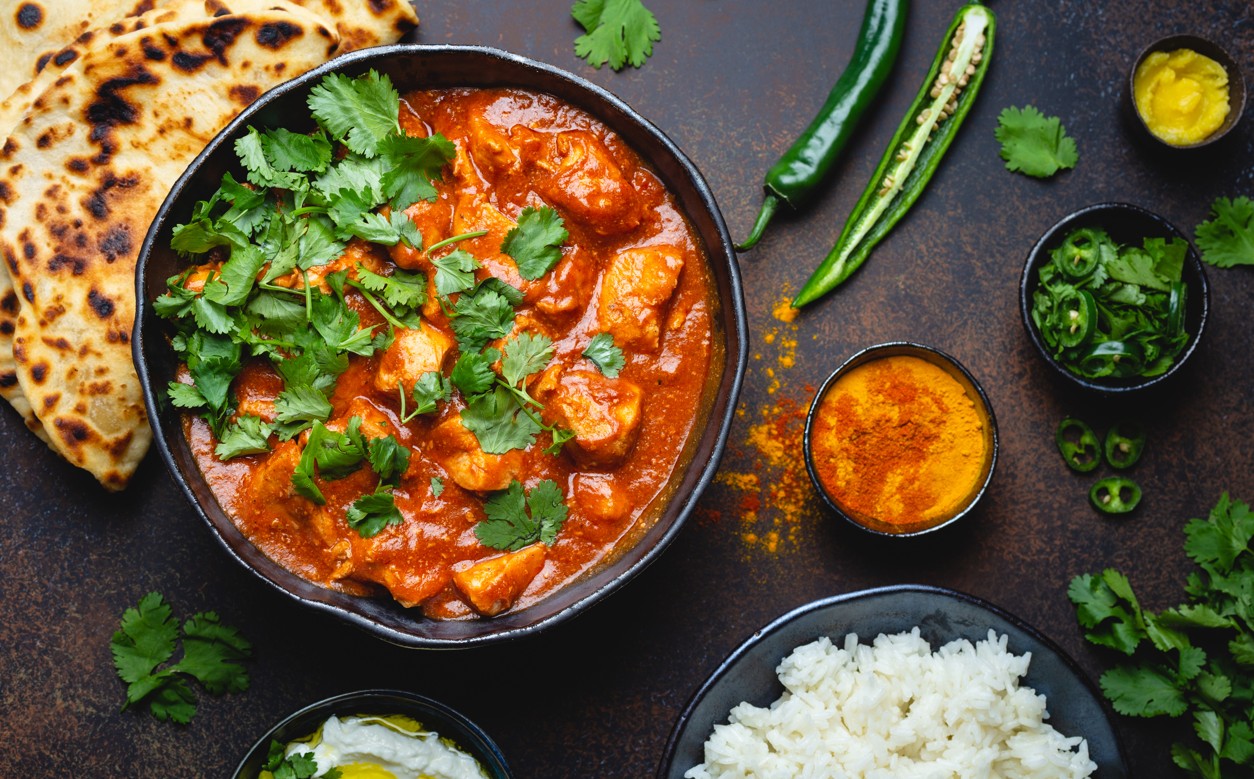
Delhi is internationally celebrated for butter chicken and chicken tikka masala, creamy tomato-based curries that originated in the city’s mid-20th-century Punjabi restaurants and later became global icons of Indian cuisine. The city’s most famous street food, chole bhature, pairs spicy chickpea curry with puffed, deep-fried bread and is eaten enthusiastically for breakfast or lunch.
Mughlai cuisine defines Delhi’s royal culinary legacy. Seekh kebabs, galouti kebabs, nihari (slow-cooked meat stew), korma, and fragrant biryani trace their roots to imperial kitchens influenced by Persian and Central Asian techniques. Paranthe Wali Gali in Old Delhi is famous for its endless varieties of stuffed parathas, while chaat—savory snacks like aloo tikki, papdi chaat, and dahi bhalla—reaches its most refined and aggressive form here.
Tandoori cooking from the clay oven is central: tandoori chicken, naan, and rumali roti appear everywhere. Seasonal specialties reflect Delhi’s extreme climate—sarson ka saag with makki ki roti and gajar ka halwa in winter; cooling drinks like lassi and jaljeera in summer. Traditional sweet shops produce iconic desserts such as gulab jamun, jalebi, rabri, and kulfi.
Everyday Delhi & North Indian Food
Breakfast in Delhi may include stuffed parathas with pickle and curd, poha, or chole bhature from a neighborhood vendor. Lunch is typically a thali—a balanced platter of dal, vegetables, roti, rice, and curd—while dinner often features richer curries or celebratory dishes.
Wheat dominates daily eating in the form of roti, naan, and paratha. Dairy products—ghee, paneer, milk, and yogurt—are essential, while lentils (dal) appear in countless preparations. Seasonal vegetables follow the agricultural calendar, and chicken is the most commonly consumed meat.
Street food is inseparable from daily life; eating while standing, walking, or sharing space with strangers is normal. Delhi’s intense heat drives lighter eating in summer and richer, ghee-heavy dishes in winter. Despite the city’s love of indulgent food, ghar ka khana (simple home cooking) remains culturally sacred, creating balance between excess and restraint.
Historical Layers: Mughal, Punjabi & Refugee Influences
Delhi’s cuisine mirrors its turbulent history. Indigenous North Indian cooking provided a base of grains, lentils, vegetables, and dairy. The Mughal Empire (16th–19th century) introduced slow-cooked meats, kebabs, biryanis, nuts, dried fruits, aromatic spices, and refined presentation.
The 1947 Partition radically reshaped Delhi’s food culture when millions of Punjabi refugees arrived, bringing tandoors, butter-heavy gravies, and robust flavors that now define modern Delhi cuisine. Later migrations from across India added Bengali, Kashmiri, South Indian, and regional specialties.
This layering allows Delhi to sustain parallel food worlds: centuries-old Mughlai kitchens in Old Delhi, Punjabi classics invented in post-Partition restaurants, and modern Indian fine dining in South Delhi—all coexisting within a few kilometers.
Beverage Culture and Local Refreshments
Delhi’s beverage culture is shaped by climate and ritual. Chai is the city’s lifeblood—strong, sweet, milky tea sold at roadside stalls from dawn to midnight. Variations range from masala chai to cutting chai served in small glasses.
Lassi, made from yogurt, appears sweet or salty, plain or fruit-flavored. Seasonal drinks are essential: aam panna and jaljeera cool the body in summer, while hot badam milk warms winter nights. Fresh fruit juices and sugarcane juice are widely consumed.
Alcohol exists but is not central to food culture; beer and whiskey are most common. The paan ritual—betel leaf preparations—often concludes meals. What distinguishes Delhi is the democratic nature of its tea culture: chai stalls function as social equalizers where class, profession, and politics momentarily dissolve.
International Dining and Contemporary Scene
As a global capital, Delhi offers extensive international dining. Indo-Chinese food remains immensely popular, adapted to local tastes over generations. Italian, Japanese, Thai, Korean, Middle Eastern, and Mexican restaurants serve both locals and expatriates.
Modern Indian restaurants reinterpret traditional dishes using global techniques, including molecular gastronomy and tasting menus focused on regional Indian cuisine. Luxury hotel restaurants set benchmarks for fine dining, while South Delhi neighborhoods support a thriving café and bakery culture.
Despite its global reach, Delhi’s food scene remains unapologetically Indian—international cuisines are frequently localized with bolder spice, richer textures, and hybrid creativity. Street food and fine dining thrive in parallel, rarely competing yet equally central to the city’s identity.
Food Customs and Practical Tips
Eating with the right hand is traditional, though utensils are common. Washing hands before and after meals is customary. When invited to a home, bringing sweets or fruit is polite.
Street food safety is about judgment: choose busy vendors, avoid uncooked items, and start gently if unfamiliar with spice. Visit Old Delhi (Chandni Chowk) with an empty stomach—ideally with a guide—to navigate its overwhelming density of food.
Explore by neighborhood: Old Delhi for historic street food, Karol Bagh for Punjabi restaurants, Khan Market for upscale dining, and Hauz Khas Village for cafés and modern Indian cuisine. Respect dietary norms—beef is avoided by Hindus, pork by Muslims, and vegetarianism is widespread.
Drink bottled water only, avoid questionable ice, and pace yourself—Delhi’s food is rich, portions are generous, and flavors are intense. From 20-rupee snacks to luxury tasting menus, Delhi offers extraordinary value at every level. Above all, arrive curious and adventurous—Delhi rewards those willing to eat boldly.
This guide covers what to eat in Delhi, from butter chicken and chole bhature to Mughlai kebabs and legendary street chaat. Use it to plan your culinary exploration of India’s historic, complex, and endlessly delicious capital.
Check monthly weather averages for
Latest Secret Flying deals to Delhi
UK cities to Delhi, India from only £322 roundtrip
Cheap flights from UK cities to Delhi, India from only £322 roundtrip with KLM.
View DealAtlanta to Delhi, India for only $655 roundtrip
Cheap flights from Atlanta to Delhi, India for only $655 roundtrip.
View DealNon-stop from Kathmandu, Nepal to Delhi, India for only $189 USD roundtrip
Non-stop flights from Kathmandu, Nepal to Delhi, India for only $189 USD roundtrip.
View Deal [adblockingdetector id="638efa67113bf"]