


Best Things to Do in Delhi: A Complete Guide
10 Best Things to Do in Delhi
Looking for what to do in Delhi? India’s capital is not merely a city; it is a living, breathing chronicle of history, a thrilling collision of epochs where ancient empires and a hyper-modern nation-state coexist in a vibrant, often chaotic, symphony. In Delhi, you can stand in the shadow of a 13th-century victory tower in the morning and sip artisanal coffee in a sleek urban cafe by afternoon. It is a place of profound contrasts: serene Mughal gardens sit beside frenetic, spice-scented bazaars; wide, colonial-era boulevards give way to labyrinthine medieval lanes. To experience Delhi is to engage all your senses at once, to be overwhelmed and enchanted in equal measure. It offers far more than any single visit can contain, but diving into its layered heart is an unforgettable rite of passage for any traveler to India.
From getting lost in the ancient arteries of Old Delhi and exploring imperial forts to finding tranquility in modern temples and indulging in a legendary street food pilgrimage, here are the 10 best things to do in Delhi. This guide is crafted to help you navigate the city’s immense scale and depth, ensuring you touch upon its historical soul, its spiritual diversity, and its dynamic contemporary pulse.
1. Dive into the Sensory Overload of Old Delhi & Chandni Chowk
To understand Delhi, you must begin in its historic heart: Old Delhi. This walled city, founded by Shah Jahan in the 17th century, is an exhilarating assault on the senses. At its core lies Chandni Chowk, once an imperial avenue, now a seething, buzzing artery of commerce. Here, the city’s energy is at its most raw and authentic. Weave through lanes narrowly dedicated to spices, wedding finery, electronics, and paper. Look up to see crumbling havelis (traditional mansions) with beautifully carved wooden balconies.
The best way to experience it is on foot, ideally with a knowledgeable guide who can navigate the chaos and reveal hidden gems: a centuries-old Jain temple, a serene Sikh gurudwara offering free community meals (langar), or a hidden courtyard perfumed by incense. This is also the epicenter of Delhi’s legendary street food. A walk through Old Delhi isn’t just sightseeing; it’s a full-immersion cultural experience.
2. Walk in the Footsteps of Emperors at the Red Fort (Lal Qila)
A monumental symbol of Mughal power, the Red Fort is an essential chapter in Delhi’s story. Built from red sandstone by Emperor Shah Jahan (who also built the Taj Mahal), its imposing walls enclose a world of palaces, audience halls, and gardens. Enter through the majestic Lahori Gate, and you walk the same path Mughal emperors once did. Key structures within include the Diwan-i-Aam (Hall of Public Audience), the Diwan-i-Khas (Hall of Private Audience, once home to the Peacock Throne), and the royal baths.
While much of its original opulence is gone, the scale and architecture inspire awe. The fort is powerfully linked to Indian independence, as the Prime Minister addresses the nation from its ramparts every August 15th. Visit in the late afternoon when the setting sun sets the sandstone ablaze, and the crowds begin to thin, allowing for a more contemplative experience.
3. Ascend for a Panorama at Jama Masjid
Facing the Red Fort is the majestic Jama Masjid, the largest mosque in India and Shah Jahan’s final architectural triumph. Its vast courtyard, capable of holding 25,000 worshippers, and its three striking domes flanked by two 40-meter-high minarets create a scene of profound grandeur. Non-Muslim visitors are welcome outside of prayer times (respectful, covered clothing is required and provided if needed).
The true highlight for visitors is the climb up the southern minaret. The narrow, spiraling staircase leads to a small balcony offering what is arguably the definitive view of Old Delhi. From this bird’s-eye perspective, the chaotic maze of Chandni Chowk transforms into a patterned tapestry of rooftops, with the Red Fort and the modern city skyline framing the horizon. It’s a breathtaking, perspective-shifting moment.
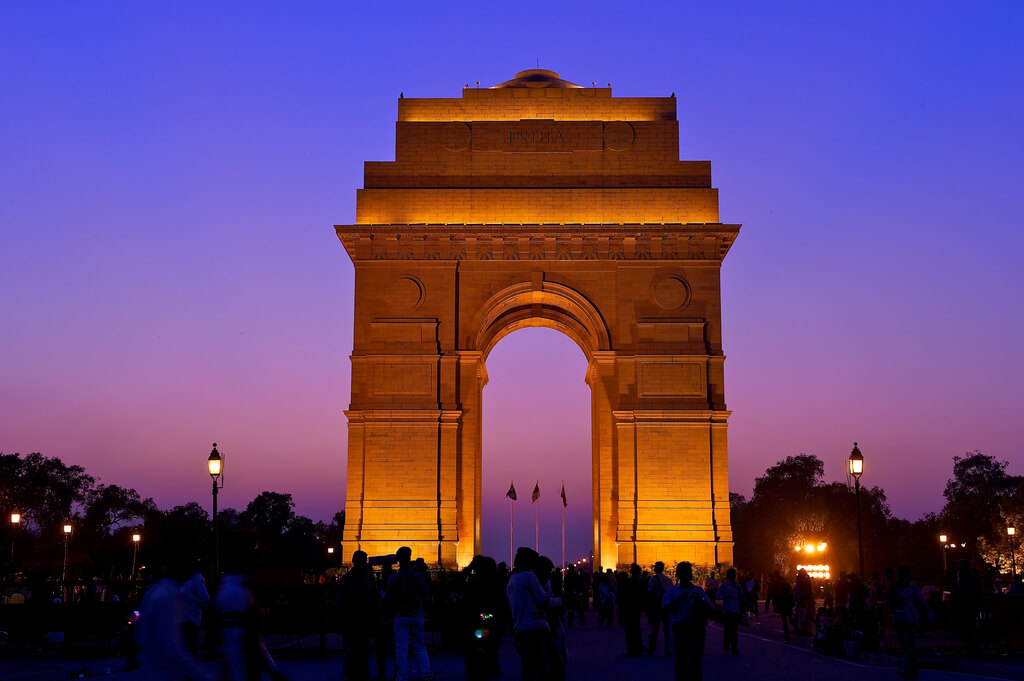
4. Stroll the Ceremonial Heart at India Gate & Rajpath
Moving from Mughal to British-era Delhi, the area around India Gate and the Rajpath (now Kartavya Path) presents a completely different urban vision. India Gate, a 42-meter-tall arch, is a solemn war memorial honoring Indian soldiers. It sits at the eastern end of a vast, grassy boulevard flanked by reflecting pools, leading to the distant Rashtrapati Bhavan (Presidential Residence).
This area is Delhi’s living room. In the evenings and on weekends, families picnic on the lawns, children play, and vendors sell balloons and ice cream. A walk here at dusk, as the monument is dramatically illuminated and a gentle breeze blows, offers a more relaxed, spacious, and contemplative side of the city, showcasing the grand, planned capital built by the British Raj.
5. Marvel at Early Mastery in the Qutub Minar Complex
A UNESCO World Heritage Site in South Delhi, the Qutub Minar complex marks the dawn of Indo-Islamic architecture in India. The star is the 73-meter-tall Qutub Minar, a fluted, red sandstone victory tower adorned with intricate carvings and Quranic inscriptions. It is the tallest brick minaret in the world.
The surrounding ruins are equally fascinating: the Quwwat-ul-Islam Mosque, built from the remains of 27 Hindu and Jain temples; the enigmatic Iron Pillar that has resisted rust for over 1,600 years; and the tombs of later rulers. The complex is a serene, park-like space where history feels palpable. Visiting early in the morning provides soft light for photographers and a peaceful atmosphere.
6. Find Serene Perfection at Humayun’s Tomb
Often called the precursor to the Taj Mahal, Humayun’s Tomb is a masterpiece of Mughal garden-tomb architecture and another UNESCO site. Built in the mid-16th century for the second Mughal emperor, it was the first of its kind in India. Set within a perfectly symmetrical char bagh (Persian quadrilateral garden), the red sandstone and white marble mausoleum seems to float above the reflecting water channels.
The site is remarkably serene, offering a respite from the city’s frenzy. You can wander through the majestic arches, explore the smaller, equally beautiful tombs dotting the grounds (like the stunning Isa Khan’s tomb), and simply sit and admire the harmony of the design. It’s a place where the Mughal ideal of paradise on earth feels tangibly realized.
7. Seek Silence at the Lotus Temple
In stark contrast to the historical monuments, the Lotus Temple is a stunning symbol of modern architectural ambition and interfaith harmony. Shaped like a blooming lotus flower with 27 marble-clad “petals,” it is a Bahá’í House of Worship open to all, regardless of religion. The architecture alone is worth the visit—a soaring, elegant form that seems both organic and futuristic.
Inside, the central prayer hall is a vast, silent space devoid of idols, altars, or pulpits. Visitors are invited to sit in quiet contemplation or prayer. The atmosphere of absolute peace, broken only by the sound of footsteps and soft whispers, provides a powerful and refreshing counterpoint to the sensory overload that defines much of Delhi. It’s a profound experience in stillness.
8. Behold Modern Grandeur at Akshardham Temple
Swaminarayan Akshardham is a phenomenon—a massive Hindu temple complex completed in 2005 that showcases traditional Indian architecture, craftsmanship, and spirituality on a breathtaking scale. The main monument, carved entirely from pink sandstone and white marble, features no structural steel and is adorned with thousands of intricate statues of deities, elephants, and musicians.
Beyond the temple itself, the complex includes an immersive boat ride through India’s ancient history, a giant-screen film on the life of a child saint, and beautifully landscaped gardens. The nightly musical fountain show is a spectacle. Note the strict security (no phones, cameras, or bags allowed) and dress code. Akshardham is a testament to the enduring power of faith and traditional art in contemporary India.
9. Unwind Amidst History in Lodhi Gardens
For a taste of how Delhiites escape the urban grind, head to Lodhi Gardens. This 90-acre city park is dotted with 15th and 16th-century tombs and pavilions from the Sayyid and Lodhi dynasties. It’s a place where history, recreation, and daily life beautifully intersect. Joggers loop around the water channels, couples stroll hand-in-hand, and yoga groups practice under ancient trees.
You can explore monuments like the Bara Gumbad and Sheesh Gumbad or simply find a quiet bench with a book. Adjacent to the gardens, Khan Market offers a chance to refuel at trendy cafes and boutiques. Lodhi Gardens provides the perfect, low-key afternoon to decompress and see a more leisurely side of the capital.
10. Embark on a Culinary Pilgrimage
To know Delhi is to taste it. The city is a gastronomic universe. In Old Delhi, join the pilgrimage to decades-old institutions for buttery parathas at Paranthe Wali Gali, fragrant biryani at Karim’s, or sweet, syrupy jalebis. The chaat (savory snacks) here is legendary.
In New Delhi and the southern neighborhoods, the scene expands exponentially. Enjoy refined regional cuisines from across India, from rich Punjabi dals and kebabs to delicate South Indian dosas. The city also boasts a thriving cafe culture, innovative farm-to-table restaurants, and vibrant night markets. A guided food walk is highly recommended—it ensures hygiene, provides cultural context, and leads you to the most iconic flavors, turning a meal into a memorable exploration of Delhi’s soul.
In conclusion, Delhi is a city that demands to be felt, not just seen. It can be challenging, enchanting, overwhelming, and serene—often within the same hour. These ten experiences are designed to guide you through its multifaceted identity, from the echoes of empire in its stones to the vibrant, beating heart of its modern streets and kitchens. Embrace the chaos, seek the quiet moments, and let Delhi reveal its incredible story to you.
Check monthly weather averages for
Latest Secret Flying deals to Delhi
Atlanta to Delhi, India for only $655 roundtrip
Cheap flights from Atlanta to Delhi, India for only $655 roundtrip.
View DealNon-stop from Kathmandu, Nepal to Delhi, India for only $189 USD roundtrip
Non-stop flights from Kathmandu, Nepal to Delhi, India for only $189 USD roundtrip.
View DealAthens, Greece to Delhi, India for only €357 roundtrip
Cheap flights from Athens, Greece to Delhi, India for only €357 roundtrip.
View Deal [adblockingdetector id="638efa67113bf"]