


Doha Food Guide
Food in Doha: What to Eat & Drink
The culinary landscape of is a striking fusion of Bedouin heritage, Gulf Arab hospitality, and global luxury, making it one of the Middle East’s most distinctive and fast-evolving food destinations. As Qatar’s capital and the focal point of its extraordinary economic transformation, Doha has developed a food culture that balances deeply rooted Qatari traditions with world-class international dining, shaped by immense wealth, strategic geography, and an ambitious global outlook.
Once a modest pearling and fishing settlement, Doha’s cuisine reflects its desert origins, Islamic values, and maritime past, while simultaneously embracing a cosmopolitan present driven by expatriates, luxury hospitality, and cultural soft power. The result is a city where traditional rice dishes are served alongside Michelin-starred tasting menus, and centuries-old coffee rituals coexist with contemporary global gastronomy.
Local Specialities of Doha
Doha is defined by machbous (also known as kabsa), Qatar’s national dish of spiced rice cooked with lamb, chicken, or seafood in a richly seasoned broth featuring tomatoes, dried lime, and warm Middle Eastern spices. A closely related coastal specialty is sayadiya, a seafood rice dish traditionally prepared with Gulf fish such as hamour (grouper), caramelized onions, and aromatic spices.
Traditional Bedouin dishes remain culturally important. Thareed, a slow-cooked stew of meat and vegetables layered over torn flatbread, is especially associated with Ramadan. Harees, a creamy porridge of wheat and meat cooked for hours, is another ceremonial staple. Majboos diyay (spiced chicken and rice) is an everyday festive dish found in homes and traditional restaurants.
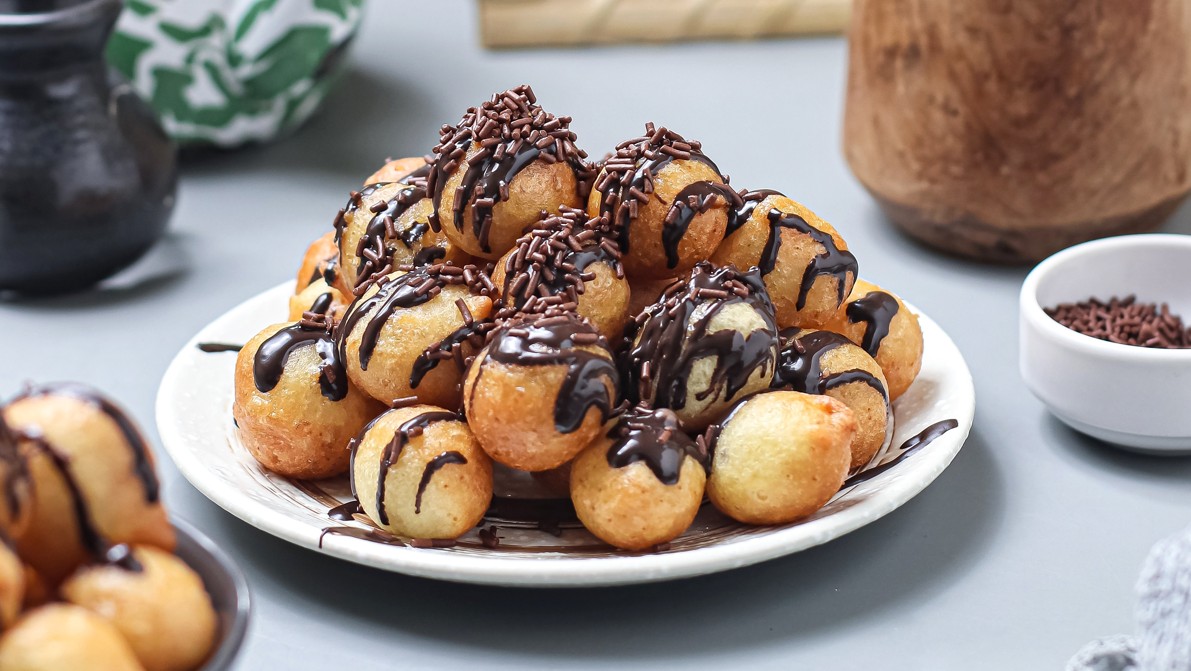
Sweet traditions are equally central. Luqaimat, crisp fried dough balls drizzled with date syrup or honey, are the quintessential Qatari dessert. Dates—especially prized varieties such as Khalas—are served with Arabic coffee as a symbol of hospitality. Karak tea, a strong, sweet, spiced milk tea introduced by the South Asian community, has become Doha’s most beloved street drink. Balaleet, sweet vermicelli topped with a savory omelet, reflects Persian influence and is commonly eaten for breakfast.
Everyday Qatari & Doha Food
Breakfast in Doha may include balaleet, eggs with khubz (Arabic flatbread), labneh, cheese, or za’atar. Lunch is traditionally the main meal, often centered on rice dishes such as machbous or biryani accompanied by salads, yogurt, and pickles. Dinner may mirror lunch or be lighter and is typically eaten late.
Rice is the dominant staple, while lamb remains the preferred meat, appearing in stews, grills, and slow-cooked preparations. Seafood—particularly hamour, safi (rabbitfish), shrimp, and kingfish—reflects Doha’s Gulf location. Dates and date products are ever-present, both nutritionally and symbolically. Mezze such as hummus, mutabbal, tabbouleh, and fattoush commonly accompany meals.
While traditional Qatari cuisine is based on desert and coastal practicality, Doha’s modern reality is profoundly international. With expatriates making up more than 80% of the population, everyday dining often includes Indian, Pakistani, Filipino, Levantine, African, and Western cuisines—frequently at exceptionally high quality and accessibility.
Cultural Fusion: Bedouin, Persian, Indian & Global Influences
Doha’s cuisine reflects centuries of trade and migration. Indigenous Bedouin traditions emphasized dates, camel products, and preserved foods suited to desert life. Persian influence introduced rice cookery, sweets, and flavor pairings. Indian and Pakistani communities, present for generations, contributed biryanis, curries, breads, and spice techniques.
Levantine influences dominate the mezze culture, while historic pearling trade connected Doha with East Africa and South Asia. The discovery of oil and gas transformed the city into a global crossroads, intentionally developing a luxury dining scene as part of Qatar’s cultural diplomacy. Today, Doha uniquely allows diners to experience a communal machbous in a traditional majlis and, hours later, a contemporary tasting menu by a celebrity chef—often within the same neighborhood.
Beverage Culture in an Islamic Society
Doha’s beverage culture is shaped by Islamic principles, desert climate, and hospitality rituals. Arabic coffee (gahwa) is central to social life—lightly roasted, flavored with cardamom, and served in small handle-less cups that are continually refilled until the guest gently shakes the cup to signal completion.
Karak tea is the city’s most popular everyday drink: strong, milky, sweet, and spiced. Fresh fruit juices, laban (buttermilk), ayran (yogurt drink), and specialty coffee are widely consumed. Alcohol is restricted to licensed hotel venues and private clubs, making luxury hotels important social spaces. The contrast between traditional sobriety and controlled luxury drinking environments is a defining feature of Doha’s dining scene.
International Dining and Luxury Scene
Despite its compact size, Doha offers one of the world’s most ambitious international dining scenes. Luxury hotels host restaurants by globally renowned chefs, and nearly every major world cuisine is represented at premium quality—Japanese, French, Italian, Indian, Lebanese, Turkish, Chinese, and more.
Modern Qatari restaurants increasingly reinterpret traditional dishes using contemporary techniques and presentation. Food destinations such as Souq Waqif, Msheireb Downtown, the Pearl-Qatar, and West Bay showcase the city’s culinary diversity. Fine dining tasting menus, architectural dining rooms, and experiential restaurants are particularly prominent, reflecting Doha’s wealth and global aspirations.
Food Customs and Practical Tips
Dining in Doha follows Arabian and Islamic customs. When visiting a Qatari home or majlis, remove your shoes before entering. Eat with the right hand only when dining traditionally, and take food from the section closest to you when sharing a communal dish. Accepting Arabic coffee and dates is an essential gesture of respect.
During Ramadan, eating, drinking, or smoking in public during daylight hours is prohibited. Modest dress is expected in traditional areas. Tipping (10–15%) is appreciated but often unnecessary where service charges apply. Reservations are essential for popular restaurants, especially in luxury hotels.
Explore by area: Souq Waqif for traditional food and atmosphere, Msheireb Downtown for modern cafés, the Pearl-Qatar for waterfront luxury dining, and West Bay for hotel-based fine dining. Expect high prices, particularly at international restaurants—Doha is among the world’s wealthiest cities. Above all, respect local customs while enjoying the city’s exceptional hospitality and remarkable culinary ambition.
This guide covers what to eat in Doha, from machbous and seafood sayadiya to Arabic coffee rituals and world-class international dining. Use it to plan your culinary exploration of Qatar’s glittering capital where desert tradition meets global luxury.
Check monthly weather averages for
Latest Secret Flying deals to Doha
New York to Dubai, UAE or Doha, Qatar from only $306 one-way
Cheap flights from New York to Dubai, UAE or Doha, Qatar from only $306 one-way.
View DealStockholm, Sweden to Doha, Qatar for only €220 roundtrip
Cheap flights from Stockholm, Sweden to Doha, Qatar for only €220 roundtrip.
View DealBucharest, Romania to Doha, Qatar for only €269 roundtrip
Cheap flights from Bucharest, Romania to Doha, Qatar for only €269 roundtrip.
View Deal [adblockingdetector id="638efa67113bf"]