


Dubai Food Guide
Food in Dubai: What to Eat & Drink
The culinary landscape of is a spectacular global crossroads where Arabian traditions meet unparalleled international luxury, creating one of the world’s most ambitious and diverse food destinations. As the United Arab Emirates’ most populous city and a global hub of commerce, tourism, and innovation, Dubai has developed a food culture that balances Emirati heritage with world-class global dining, fueled by visionary ambition, immense wealth, and its strategic position between East and West.
Dubai’s cuisine reflects its history as a pearl-diving and trading port, its breathtaking transformation from desert settlement to global metropolis, and its contemporary identity as a cosmopolitan melting pot where more than 200 nationalities coexist. The result is a dining scene that ranges from authentic Bedouin simplicity to extravagant culinary theater.
Local Specialities of Dubai
Dubai is celebrated for machboos, the UAE’s national dish of spiced rice cooked with lamb, chicken, or fish, flavored with dried lime (loomi) and aromatic Arabian spices. The city’s signature seafood, hamour (local grouper), appears grilled, fried, or stewed and represents the traditional bounty of the Arabian Gulf.
Camel meat, once a Bedouin staple, now appears in modern interpretations such as camel burgers and camel sausages, while camel milk is used in chocolates, ice cream, and coffee drinks. Harees, a slow-cooked porridge of wheat and meat, is especially popular during Ramadan. Luqaimat, sweet fried dough balls drizzled with date syrup, are the quintessential Emirati dessert.
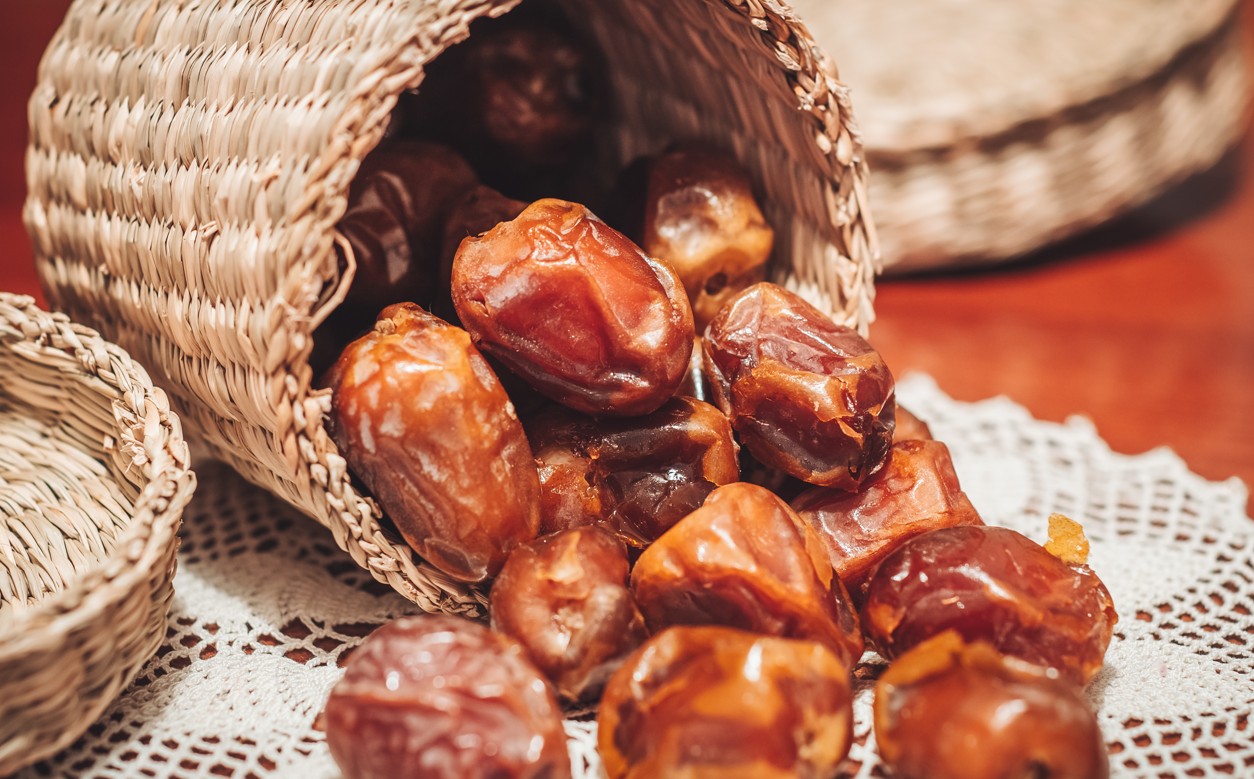
Dates from Al Ain and the Liwa Oasis—particularly Khalas and Medjool varieties—are served with Arabic coffee as a fundamental gesture of hospitality. Shawarma, though Levantine in origin, has been perfected in Dubai and is one of the city’s most beloved everyday foods. Karak chai, strong spiced milk tea introduced by the South Asian community, is Dubai’s iconic street drink. Al mandi, fragrant rice and meat cooked in a tandoor, reflects Yemeni influence that has become deeply local.
Everyday Emirati & Dubai Food
Breakfast in Dubai might include balaleet (sweet vermicelli topped with omelet), chebab (Emirati pancakes served with date syrup or cheese), or eggs with khameer bread. Lunch, traditionally the main meal for locals, often features rice dishes such as machboos or biryani with meat or fish, accompanied by salads and yogurt. Dinner is frequently eaten late and may be lighter.
Seafood—particularly hamour, kingfish, and shrimp—is common in traditional households, while lamb remains the preferred meat for celebrations. Dates and date products are omnipresent in Emirati homes. Middle Eastern mezze such as hummus, mutabbal, tabbouleh, and fattoush accompany many meals.
However, Dubai’s expatriate majority (over 85% of residents) means that everyday eating for most people is international. Indian curries, Pakistani grills, Filipino dishes, Iranian kebabs, East Asian noodles, and Western fast food are all widely available at high quality. Dubai’s 24-hour lifestyle means dining happens around the clock, with late-night restaurants and delivery culture deeply embedded.
Cultural Fusion: Emirati, Levantine, South Asian & Global Influences
Dubai’s cuisine is a layered product of historic trade routes and modern migration. Indigenous Bedouin traditions emphasized dates, camel products, and simple preservation methods. Persian influences introduced rice dishes and sweets. Indian and Pakistani communities brought biryanis, curries, and flatbreads that are now everyday staples.
Levantine influences from Lebanon, Syria, and Palestine dominate casual dining, while Yemeni, Iranian, and North African cuisines are also prominent. British colonial presence left minor culinary traces, while the oil-era transformation brought wealth and global populations. Dubai’s intentional positioning as a luxury tourism and business hub accelerated the creation of a world-class dining scene.
This fusion allows a uniquely Dubai experience: Emirati machboos in a heritage district, Lebanese mezze in a design-led café, Indian curry in Bur Dubai, and molecular gastronomy by a celebrity chef in a skyscraper—all within a single day.
Beverage Culture in a Global Islamic Society
Dubai’s beverage culture reflects Islamic traditions, desert climate, and global luxury. Arabic coffee (gahwa), lightly roasted and flavored with cardamom, is central to Emirati hospitality and served continuously in small cups. Karak chai has become a cultural institution, with dedicated shops across the city.
Fresh juices—particularly pomegranate, mango, and tamarind—are popular. Laban (buttermilk) and ayran (yogurt drink) are traditional refreshments. Alcohol is permitted only in licensed venues, primarily hotel restaurants and bars, creating a dynamic where luxury hotels function as social hubs.
Dubai’s specialty coffee scene is world-class, with international roasters and architecturally striking cafés. Mocktails and non-alcoholic drinks are highly sophisticated. What distinguishes Dubai is the contrast: traditional gahwa rituals in heritage districts alongside extravagant champagne brunches in five-star hotels.
International Dining and Luxury Scene
Dubai boasts one of the world’s most spectacular international dining scenes. Luxury hotels host restaurants by globally renowned chefs, including Gordon Ramsay, Nobu Matsuhisa, Massimo Bottura, and many others. Virtually every global cuisine is represented, often at multiple price levels and with regional specificity.
The city is known for theatrical dining concepts—underwater restaurants, panoramic sky-high dining, themed environments, and immersive culinary experiences. Events such as Dubai Food Festival and Dubai Restaurant Week highlight the city’s ambition. Michelin-starred dining has expanded rapidly, while food halls and delivery platforms provide unmatched convenience.
Despite the international focus, traditional Emirati cuisine is experiencing a revival, with restaurants dedicated to preserving and modernizing heritage dishes. This balance between tradition and excess encapsulates modern Dubai.
Food Customs and Practical Tips
Dining in Dubai follows a blend of Arabian customs and international norms. In traditional Emirati settings, remove shoes before entering majlis areas and eat with the right hand. Accepting Arabic coffee and dates is an essential sign of respect.
During Ramadan, eating, drinking, or smoking in public during daylight hours should be avoided, although many restaurants operate discreetly. Dress modestly in traditional areas. Tipping of 10–15% is appreciated but not mandatory. Reservations are essential for popular venues, especially weekend brunches.
Explore different areas: Al Fahidi Historical District for Emirati food, Downtown Dubai for luxury dining with Burj Khalifa views, Dubai Marina for waterfront restaurants, JBR for beachside dining, Bur Dubai and Deira for authentic South Asian eateries, and Jumeirah for contemporary cafés.
This guide covers what to eat in Dubai, from machboos and camel dishes to global fine dining and Arabic coffee rituals. Use it to plan your culinary exploration of the UAE’s dazzling metropolis where desert traditions meet global gastronomy.
Check monthly weather averages for
Latest Secret Flying deals to Dubai
Washington DC to Dubai, UAE for only $619 roundtrip
Cheap flights from Washington DC to Dubai, UAE for only $619 roundtrip.
View DealNew York to Dubai, UAE for only $535 roundtrip
Cheap flights from New York to Dubai, UAE for only $535 roundtrip.
View DealNew York to Dubai, UAE or Doha, Qatar from only $306 one-way
Cheap flights from New York to Dubai, UAE or Doha, Qatar from only $306 one-way.
View Deal [adblockingdetector id="638efa67113bf"]