


El Paso Food Guide
Food in El Paso: What to Eat & Drink
The culinary landscape of is a vibrant expression of borderland traditions, where Mexican, Texan, and New Mexican influences converge to create one of the United States’ most authentic regional cuisines. As Texas’ westernmost city and a major border metropolis intimately linked with Ciudad Juárez, El Paso has developed a food culture rooted in centuries of shared history, migration, and cultural exchange.
The city’s cuisine reflects its origins as a Spanish mission outpost, its long role as a military and transportation hub, and its modern identity as a bilingual, bicultural community. Shaped by the Chihuahuan Desert, the Rio Grande Valley, and generational Mexican home cooking, El Paso food is bold, hearty, and deeply connected to place.
Local Specialities of El Paso
El Paso is best known for its enchiladas montadas (“stacked enchiladas”), where corn tortillas are layered with cheese and onions, then smothered in red or green chile sauce rather than rolled. This preparation reflects strong New Mexican influence and distinguishes El Paso cooking from Tex-Mex traditions.
The city’s signature comfort dish, chile con queso, features melted cheese blended with roasted green chiles, typically without tomatoes—simpler and more chile-forward than versions found elsewhere in Texas. Menudo, a slow-simmered tripe and hominy soup, is a cultural institution traditionally eaten on weekends and special mornings.
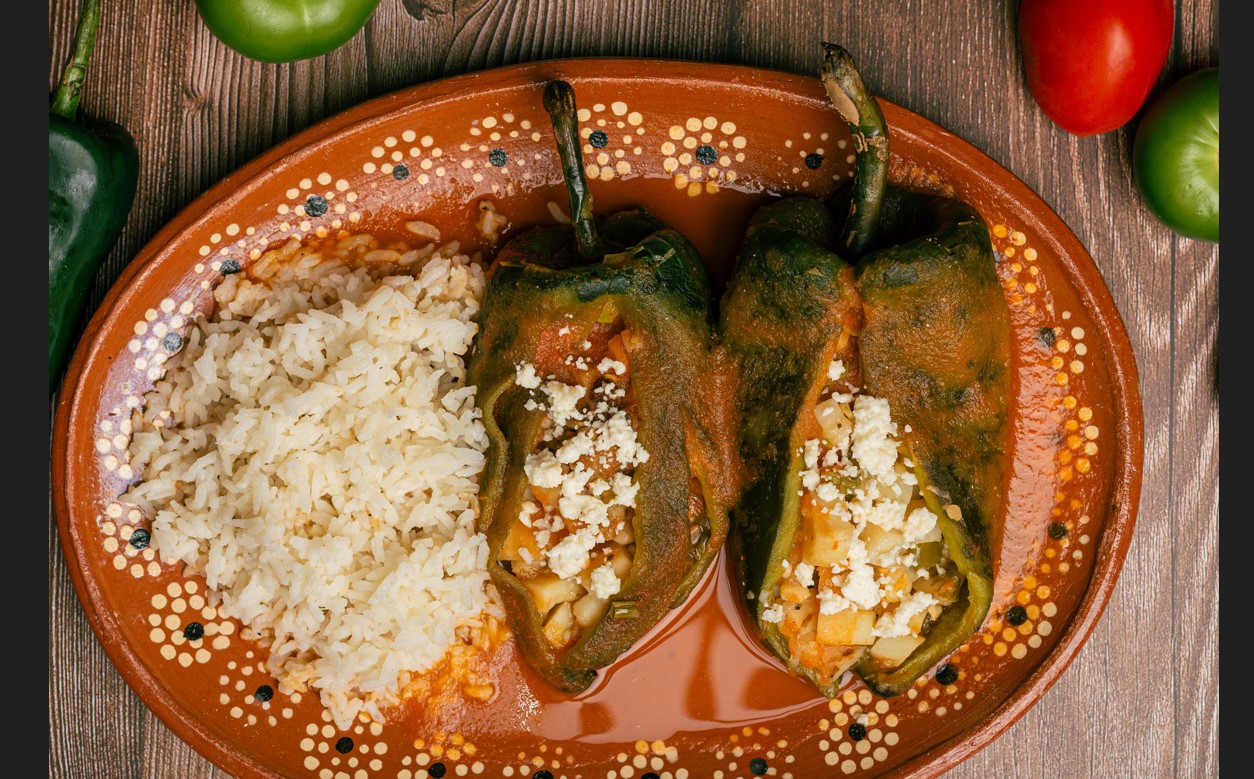
Carne asada, marinated and grilled beef served with tortillas and fresh salsa, represents El Paso’s outdoor and family-style cooking culture. Breakfast and lunch burritos—often filled with chorizo, potatoes, eggs, or machaca (dried shredded beef)—are everyday staples. Chiles rellenos, poblano peppers stuffed with cheese or meat, highlight the region’s chile agriculture.
For dessert, sopapillas—pillowy fried dough served with honey—are essential. Local bakeries produce excellent pan dulce and crusty bolillos. Margaritas made with fresh lime and quality tequila are the signature cocktail, while panaderías and taquerías anchor daily food life across the city.
Everyday Borderland & El Paso Food
Breakfast in El Paso almost always involves breakfast tacos or burritos, frequently eaten on the go. Lunch often features combination plates with enchiladas, tacos, rice, and beans. Dinner balances traditional Mexican cooking with modern Southwestern interpretations. Corn tortillas—often handmade—accompany nearly every meal.
Pinto beans simmered with pork fat or bacon are a daily staple, alongside Mexican rice cooked with tomatoes and spices. Beef is the preferred protein, appearing as carne asada, barbacoa (slow-cooked beef cheeks), and ground beef preparations. Chile peppers—green and red—are used fresh, roasted, dried, and powdered across countless dishes.
Dairy products such as cheese and crema are essential, while soups and stews remain popular due to the desert climate. El Paso’s large military presence (Fort Bliss) and university population (UTEP) support dining diversity while reinforcing strong Mexican culinary foundations.
Cultural Fusion: Mexican, Texan, New Mexican & Indigenous Influences
El Paso’s cuisine reflects centuries of layered borderland history. Indigenous peoples cultivated corn, beans, squash, and chile peppers long before European arrival. Spanish colonization introduced wheat, dairy, beef, and pork, blending Old World techniques with Indigenous ingredients.
Mexican independence and continued migration reinforced traditional Mexican cooking, while Texas statehood and American expansion introduced new dining customs. Proximity to New Mexico brought distinct chile varieties and preparations, particularly green chile sauces and stacked enchiladas.
The railroad era and the Mexican Revolution (1910–1920) further shaped El Paso’s food culture through migration and exchange. Today, constant cross-border movement with Ciudad Juárez ensures the cuisine remains authentic, evolving, and deeply rooted—culturally Mexican, politically American, and uniquely El Paso.
Craft Beverage Scene and Local Refreshments
El Paso’s beverage culture reflects its Mexican heritage and desert climate. Margaritas are the iconic drink, ranging from traditional lime to fruit-infused variations. Mexican beers such as Tecate, Modelo, and Corona are widely consumed, often served ice-cold with lime.
Agua frescas—including horchata, Jamaica (hibiscus), and tamarindo—are popular non-alcoholic options. Mexican Coca-Cola, made with cane sugar, has a devoted local following. Tequila and mezcal selections are extensive, reflecting proximity to Mexico.
The local craft beer scene has grown steadily, with breweries producing Mexican-style lagers and climate-appropriate ales. Coffee culture includes both American cafés and traditional café de olla, brewed with cinnamon and piloncillo. Cold, refreshing drinks dominate most of the year, while hot chocolate appears during cooler desert winters.
International Dining and Contemporary Scene
While Mexican cuisine overwhelmingly defines El Paso, the city offers increasing international diversity. Lebanese and Middle Eastern restaurants reflect early 20th-century immigration, while Korean and Vietnamese eateries serve military and university communities.
Modern Southwestern restaurants reinterpret borderland cuisine with contemporary techniques, while steakhouses highlight regional beef. Food trucks are a major part of the scene, specializing in tacos, burritos, and creative fusions.
What distinguishes El Paso is authenticity—this is not tourist-driven Tex-Mex, but multi-generational home cooking preserved in family-run restaurants and neighbourhood bakeries, where recipes are lived rather than curated.
Food Customs and Practical Tips
Dining in El Paso is casual, family-oriented, and welcoming. Many restaurants are multi-generational businesses. Tipping of 15–20% is standard, and reservations are rarely required except at upscale restaurants.
When ordering, remember that “hot” truly means spicy—start cautiously with salsas. Try both red and green chile sauces, as they offer distinct flavours. Visit local panaderías early in the morning for the best pan dulce, and don’t miss weekend menudo, which is as much ritual as meal.
Explore different areas: Downtown and Segundo Barrio for historic family-owned restaurants, Ysleta for traditional eateries near the mission, the West Side for newer dining options, and the UTEP area for student-friendly spots. El Paso offers exceptional value, generous portions, and deeply rooted hospitality.
This guide covers what to eat in El Paso, from enchiladas montadas and chile con queso to carne asada and traditional Mexican cooking. Use it to plan your culinary exploration of America’s largest border city, where Mexican heritage and Texas hospitality meet in one of the country’s most authentic food cultures.
Check monthly weather averages for
Latest Secret Flying deals to El Paso
SUMMER: Vancouver, Canada to El Paso, Texas for only $317 CAD roundtrip
Summer flights from Vancouver, Canada to El Paso, Texas for only $317 CAD roundtrip with United Airlines.
View DealSUMMER: San Juan, Puerto Rico to El Paso, Texas for only $272 USD roundtrip (Aug-Sep dates)
Summer flights from San Juan, Puerto Rico to El Paso, Texas for only $272 USD roundtrip with American Airlines.
View DealParis, France to El Paso, Texas for only €324 roundtrip (Sep-Jul dates)
Cheap flights from Paris, France to El Paso, Texas for only €324 roundtrip with Iberia, American Airlines and British Airways.
View Deal [adblockingdetector id="638efa67113bf"]