


El Salvador Food Guide
Food in El Salvador: What to Eat & Drink
The culinary landscape of is a vibrant expression of indigenous Pipil traditions, Spanish colonial influences, and Central American agricultural heritage, creating one of Latin America’s most distinctive and underappreciated national cuisines. As the smallest and most densely populated country in Central America, El Salvador has developed a deeply rooted food culture built around corn, beans, cheese, and tropical produce, defined by handmade techniques and powerful cultural symbolism.
Salvadoran cuisine reflects the country’s history as the Land of Cuzcatlán, its colonial past, the hardships of civil war, and its modern identity as a nation marked by resilience, migration, and cultural pride. The food is modest in ingredients but rich in tradition—nowhere more evident than in the iconic pupusa, which anchors everyday life and national identity.
National Specialities of El Salvador
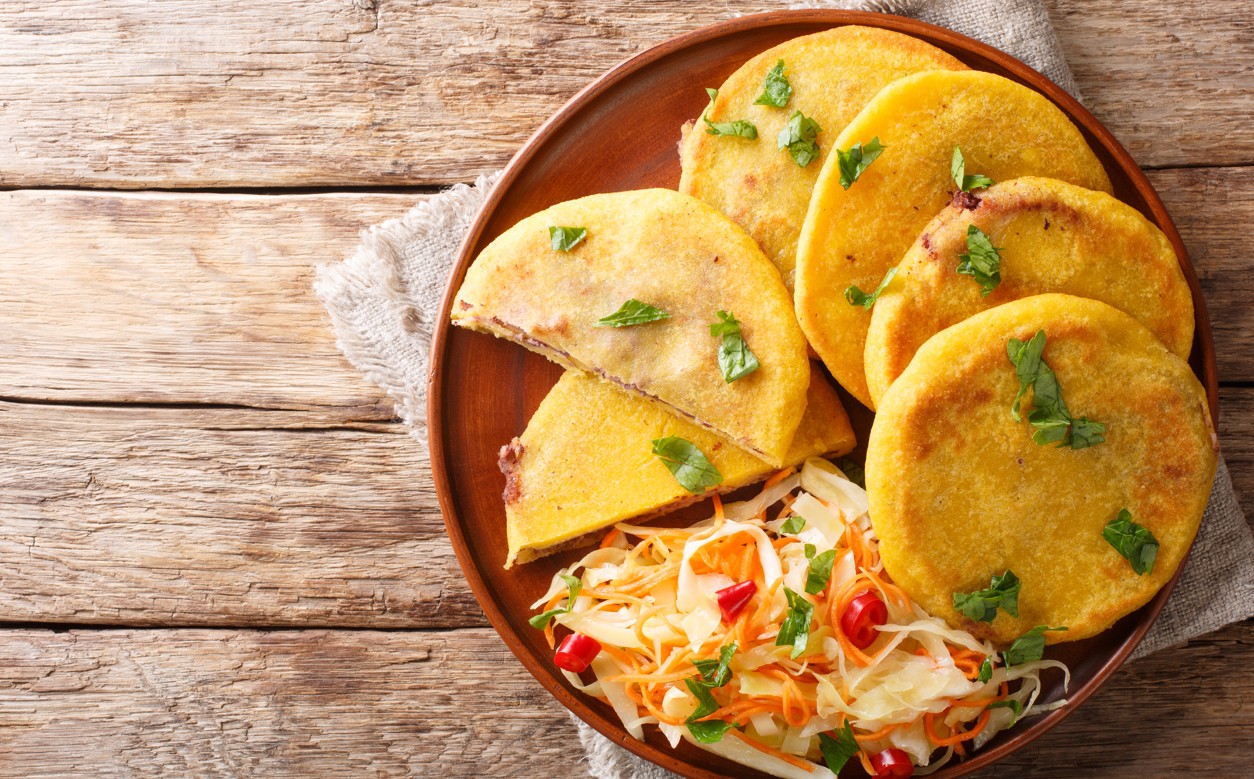
El Salvador is world-famous for its pupusas, thick handmade corn tortillas stuffed with fillings such as cheese (queso), refried beans (frijoles refritos), and seasoned pork (chicharrón), always served with curtido (a lightly fermented cabbage slaw) and tomato salsa. So central is this dish that November 13 is celebrated as National Pupusa Day.
Pupusas revueltas, combining cheese, beans, and pork, are the most popular variation, while loroco con queso—featuring a native edible flower—represents one of the country’s most distinctive flavors. Yuca frita con chicharrón (fried cassava with seasoned pork) is a beloved weekend dish, while panes con pavo or panes con pollo—stuffed turkey or chicken sandwiches—are traditional holiday foods.
Sopa de pata, a rich cow’s foot soup with vegetables, tripe, and corn, is classic comfort food. Tamales Salvadoreños, wrapped in banana leaves, are larger and softer than Mexican tamales. Desserts include empanadas de plátano (sweet plantain turnovers filled with milk custard) and semita, a traditional sweet bread layered with fruit jam.
Everyday Salvadoran Food
Breakfast in El Salvador often includes eggs, refried red beans, fried plantains, fresh cheese, and handmade tortillas—sometimes served together as a plato típico. Lunch is the main meal of the day, usually featuring meat or chicken accompanied by rice, beans, salad, and tortillas. Dinner tends to be lighter but similar in composition.
Red beans are eaten daily, refried for breakfast and served whole at other meals. Rice is a constant presence, while fresh cheeses appear in nearly every dish. Plantains—both ripe (maduros) and green (verdes)—are fried, boiled, or mashed. Tropical fruits such as mango, pineapple, jocote, and marañón are consumed fresh or blended into drinks.
Salvadoran cooking places strong emphasis on freshness and handmade preparation. Even simple meals require significant labor, reflecting a culinary culture built on care rather than convenience. Meat is often used sparingly, stretched through stews or combined with other ingredients, resulting in resourceful and deeply flavorful dishes.
Cultural Fusion: Pipil Indigenous, Spanish & Central American Influences
Salvadoran cuisine is the product of layered cultural histories. Indigenous Pipil foundations centered on corn, beans, squash, cacao, and turkey—the core of Mesoamerican food systems. Spanish colonization introduced wheat, rice, dairy, beef, pork, chicken, and techniques such as frying and baking.
African influences, though less visible, contributed certain ingredients and methods via colonial trade. Regional Central American exchanges added further variation. The civil war (1980–1992) and widespread migration shaped food practices through scarcity, adaptation, and diaspora reinterpretations.
The result is a uniquely Salvadoran cuisine where indigenous corn-based pupusas are filled with Spanish-introduced cheese and pork, paired with curtido that reflects European cabbage traditions—history served on a single plate.
Beverage Culture and Local Refreshments
El Salvador’s beverage culture reflects its tropical climate and agricultural strengths. Coffee is central to both economy and identity—Salvadoran coffee, especially from the Apaneca-Ilamatepec region, is internationally respected for its balance, sweetness, and chocolate notes.
Horchata Salvadoreña is distinct from Mexican versions, incorporating morro seeds that give it a gray color and nutty flavor. Atol de elote, a sweet corn drink, is traditional comfort fare, while chilate—made from corn and cacao—has pre-Columbian roots.
Fresh fruit drinks (frescos) are everywhere, including tamarind, hibiscus, pineapple, and melon. Local beers such as Pilsener are widely consumed, while soft drinks like Tic Tac and Kolashampan have cult status. What distinguishes Salvadoran beverage culture is the pride placed in coffee and horchata—both national symbols.
International Dining and Contemporary Scene
Traditional Salvadoran cuisine dominates daily eating, but urban centers offer growing international diversity influenced by globalization and returning diaspora. Mexican, Chinese, and Italian restaurants are common in San Salvador, alongside American fast-food chains adapted to local tastes.
Modern Salvadoran restaurants are reinterpreting traditional dishes with refined presentation and contemporary techniques, particularly in upscale neighborhoods such as Zona Rosa. Despite this, Salvadoran dining remains overwhelmingly national—foreign cuisines are often adapted with local ingredients and flavors.
Street food culture remains central, accessible, and authentic, offering some of the country’s best meals at very low cost. What defines Salvadoran dining is not trendiness but intimacy—food is inseparable from family life, community gatherings, and daily routines.
Food Customs and Practical Tips
Dining in El Salvador is informal and family-oriented. When invited into a home, it is polite to try everything offered. Pupusas are traditionally eaten with the hands, though utensils are common. Washing hands before meals is customary.
Street food is generally safe when freshly cooked—busy pupusa stands are the best indicator of quality. Always eat pupusas with curtido and salsa; they are essential to the dish. Try fillings beyond the basics—loroco with cheese is a national favorite.
Explore San Salvador for variety, smaller towns for regional specialties, and coastal areas for seafood adaptations. Markets are excellent places to discover local ingredients. Drink only bottled or purified water. El Salvador offers outstanding value—large portions, low prices, and deeply satisfying food.
This guide covers what to eat in El Salvador, from pupusas and yuca frita to traditional soups, desserts, and unique beverages. Use it to plan your culinary exploration of Central America’s smallest country with one of its most powerful and beloved food cultures.
Check monthly weather averages for
Latest Secret Flying deals to El Salvador
⚠️ ERROR FARE ⚠️ Open-jaw from European cities to Latin America from only €152 roundtrip
Error Fare, open-jaw flights from European cities to Latin America from only €152 roundtrip with Iberia.
View DealOttawa, Canada to San Salvador, El Salvador for only $421 CAD roundtrip
Cheap flights from Ottawa, Canada to San Salvador, El Salvador for only $421 CAD roundtrip with Avianca.
View DealNon-stop from Houston, Texas to San Salvador, El Salvador for only $266 roundtrip
Non-stop flights from Houston, Texas to San Salvador, El Salvador for only $266 roundtrip with United Airlines.
View Deal [adblockingdetector id="638efa67113bf"]