


Fortaleza Food Guide
Food in Fortaleza: What to Eat & Drink
The culinary landscape of is a vibrant celebration of Northeastern Brazilian traditions, coastal abundance, and Afro-Indigenous influences, creating one of Brazil’s most flavorful and distinctive regional cuisines. As the capital of Ceará and the economic heart of Brazil’s Northeast, Fortaleza has developed a food culture shaped by sun, sea, and the resilience of the sertão (arid hinterland).
The city’s cuisine reflects its history as a fishing village turned major Atlantic port, its identity as a land of beaches, forró music, and strong regional pride, and its modern role as a growing metropolis and tourism hub. Fortaleza’s food is bold, colorful, and expressive—deeply connected to both the Atlantic Ocean and the inland traditions of Northeastern Brazil.
Local Specialities of Fortaleza
Fortaleza is famous for caranguejada, a lively crab feast where whole crabs are cooked in a spicy broth and eaten communally by hand, usually accompanied by ice-cold beer at beachside barracas. The city’s signature seafood dish, peixada cearense, features fresh local fish (commonly snapper or grouper) simmered with vegetables in a light coconut-based broth.
Baião de dois, a hearty dish of rice and beans cooked together with dried meat, queijo coalho (local cheese), and herbs, represents the culinary soul of the sertão. Moqueca cearense, Ceará’s version of Brazil’s iconic seafood stew, uses local fish, coconut milk, and dendê (palm oil), often prepared in clay pots.
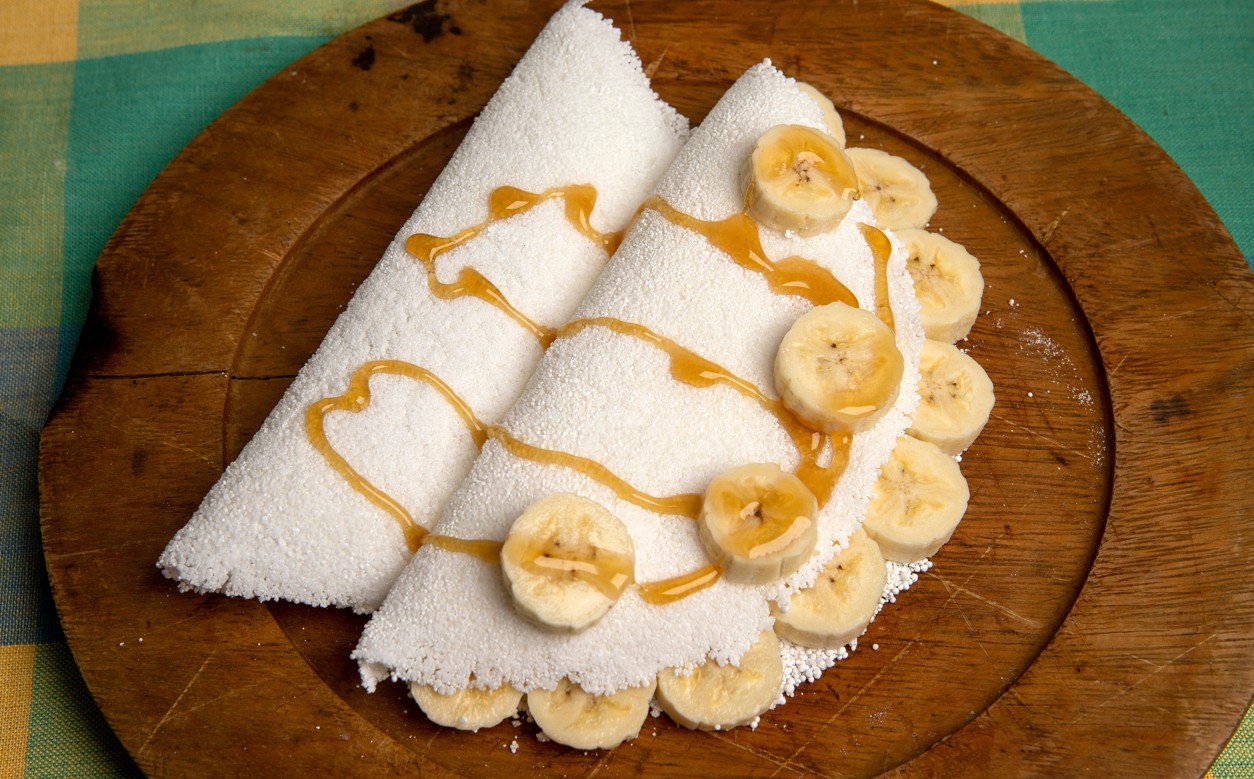
Tapioca, the naturally gluten-free crepe made from hydrated cassava starch, is a daily staple served sweet or savory from street stalls. Carne de sol (sun-dried beef) appears grilled, shredded, or paired with beans and farofa. Cuscuz nordestino, steamed cornmeal often served with coconut, cheese, or eggs, is a beloved breakfast dish. Regional sweets and drinks made from cashew fruit—such as doce de caju and cajuína—highlight Ceará’s status as one of the world’s largest cashew producers.
Everyday Northeastern Brazilian & Fortaleza Food
Breakfast in Fortaleza commonly includes fresh tropical fruit, tapioca filled with cheese or coconut, or cuscuz nordestino with butter or eggs. Lunch, the main meal, typically consists of rice, beans, grilled fish or meat, farofa (toasted cassava flour), and salad. Dinner may be similar or lighter, with many locals opting for seafood or street food.
Cassava products—farofa, tapioca, and flour—are everyday staples. Coconut milk is used generously in both savory dishes and desserts. Beans, especially cowpeas and black-eyed peas, are widely consumed. Fortaleza’s seafood is abundant and affordable, featuring shrimp, lobster, octopus, and a wide variety of local fish. Tropical fruits such as caju (cashew fruit), mango, guava, acerola, and passion fruit are eaten fresh or blended into juices.
The city’s intense heat shapes eating habits: lighter foods and hydrating drinks dominate midday, while heartier sertão-inspired dishes appear later in the day. Street food culture is exceptionally vibrant, with vendors selling grilled meat skewers, tapioca, roasted corn, and fresh coconut water across the city.
Cultural Fusion: Indigenous, African, Portuguese & Sertão Influences
Fortaleza’s cuisine is the result of layered cultural exchange. Indigenous peoples laid the foundation with cassava, corn, fish, and native fruits. African influences, brought through slavery, introduced dendê oil, coconut-based cooking, okra, and bold seasoning. Portuguese colonization added cattle, dairy, wheat, and stewing techniques.
The sertão contributed dried meats, goat, and resourceful preservation methods developed for life in an arid climate. This fusion creates a uniquely Fortaleza experience where Indigenous tapioca meets Portuguese cheese, African-influenced seafood stews simmer in dendê oil, and sertão carne de sol anchors hearty meals. The contrast between coast and interior is one of the defining characteristics of Northeastern Brazilian cuisine.
Beverage Culture and Local Refreshments
Fortaleza’s beverage culture reflects its tropical climate and social energy. Cachaça, Brazil’s sugarcane spirit, forms the base of the caipirinha, the national cocktail made with lime, sugar, and ice—ideal for hot beach days. Fresh coconut water served straight from the nut is the city’s most popular refreshment.
Fresh fruit juices are exceptional, particularly caju, acerola, maracujá (passion fruit), and guava. Beer is consumed ice-cold, with brands like Skol and Antarctica dominating. Cajuína, a clarified, non-alcoholic cashew juice, is a regional specialty. Coffee is strong and sweet, usually served in small cups.
What truly distinguishes Fortaleza is its beach-bar culture: thatched barracas lining Praia do Futuro serve seafood, cold drinks, and caipirinhas directly on the sand, often accompanied by live forró music and a festive, communal atmosphere.
International Dining and Contemporary Scene
While Northeastern Brazilian cuisine dominates, Fortaleza offers a growing international dining scene driven by tourism and urban growth. Italian, Japanese, and Middle Eastern restaurants are increasingly common, often adapted to Brazilian tastes and ingredients.
Modern Brazilian restaurants in neighborhoods like Meireles and Aldeota reinterpret traditional dishes with contemporary techniques and presentation. Despite this evolution, Fortaleza’s most memorable meals are often the simplest: grilled fish at a beach barraca, tapioca from a street vendor, or moqueca served in a family-run restaurant. Even upscale establishments proudly highlight regional ingredients, reinforcing the city’s strong culinary identity.
Food Customs and Practical Tips
Dining in Fortaleza is relaxed and social. Beach barracas are barefoot-friendly, while city restaurants range from casual to refined. A 10% service charge is customary and often included on the bill.
Caranguejada is intentionally messy—use the wooden mallet provided and dress accordingly. Tapioca is endlessly customizable and worth trying in multiple versions. June’s Festas Juninas bring special corn-based dishes and festive foods. Street food is widely enjoyed and generally safe when freshly prepared.
Explore different areas: Praia do Futuro for beachside seafood, Mercado Central for traditional foods and regional products, Meireles and Aldeota for upscale dining, and Dragão do Mar for cultural venues with restaurants and bars. Drink plenty of water, eat lighter during the hottest hours, and take advantage of Fortaleza’s excellent value—fresh seafood is plentiful and portions generous. Above all, embrace the Northeastern spirit: food here is about sharing, celebration, music, and enjoying life under the sun.
This guide covers what to eat in Fortaleza, from caranguejada and peixada cearense to tapioca, carne de sol, and Northeastern Brazilian classics. Use it to plan your culinary exploration of Ceará’s vibrant capital where beach culture and sertão traditions come together on every plate.
 [adblockingdetector id="638efa67113bf"]