


Frankfurt Food Guide
Food in Frankfurt: What to Eat & Drink
The culinary landscape of is a sophisticated blend of Hessian traditions, apple wine culture, and global finance-driven diversity, making it one of Germany’s most distinctive and cosmopolitan food destinations. As the country’s financial capital and one of Europe’s busiest transportation hubs, Frankfurt has developed a food culture that balances hearty regional cooking with exceptional international dining.
The city’s cuisine reflects its history as a medieval imperial city and trade fair center, its destruction and reconstruction after World War II, and its modern role as a global banking powerhouse. The result is a dining scene where deeply rooted local traditions coexist seamlessly with world-class global gastronomy.
Local Specialities of Frankfurt
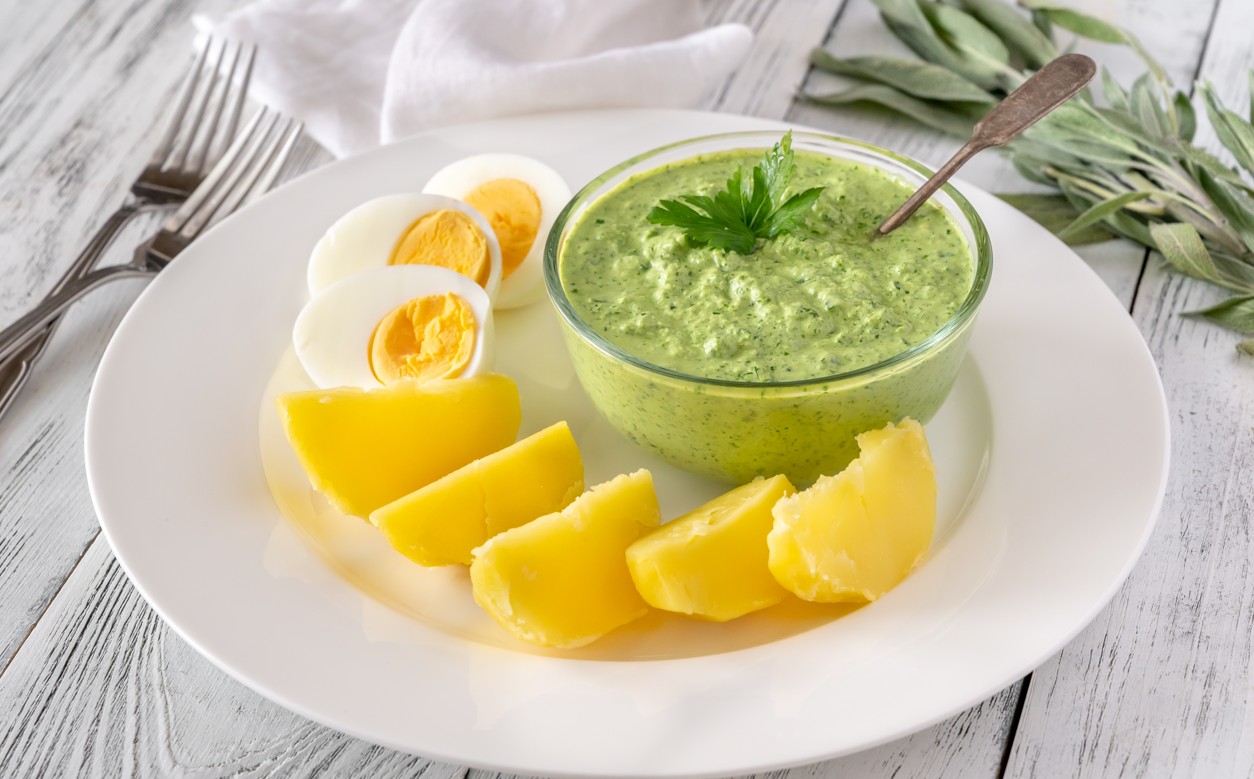
Frankfurt is best known for Frankfurter Grüne Soße (Green Sauce), a cold herb sauce made from seven specific herbs—borage, chervil, cress, parsley, salad burnet, sorrel, and chives—mixed with sour cream or yogurt. It is traditionally served with boiled potatoes and hard-boiled eggs and is considered the city’s most iconic regional dish.
The original Frankfurter Würstchen, a finely minced, lightly smoked pork sausage, is served hot with bread and mustard and is the ancestor of the modern hot dog. Handkäse mit Musik, a sour milk cheese marinated in vinegar, oil, and onions, is a classic tavern snack, with the “music” humorously referring to its digestive effects.
Other traditional dishes include Rippchen mit Kraut (cured pork chops with sauerkraut and mashed potatoes) and Frankfurter Kranz, a ring-shaped sponge cake layered with buttercream, jam, and caramelized nuts. Seasonal specialties include Bethmännchen, marzipan pastries decorated with three almonds, and Frankfurter Brenten, traditional almond cookies. Frankfurt’s signature drink, Apfelwein (apple wine, locally called Ebbelwoi), defines the city’s tavern culture and is served in distinctive ribbed glasses known as Gerippte.
Everyday Hessian & Frankfurt Food
Breakfast in Frankfurt typically consists of fresh Brötchen (bread rolls) with cheese, cold cuts, or jam, accompanied by coffee. Lunch often features schnitzel, sausages, or hearty casseroles, while dinner may be lighter, traditionally centered around Abendbrot—bread with cold cuts, cheese, and pickles.
Pork is the dominant protein, appearing in sausages, schnitzel, roasts, and cured meats. Potatoes are the essential starch, prepared as dumplings, pancakes, mashed, or fried. Cabbage, particularly sauerkraut, is a staple accompaniment. Apples play a central role, both fresh and processed into sauces and apple wine. Bread culture is strong, especially dark rye and sourdough varieties.
Frankfurt’s international business community supports a thriving weekday lunch scene, with many restaurants offering Mittagstisch (set lunch menus). The city’s apple wine taverns (Apfelweinwirtschaften), particularly in Sachsenhausen, remain social institutions where traditional Hessian food is served in convivial, often rustic surroundings.
Cultural Fusion: Hessian Traditions & Global Influences
Frankfurt’s cuisine reflects centuries of trade and migration. Traditional Hessian cooking developed around preserved foods suitable for colder climates. Frankfurt’s long history as a trade fair city, dating back to the 13th century, exposed it early to foreign ingredients and culinary ideas.
Post-war reconstruction and Frankfurt’s rise as a global financial center transformed the city into one of Europe’s most international urban environments. Today, residents from over 180 nations live in Frankfurt. This creates a uniquely Frankfurt experience: traditional Grüne Soße in a Sachsenhausen tavern followed by world-class Japanese, French, or Korean cuisine minutes away in the city center.
Craft Beverage Scene and Liquid Heritage
Frankfurt’s beverage culture is dominated by Apfelwein, a tart, cloudy fermented apple drink that is lower in alcohol than wine and deeply embedded in local identity. It is traditionally served in 0.3-liter ribbed glasses (Gerippte) and poured from stoneware jugs called Bembel.
Popular variations include apple wine spritzers: Sauergespritzer (with sparkling water) and Süßgespritzer (with lemonade). Local beers such as Binding and Henninger are widely available, while apple brandy (Apfelbrand) is a traditional digestif. Excellent wines from nearby Rheingau and Rheinhessen regions are common on menus.
Coffee culture is strong, with a growing number of specialty cafés, and the cocktail scene is sophisticated, particularly in Nordend and Bornheim. What sets Frankfurt apart is its apple wine tavern culture—communal, informal spaces where locals and visitors share tables, food, and pitchers of Ebbelwoi.
International Dining and Contemporary Scene
Frankfurt is one of Germany’s strongest cities for international dining. The city is particularly renowned for its Japanese restaurants, some considered among the best in Europe, reflecting close economic ties with Japan. Korean, Chinese, Thai, and Vietnamese cuisines are widely available and authentic.
Italian cuisine is deeply embedded in everyday dining, while French, Spanish, and Mediterranean restaurants dominate the upscale scene. Turkish, Middle Eastern, Balkan, and African cuisines are especially strong in neighborhoods like Bahnhofsviertel. Modern German restaurants reinterpret traditional dishes with contemporary techniques, serving both business diners and locals.
Despite its global outlook, Frankfurt maintains strong regional roots—apple wine taverns and Hessian classics remain an essential part of the city’s food identity.
Food Customs and Practical Tips
Dining in Frankfurt ranges from casual taverns to Michelin-starred restaurants. Tipping is modest—rounding up or adding 5–10% is customary. Reservations are recommended for popular restaurants, especially apple wine taverns in Sachsenhausen on weekends.
When visiting an apple wine tavern, order a Gerippte glass and consider sharing dishes—they are designed for communal eating. Grüne Soße is highly seasonal and traditionally eaten in spring and early summer. Visit the Kleinmarkthalle for one of Germany’s best indoor food markets, featuring both regional and international vendors.
Explore different districts: Sachsenhausen for traditional apple wine culture, Nordend and Bornheim for modern cafés and bistros, Bankenviertel for upscale business dining, and Bahnhofsviertel for diverse international cuisine. Frankfurt offers excellent value across price points and one of Europe’s most varied dining scenes. Most importantly, embrace the contrast—few cities allow you to enjoy centuries-old tavern culture and world-class global dining within the same evening.
This guide covers what to eat in Frankfurt, from Grüne Soße and Frankfurter sausages to apple wine culture and international cuisine. Use it to plan your culinary exploration of Germany’s financial capital where tradition and globalization meet at every meal.
Check monthly weather averages for
Latest Secret Flying deals to Frankfurt

🔥 Chiang Mai, Thailand to European cities from only $176 USD one-way
Cheap flights from Chiang Mai, Thailand to European cities from only $176 USD one-way with Etihad Airways.
View Deal🔥 Krabi, Thailand to European cities from only $171 USD one-way
Cheap flights from Krabi, Thailand to European cities from only $171 USD one-way with Etihad Airways.
View Deal [adblockingdetector id="638efa67113bf"]