


Guadalajara Food Guide
Food in Guadalajara: What to Eat & Drink
The culinary landscape of is a powerful expression of Jalisco tradition, Mexican identity, and evolving creativity, making it one of the most influential food cities in the country. As the capital of Jalisco and Mexico’s second-largest metropolitan area, Guadalajara has developed a food culture that remains fiercely traditional while increasingly open to modern interpretation, all rooted in the agricultural wealth of western Mexico and the city’s role as the birthplace of mariachi, tequila, and charrería (Mexican rodeo).
The city’s cuisine reflects its Spanish colonial foundations, its importance during the Mexican War of Independence, and its contemporary emergence as a cultural and technology hub. What results is food that is bold, layered, and deeply symbolic—dishes that define not only regional identity, but Mexican cuisine as a whole.
Local Specialities of Guadalajara
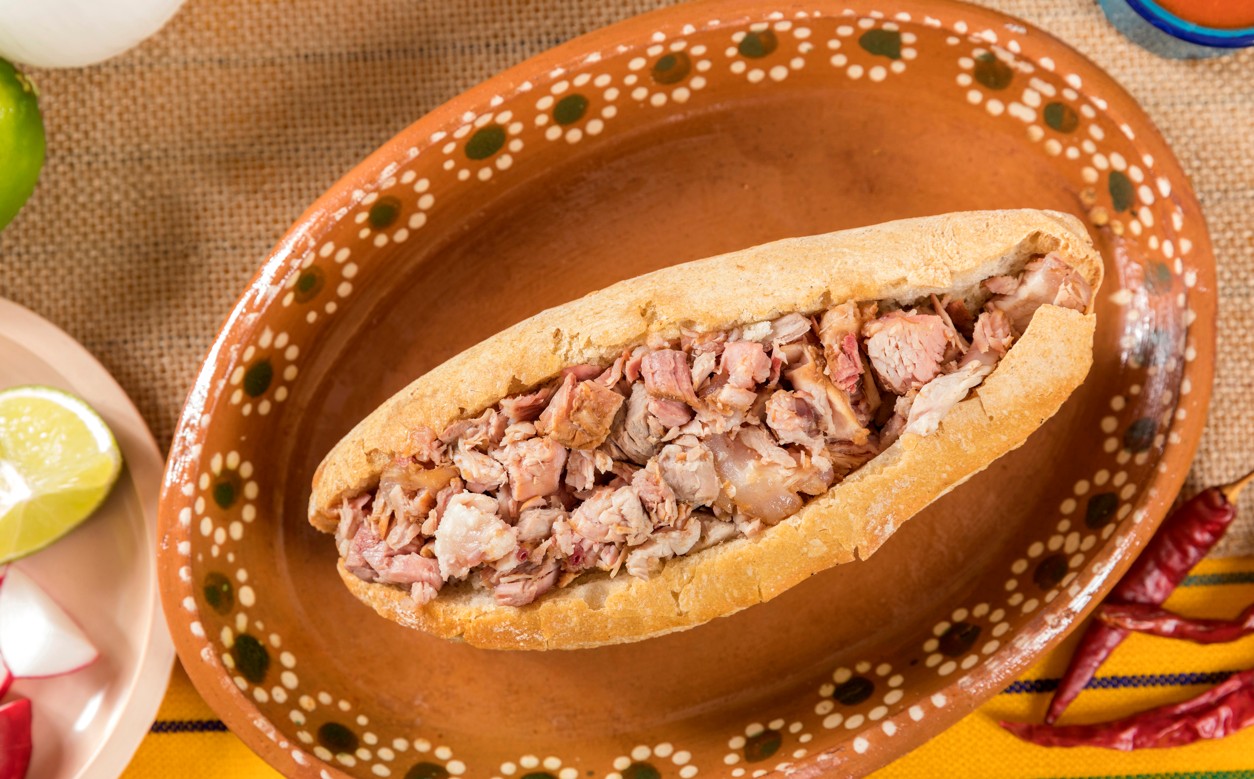
Guadalajara is world-famous for its torta ahogada, the city’s defining dish and a point of intense local pride. This “drowned sandwich” features crusty birote bread filled with carnitas (slow-fried pork) and completely submerged in a spicy tomato–chili sauce, often topped with pickled onions. Messy, fiery, and unapologetic, it is Guadalajara on a plate.
Birria, Jalisco’s iconic slow-cooked stew of goat or beef marinated in dried chilies and spices, is traditionally eaten on weekend mornings, served with its rich consommé for dipping. Carne en su jugo, thin slices of beef cooked in their own juices with bacon, beans, and cilantro, is a comforting local specialty rarely found elsewhere.
Pozole, the celebratory hominy soup made with pork and red chili broth, reaches one of its highest expressions in Guadalajara, particularly the deeply flavored pozole rojo. For dessert, jericalla—a baked custard similar to flan but firmer and lightly caramelized—is the city’s signature sweet.
Tequila, produced from blue agave in nearby towns such as Tequila and Amatitán, is inseparable from Guadalajara’s food culture. Tejuino, a lightly fermented corn drink served with lime and chili, is a uniquely local refreshment, while seafood dishes like ceviche de la romana (shrimp, octopus, avocado in tomato sauce) reflect the city’s Pacific connections.
Everyday Jaliscense & Guadalajara Food
Breakfast in Guadalajara may include huevos rancheros, chilaquiles, or birria—especially on weekends, when birria stalls become morning institutions. Lunch is traditionally the main meal and often includes soup, rice, a main dish, beans, tortillas, and an agua fresca. Dinner is lighter, frequently centered around antojitos such as tacos, sopes, or tostadas.
Fresh corn tortillas are essential and accompany nearly every meal. Frijoles de la olla (whole pinto beans) are consumed daily. Pork dominates local cooking, appearing as carnitas, chicharrón, and slow-simmered stews. Chili peppers—guajillo, ancho, árbol—are used fresh, dried, and ground, creating depth rather than sheer heat.
Dairy plays an important supporting role through crema, fresh cheeses, and melting cheeses. Street food culture is deeply respected across all social classes, with busy stalls considered legitimate culinary institutions. Guadalajara’s mild, spring-like climate encourages outdoor eating year-round in markets, plazas, and neighborhood streets.
Cultural Fusion: Indigenous, Spanish & Regional Mexican Influences
Guadalajara’s cuisine is a direct product of Mexico’s mestizo heritage. Indigenous cultures contributed corn, beans, chilies, squash, and foundational cooking techniques. Spanish colonization introduced pork, beef, dairy, wheat, rice, and new methods such as frying and baking.
The synthesis created dishes that define Mexican food globally, with Jalisco’s geography and agricultural conditions shaping their local expression. Over time, migration, revolution, and regional exchange reinforced Guadalajara’s position as a culinary standard-bearer. A bowl of pozole here is not simply regional food—it is a national symbol prepared with particular confidence and pride.
Beverage Culture and Local Libations
Guadalajara sits at the heart of tequila country, and its beverage culture reflects deep respect for agave spirits. Tequila is traditionally sipped neat from a caballito glass, not rushed, and appreciated by style—blanco, reposado, or añejo. Cantaritos, refreshing cocktails of tequila, citrus, and grapefruit soda served in clay cups, are popular in casual settings.
Raicilla, a lesser-known regional agave spirit from nearby mountains, is increasingly celebrated. Mexican beers such as Pacifico and Tecate are everyday staples. Non-alcoholic options are equally important: aguas frescas like horchata, jamaica (hibiscus), and tamarindo are consumed daily.
Café de olla, brewed with cinnamon and piloncillo, reflects traditional coffee culture. Tejuino remains one of the city’s most distinctive drinks. What sets Guadalajara apart is not just tequila consumption, but its understanding—production, terroir, and tradition treated as cultural heritage rather than nightlife accessory.
International Dining and Contemporary Scene
While traditional Mexican cuisine dominates, Guadalajara’s growth has brought notable international dining. Italian, French, Japanese, and Middle Eastern restaurants serve a cosmopolitan population, while Korean and Chinese kitchens often adapt flavors to local preferences.
Modern Mexican restaurants, particularly in Colonia Americana and Providencia, reinterpret classic dishes with refined techniques and contemporary presentation. Despite this evolution, Guadalajara’s food scene remains unmistakably Mexican—international influences are layered on top of tradition, not substituted for it.
The city’s expanding tech sector and affluent neighborhoods support ambitious dining without sacrificing authenticity. What defines Guadalajara’s contemporary scene is continuity: innovation that respects roots rather than replacing them.
Food Customs and Practical Tips
Dining in Guadalajara is relaxed, social, and family-oriented. Many establishments are multi-generational, and food is closely tied to identity. Tipping of 10–15% is standard. Reservations are generally only required for upscale restaurants.
When eating a torta ahogada, accept the chaos—it is meant to be messy, and the plastic bag it’s served in is part of the ritual. Try birria in the morning on weekends for the most authentic experience. Visit traditional markets such as Mercado San Juan de Dios or Mercado Corona for some of the city’s best food.
Explore different neighborhoods: Centro Histórico for traditional fondas, Colonia Americana for cafés and modern dining, Tlaquepaque for artisan atmosphere and elevated Mexican cuisine, and Chapultepec for nightlife and contemporary eateries. Street food is generally safe at busy stalls. Be mindful of spice levels—Jalisco cuisine can be assertive.
This guide covers what to eat in Guadalajara, from torta ahogada and birria to pozole and tequila culture. Use it to plan your culinary exploration of Mexico’s cultural heartland, where food is not just nourishment, but history, pride, and identity served on every plate.
Check monthly weather averages for
Latest Secret Flying deals to Guadalajara
Non-stop from Toronto, Canada to Guadalajara, Mexico for only $452 CAD roundtrip
Non-stop flights from Toronto, Canada to Guadalajara, Mexico for only $452 CAD roundtrip.
View DealNon-stop from Vancouver, Canada to Guadalajara, Mexico for only $403 CAD roundtrip
Non-stop flights from Vancouver, Canada to Guadalajara, Mexico for only $403 CAD roundtrip.
View Deal😲 CRAZY HOT 😲 Non-stop from the USA to Mexican cities for only $36 one-way
Non-stop flights from US cities to Mexican cities for only $36 one-way.
View Deal [adblockingdetector id="638efa67113bf"]