


Hamburg Food Guide
Food in Hamburg: What to Eat & Drink
The culinary landscape of is a refined blend of North German traditions, maritime heritage, and cosmopolitan innovation, making it one of Germany’s most distinctive and internationally influenced food destinations. As Germany’s second-largest city and Europe’s third-largest port, Hamburg has developed a food culture shaped by centuries of trade, seafaring, and global exchange. Known as Germany’s “Gateway to the World,” the city balances hearty Hanseatic comfort food with exceptional international dining.
Hamburg’s cuisine reflects its history as a Free Hanseatic City, its destruction and rebuilding after World War II, and its modern role as a media, logistics, and cultural hub. Anchored by the Elbe River and close to the North Sea, Hamburg’s food is deeply connected to water, preservation, and trade—resulting in dishes that are substantial, practical, and quietly sophisticated.
Local Specialities of Hamburg
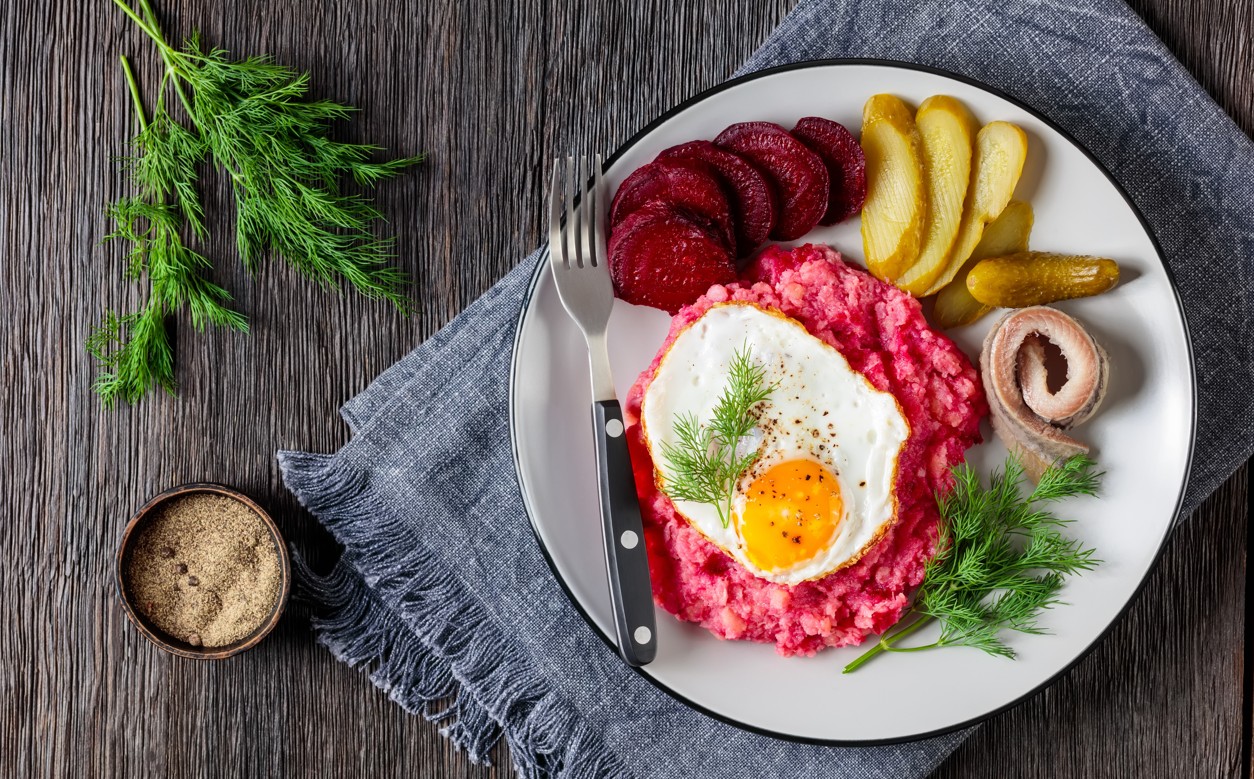
Hamburg is best known for Labskaus, its iconic sailor’s dish made from corned beef, potatoes, and beetroot mashed together, traditionally served with a fried egg, pickled herring, and gherkins. Though visually unusual, Labskaus is a deeply historic dish tied to long sea voyages and Hamburg’s maritime past.
The city’s most famous street food is the Fischbrötchen (fish sandwich), typically filled with Matjes (young pickled herring), smoked eel (Räucheraal), salmon, or fried fish, and eaten standing near the harbour. Aalsuppe, despite its name, is a sweet-and-sour soup made with vegetables, dried fruit, and sometimes meat—eel is optional and historically symbolic rather than essential.
Classic North German dishes include Birnen, Bohnen und Speck (pears, beans, and bacon cooked together), Hamburger Pannfisch (pan-fried fish with mustard sauce and potatoes), and Kükenragout (chicken ragout with asparagus and morels). Rote Grütze, a red berry compote served with vanilla sauce or cream, is a beloved summer dessert. Hamburg’s signature pastry, the Franzbrötchen, is a flaky cinnamon-sugar treat found in every bakery.
Everyday North German & Hamburg Food
Breakfast in Hamburg typically consists of fresh Brötchen (bread rolls) with cheese, cold cuts, or smoked fish, accompanied by strong coffee. Lunch often features hearty meat or fish dishes, soups, or casseroles. Dinner may be similar or lighter, with many locals opting for Abendbrot—bread with cheese, cured meats, and pickles.
Potatoes are the foundational starch, prepared mashed, fried, boiled, or in pancakes. Fish—particularly herring, mackerel, and cod—is consumed regularly, reflecting Hamburg’s proximity to the North Sea. Pork appears in sausages, schnitzel, roasts, and cured meats. Cabbage, especially kale (Grünkohl), dominates winter menus. Dense rye breads are preferred over lighter wheat loaves.
Hamburg’s vast port and international business community support a remarkably diverse everyday dining scene. The city’s famous Sunday morning Fischmarkt offers one of Europe’s most unique food experiences, combining seafood, beer, and live music in the early hours.
Cultural Fusion: Hanseatic, Maritime & Global Influences
Hamburg’s cuisine is shaped by its long trading history and outward-looking identity. Traditional North German cooking emphasized preservation—pickling, curing, smoking—suited to cold climates and long winters. During the Hanseatic League era (13th–17th centuries), Hamburg developed trade links that introduced spices, dried fruits, and international ingredients earlier than most inland cities.
Portuguese sailors brought salted cod traditions. Post-war immigration introduced Italian, Greek, and Turkish cuisines, while later globalisation added Asian, African, and Middle Eastern influences. Today, Hamburg offers a food culture where historic sailor dishes coexist with Portuguese seafood, Turkish street food, and modern global cuisine—reflecting a city that has always embraced the world without losing its North German identity.
Craft Beverage Scene and Maritime Libations
Beer culture is central to Hamburg life. The city once hosted more than 500 breweries and remains a major brewing centre. Local beers such as Astra, Holsten, and Ratsherrn are widely consumed.
Alsterwasser, a refreshing mix of beer and lemon soda, is Hamburg’s signature shandy, named after the Alster lakes. Korn, a traditional North German grain spirit, is the classic schnapps. Coffee culture is deeply rooted, reflecting Hamburg’s historic role as a major coffee-importing port, and today the city boasts excellent cafés and roasteries.
The craft cocktail scene is sophisticated, particularly in Sternschanze and St. Pauli. What truly distinguishes Hamburg is its Fischmarkt drinking culture—early morning beer paired with fish sandwiches on Sunday mornings, often accompanied by live music and crowds that blur the line between night out and breakfast ritual.
International Dining and Contemporary Scene
As Germany’s most international port city, Hamburg offers one of the country’s strongest global dining scenes. Portuguese restaurants are a local specialty, reflecting historic sailor connections. Turkish, Italian, Greek, and Vietnamese cuisines are deeply embedded in everyday dining.
Asian cuisine is particularly strong, with excellent Chinese, Japanese, Korean, and Thai restaurants. Modern German restaurants reinterpret traditional dishes with contemporary techniques, while HafenCity’s redevelopment has introduced upscale waterfront dining. Despite its international sophistication, Hamburg remains proudly local—many residents still consider a Fischbrötchen by the harbour an essential culinary experience.
Food Customs and Practical Tips
Dining in Hamburg ranges from casual fish stands to Michelin-starred restaurants, with service that is generally efficient and professional. Tipping of 5–10% or rounding up is customary. Reservations are recommended for popular restaurants, especially in Schanzenviertel, St. Pauli, and around the port on weekends.
When ordering Fischbrötchen, try Matjes—it’s a regional specialty. Visit the Fischmarkt early on Sunday morning (typically 5:00–9:30 AM) for the full Hamburg experience. Labskaus is worth trying despite its appearance—it’s historically important and surprisingly satisfying. Don’t limit yourself to beer; try Alsterwasser and local spirits.
Explore different neighbourhoods: St. Pauli and the harbour for maritime atmosphere, Schanzenviertel for trendy cafés and international food, Altstadt for traditional restaurants, HafenCity for modern dining with views, and Ottensen for diverse neighbourhood cuisine. Hamburg’s weather makes cozy indoor dining especially appealing, while summer brings outdoor cafés along the Alster. The city offers exceptional culinary diversity across all price ranges. Above all, embrace Hamburg’s maritime spirit—beer in hand, Fischbrötchen at the port, ships passing on the Elbe—this is Hamburg’s culinary soul.
This guide covers what to eat in Hamburg, from Labskaus and Fischbrötchen to modern German cuisine and international dining. Use it to plan your culinary exploration of Germany’s great port city where Hanseatic tradition meets global flavour.
Check monthly weather averages for
Latest Secret Flying deals to Hamburg
⚠️ ERROR FARE ⚠️ Open-jaw from the US to Europe, returning to Canada from only $249
Error Fare, open-jaw, summer flights from the US to Europe, returning to Canada from only $249.
View DealChicago to German cities from only $184 one-way
Cheap flights from Chicago to German cities from only $184 one-way with American Airlines and British Airways.
View DealNew York to Munich or Hamburg, Germany from only $380 roundtrip
Cheap flights from New York to Munich or Hamburg, Germany from only $380 roundtrip.
View Deal [adblockingdetector id="638efa67113bf"]