


Hanoi Food Guide
Food in Hanoi: What to Eat & Drink
The culinary landscape of is an exquisite celebration of Northern Vietnamese traditions, French colonial influence, and world-class street food craftsmanship, making it one of Asia’s most iconic food destinations. As Vietnam’s capital and cultural heart, Hanoi has developed a food culture defined by balance (âm dương), restraint, and precision, where subtle flavors, fresh herbs, and textural contrast take precedence over heat or heaviness.
Hanoi’s cuisine reflects its history as ancient Thăng Long (“Ascending Dragon”), its French colonial past, decades of hardship and resilience, and its modern energy as a rapidly evolving Asian capital. The result is food that is aromatic yet delicate, deeply seasonal, and inseparable from daily life—served on sidewalks, in family kitchens, and in refined dining rooms with equal pride.
Local Specialities of Hanoi
Hanoi is world-famous for phở, Vietnam’s most iconic noodle soup. Hanoi-style phở is defined by its clear, lightly seasoned beef broth, flat rice noodles, thinly sliced beef, and restrained use of herbs—more subtle than the sweeter, spicier southern versions. It is traditionally eaten for breakfast, often before sunrise.
The city’s signature dish, bún chả, features charcoal-grilled pork patties and sliced pork belly served in a sweet-sour fish sauce broth, accompanied by rice vermicelli and baskets of fresh herbs. Bánh cuốn, delicate steamed rice rolls filled with minced pork and wood ear mushrooms, are another Hanoi classic, typically eaten in the morning with light fish sauce.
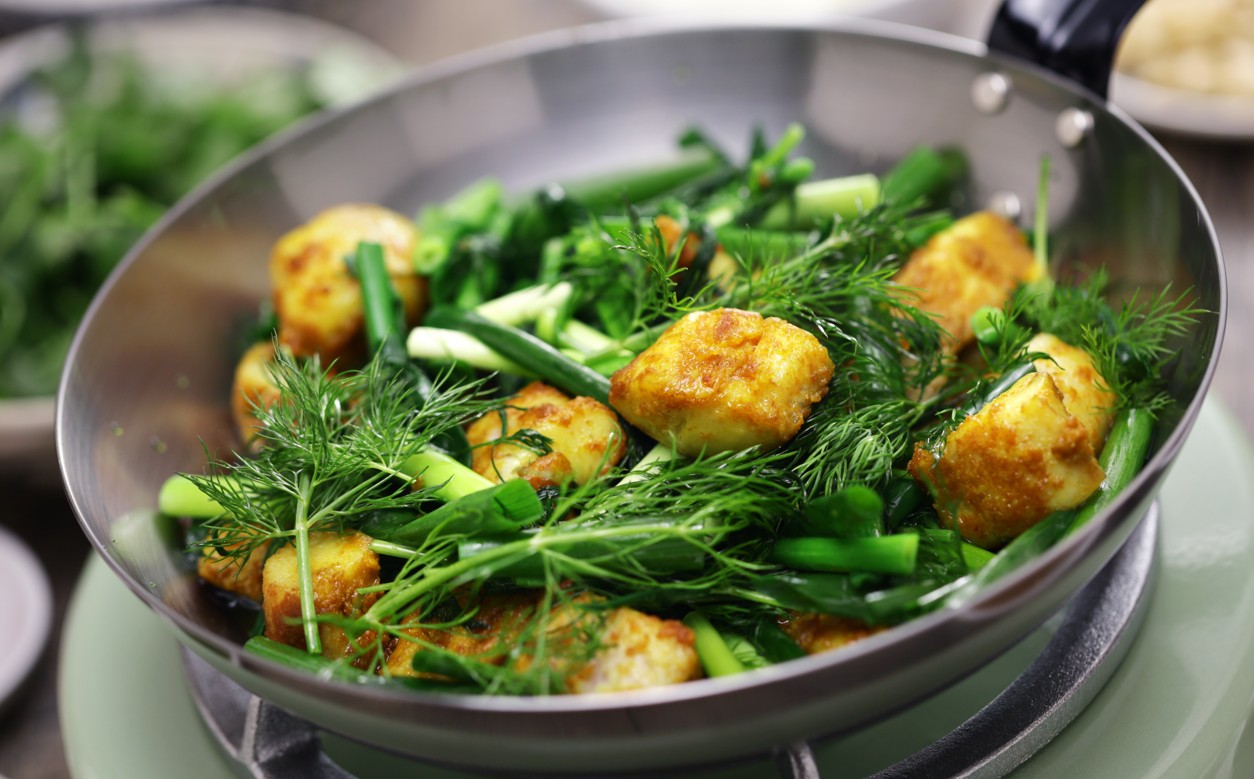
More refined dishes include bún thang, an elegant noodle soup with chicken, shredded omelet, and pork sausage; and chả cá Lã Vọng, turmeric-marinated fish cooked tableside with dill and spring onions—a dish so iconic it has its own street. Bánh mì, the Vietnamese baguette sandwich born from French colonial influence, reaches exceptional quality here. Hanoi is also the birthplace of egg coffee (cà phê trứng), a rich, custard-like topping of whipped egg yolk and condensed milk over strong coffee. Bánh tôm, crispy shrimp fritters from West Lake, are beloved local snacks, while fresh and fried spring rolls (gỏi cuốn and nem rán) showcase Vietnamese wrapping mastery.
Everyday Northern Vietnamese & Hanoi Food
Breakfast in Hanoi often consists of phở, bánh cuốn, or xôi (sticky rice) topped with pork, egg, or beans. Lunch typically features rice plates (cơm) with several shared dishes or noodle meals like bún chả. Dinner may mirror lunch or become a more social, family-style affair.
Rice appears in many forms—steamed grains, noodles, sheets, and sticky rice. Fresh herbs such as mint, cilantro, perilla, and fish mint are essential at every meal. Pork is the dominant protein, used grilled, boiled, fermented, and in sausages (giò). Fish sauce (nước mắm) is foundational, seasoning nearly every dish. Hanoi’s street food culture is famously democratic: executives, students, and laborers all eat together on low plastic stools. The city’s four seasons shape eating habits—warming soups in winter, herb-heavy dishes in spring, lighter foods in summer, and seasonal specialties in autumn.
Cultural Fusion: Vietnamese Roots, Chinese Techniques & French Legacy
Hanoi’s cuisine is a historical palimpsest of layered influences. Indigenous Vietnamese traditions emphasized rice, fish sauce, herbs, fermentation, and balance. Over a millennium of Chinese rule (111 BC–939 AD) introduced noodles, stir-frying, soy products, and cooking implements. French colonization (1884–1954) brought baguettes, pâté, coffee, dairy, and certain vegetables.
The synthesis created modern Vietnamese cuisine—distinct from both Chinese and French cooking, yet shaped by both. Post-war austerity refined simplicity, while economic reforms (đổi mới) sparked culinary revival and innovation. Hanoi’s food culture is deeply tied to identity and resilience; preserving recipes is seen as preserving history. Nowhere is this more evident than in family-run phở shops and bún chả stalls that have served the same dish for generations.
Beverage Culture and Local Libations
Hanoi’s beverage culture is dominated by coffee and casual communal drinking. Strong Vietnamese coffee brewed through a phin filter—often with sweetened condensed milk (cà phê sữa)—is central to daily life. Egg coffee is Hanoi’s most famous innovation and a must-try.
Trà đá (iced tea) is ubiquitous and often free. Fresh fruit juices and sugarcane juice are popular street drinks. Bia hơi, freshly brewed and served daily at sidewalk stalls, is the world’s cheapest beer and a cornerstone of social life. Rice wine (rượu) appears at celebrations. What distinguishes Hanoi is its café culture—from hidden alleyway cafés to lakeside terraces, coffee drinking is both ritual and recreation. The bia hơi scene, with streets full of plastic stools each evening, is uniquely Hanoi.
International Dining and Contemporary Scene
As Vietnam’s political and cultural capital, Hanoi offers strong international dining alongside traditional cuisine. French restaurants remain prominent, from casual bistros to refined dining rooms. Japanese, Korean, Italian, and other European options cater to a growing international population.
Modern Vietnamese restaurants reinterpret traditional dishes with contemporary techniques, particularly in areas like the French Quarter and Tay Ho (West Lake). Despite international variety, Hanoi’s food culture remains overwhelmingly local—foreign cuisines often adapt to Vietnamese tastes and ingredients. Street food and cafés remain the city’s culinary backbone. What sets Hanoi apart is authenticity: this is where Northern Vietnamese cuisine is preserved at its source, evolving slowly and deliberately.
Food Customs and Practical Tips
Dining in Hanoi ranges from plastic-stool street stalls to elegant restaurants, but the atmosphere is generally informal. Chopsticks are used for most meals. Tipping is not expected, though appreciated in higher-end restaurants.
When eating phở, taste the broth before adding lime, chili, or herbs. For bún chả, dip noodles and herbs directly into the pork broth. Busy street stalls are usually the safest and best. Carry tissues, as napkins are minimal. Be aware of traffic when eating on sidewalks—motorbikes pass close.
Explore different areas: the Old Quarter for dense street food and history, the French Quarter for upscale dining and cafés, Tay Ho (West Lake) for international options and views, and Trúc Bạch for local specialties. Try both famous institutions and nameless stalls—some of Hanoi’s best food has no signage. A food tour can help navigate the city’s overwhelming choice. Hanoi offers extraordinary culinary quality at remarkably low prices. Most importantly, embrace Hanoi’s food philosophy: balance, freshness, community, and the quiet mastery of simple ingredients define why this city is one of the world’s great food capitals.
This guide covers what to eat in Hanoi, from phở and bún chả to egg coffee and street food culture. Use it to plan your culinary exploration of Vietnam’s ancient capital, where every bowl carries history and every street corner offers discovery.
Check monthly weather averages for
Latest Secret Flying deals to Hanoi
Stockholm, Sweden to East Asia from only €335 roundtrip
Cheap flights from Stockholm, Sweden to East Asia from only €335 roundtrip.
View DealLondon, UK to Hanoi, Vietnam for only £346 roundtrip
Cheap flights from London, UK to Hanoi, Vietnam for only £346 roundtrip.
View DealFrankfurt, Germany to Hanoi, Vietnam for only €490 roundtrip
Cheap flights from Frankfurt, Germany to Hanoi, Vietnam for only €490 roundtrip.
View Deal [adblockingdetector id="638efa67113bf"]