


Havana Food Guide
Food in Havana: What to Eat & Drink
Havana’s culinary landscape is a complex, resilient, and profoundly flavorful expression of Cuba’s soul, where Spanish colonial foundations, African culinary genius, decades of revolutionary scarcity and ingenuity, and a recent, cautious opening to the world converge to create a cuisine defined by its comforting staples, ingenious substitutions, and a vibrant, music-filled social life. As the cultural and political heart of Cuba, frozen in time yet pulsing with energy, Havana developed a food culture that is both defined by its limitations and rich in tradition, governed by the ration book (libreta), the entrepreneurial spirit of paladares, and the omnipresent rhythms of son and salsa. Shaped by its history as a Spanish sugar colony, the forced migration of enslaved Africans, and over sixty years of a U.S. embargo and socialist economy, Cuban cuisine in Havana is a celebration of slow-cooked meats, rice and beans, tropical roots, and simple, satisfying flavors, all served with a warmth and improvisational spirit that is uniquely Cuban. This is a city where food tells a story of survival and joy, where the classic ham sandwich evolved into the Cubano, and where every meal—from a peso pizza on the street to a multi-course feast in a hidden paladar—is an opportunity to taste the bittersweet, passionate, and unforgettable essence of Cuba.
Core ingredients like rice, black beans, pork, chicken, yuca (cassava), plantains (both green and ripe), tomatoes, onions, garlic, green peppers, lime, and a handful of key spices (cumin, oregano, bay leaf) form the foundational holy trinity of Cuban cooking. Dishes are characterized by their savory, garlicky, and subtly spiced profiles, a mastery of slow braising (sofrito-based stews) and frying, and a beautiful, if sometimes monochromatic, reliance on a few precious ingredients. Havana’s unique socio-economic reality has fostered incredible creativity within constraint. Its identity is one of crumbling colonial grandeur and vibrant street life, where a queue for bread forms next to a beautifully restored 1950s Chevrolet. From a state-run cafeteria to a bustling family-run paladar in a Centro Habana apartment, eating in Havana is a direct and deeply human immersion into the heart of the Caribbean’s most enigmatic island.
Local Specialties of Havana
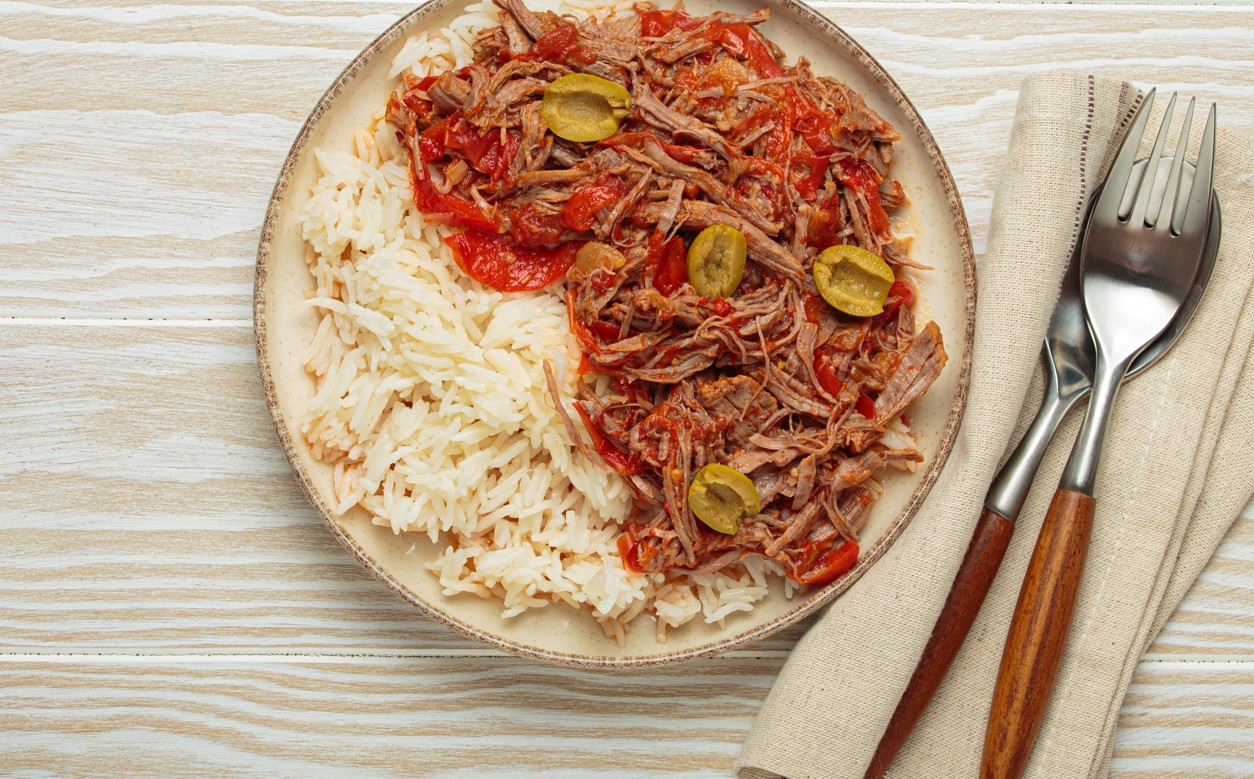
Havana’s iconic dishes are the pillars of Cuban home cooking and national identity: Ropa Vieja is the quintessential Cuban dish: literally “old clothes,” it’s shredded beef (or sometimes lamb) stewed in a rich tomato-based sauce with onions, peppers, and garlic, served with rice and black beans.
Moros y Cristianos is the ubiquitous side dish: black beans and rice cooked together (“Moors and Christians”), flavorful and fundamental. Lechón Asado is slow-roasted suckling pig, marinated in garlic and sour orange juice (mojo), a celebratory centerpiece.
Vaca Frita is shredded, marinated beef that’s fried until crispy on the edges. Arroz con Pollo is the comforting chicken and rice dish, cooked with beer or wine for depth. Yuca con Mojo is boiled cassava root drenched in a pungent sauce of garlic, sour orange juice, and olive oil.
Tostones are twice-fried green plantain slices, crispy and salty. Maduros are sweet, caramelized fried ripe plantains. The Cuban Sandwich (Cubano), while Tampa also claims it, is perfected here: ham, roasted pork, Swiss cheese, pickles, and mustard pressed on Cuban bread.
Picadillo is ground beef hash with tomatoes, olives, and raisins. Flan is the classic caramel custard dessert. Daiquirí and Mojito are the world-famous cocktails born in Havana (at El Floridita and La Bodeguita del Medio, respectively).
Everyday Havana & Cuban Food
Breakfast is often light: strong coffee with milk and buttered toast. Lunch is a significant meal, often the main hot meal of the day. Dinner can be similar to lunch or lighter. The culture of the Paladar (privately-owned, in-home restaurant), the Estado (State-run) Restaurant/Cafeteria, the Street Food Vendor (for pizza, fritters), and the home kitchen is central.
Eating is a deeply social and family-centered affair. Service in paladares is often warm and personal. The concept of ”resolver” (to resolve/find a way) is key to understanding how ingredients are sourced. Meals are almost always accompanied by rice and beans. Beverages include guarapo (fresh sugarcane juice), tropical fruit juices, beer (Cristal, Bucanero), or rum. The pace is slow; meals are for conversation and music.
Cultural Fusion: Spanish Tavern Fare, African Techniques & Caribbean Ingredients
Cuban cuisine’s foundation is the simple, hearty fare of Spanish peasants and taverns (stews, rice, frying). The transformative influence came from enslaved Africans, who brought techniques for cooking tropical tubers (yuca, malanga), the use of plantains, and methods of slow-cooking tough cuts of meat.
The Caribbean environment provided new ingredients like sour orange and sugarcane. Chinese indentured laborers also left a minor mark. The 20th-century U.S. influence brought the sandwich culture, later adapted into the Cubano. This creates a Havana table where you can taste a Spanish peasant stew, an African-inspired root vegetable dish, and an American-style sandwich, all unified by the Cuban sofrito and the island’s unique history.
Craft Beverage Scene and Local Libations
Havana’s beverage scene is historic and revolves around two pillars: coffee and rum. Cuban Coffee (Café Cubano) is a strong, sweet espresso shot, the social and energetic lifeblood of the city.
Rum (Ron) is the national spirit, with Havana Club being the iconic brand. It’s the base for the world-famous cocktails invented here: the Daiquirí, the Mojito, the Cuba Libre, and the Canchánchara (a lesser-known cocktail from Trinidad).
Local Beer (Cristal—a light lager, Bucanero—a stronger beer) is popular. Guarapo is freshly pressed sugarcane juice, often sold from street carts. Refrescos (soft drinks) like TuKola or Cachito are local versions. Fresh Fruit Juices (mango, guava, pineapple) are excellent when available. What distinguishes Havana is the ritual of starting the day with a potent cafecito, and ending it with a perfectly crafted mojito made with local rum, mint, and sugarcane juice—a taste of history in a glass.
International Dining and Contemporary Scene
Due to historical isolation and economic constraints, Havana’s traditional international dining scene was limited. However, with the growth of paladares, a new wave of creative, fusion, and international restaurants has emerged, particularly in neighborhoods like Vedado and Miramar, offering Italian, Asian-inspired, and modern Cuban cuisine.
“Nueva Cocina Cubana” (New Cuban Cuisine) is a small but exciting movement where chefs in upscale paladares are reinterpreting traditional dishes with modern techniques, artistic presentation, and a focus on sourcing better-quality, often organic (orgánico) ingredients. However, the soul of Havana’s dining remains overwhelmingly in its traditional paladares serving classic criollo (Creole) food and in the home cooking of its people. The scene is a fascinating study in contrast between scarcity and abundance, tradition and nascent innovation. For visitors, this means enjoying hearty, flavorful classics while also discovering the avant-garde of a cuisine on the cusp of change.
Food Customs and Practical Tips
Dining is casual. Tipping (in CUP or convertible currency) is appreciated in paladares, 10% is a good guideline. Always carry cash (both CUP and ideally some EUR/USD for paladares). Be patient; service and food preparation can be slow. Don’t drink the tap water.
For the authentic experience, eat at a family-run paladar in a residential building—ask locals for recommendations. Try a Cuban sandwich from a reputable spot like “El Rey de las Fritas” or a good paladar. Have a mojito at La Bodeguita del Medio (for the history, not necessarily the best drink) and a daiquiri at El Floridita. Don’t expect spicy food—traditional Cuban cuisine is flavorful but not hot; chili sauce is served on the side.
Explore different areas: Habana Vieja (Old Havana) for tourist-focused spots, historic bars, and some good paladares; Centro Habana for more local, gritty, and authentic paladares; Vedado for a mix of state-run classics (like Coppelia ice cream park) and trendy new paladares; Miramar for upscale paladares in grand houses. Try both a no-frills local spot and a more creative, upscale paladar. Consider a cooking class or a food tour to understand the market and food system. Be prepared for a limited and sometimes repetitive menu, especially outside of tourist areas. Havana is not a cheap destination for eating well. Most importantly, embrace Havana’s culinary spirit: it is resourceful, hearty, communal, steeped in history, and infused with music—a true taste of Cuba’s resilient and joyful soul.
This guide covers what to eat in Havana, Cuba, from Ropa Vieja and Moros y Cristianos to the Cubano, Mojito, and Daiquiri. Use it to plan your culinary journey to the heart of the Caribbean’s most iconic city.
Check monthly weather averages for
Latest Secret Flying deals to Havana
Non-stop from Madrid, Spain to Havana, Cuba for only €486 roundtrip
Non-stop flights from Madrid, Spain to Havana, Cuba for only €486 roundtrip.
View DealNon-stop from Toronto, Canada to Havana, Cuba for only $246 CAD roundtrip
Non-stop flights from Toronto, Canada to Havana, Cuba for only $246 CAD roundtrip.
View DealPorto or Lisbon, Portugal to Havana, Cuba from only €477 roundtrip
Cheap flights from Porto or Lisbon, Portugal to Havana, Cuba from only €477 roundtrip with Air Europa.
View Deal [adblockingdetector id="638efa67113bf"]