


Hiroshima Food Guide
Food in Hiroshima: What to Eat & Drink
The culinary landscape of is a powerful expression of regional identity, resilience, and one of Japan’s most distinctive okonomiyaki traditions. As the largest city in the Chūgoku region and an international symbol of peace and reconstruction, Hiroshima has developed a food culture rooted in local ingredients, communal dining, and creative adaptation born from historical necessity.
Hiroshima’s cuisine reflects its evolution from castle town to industrial city, its devastation in 1945, and its remarkable post-war rebirth. The result is food that is hearty, layered, and deeply connected to place—combining the bounty of the Seto Inland Sea with preparations that emphasize technique, balance, and shared experience.
Local Specialties of Hiroshima
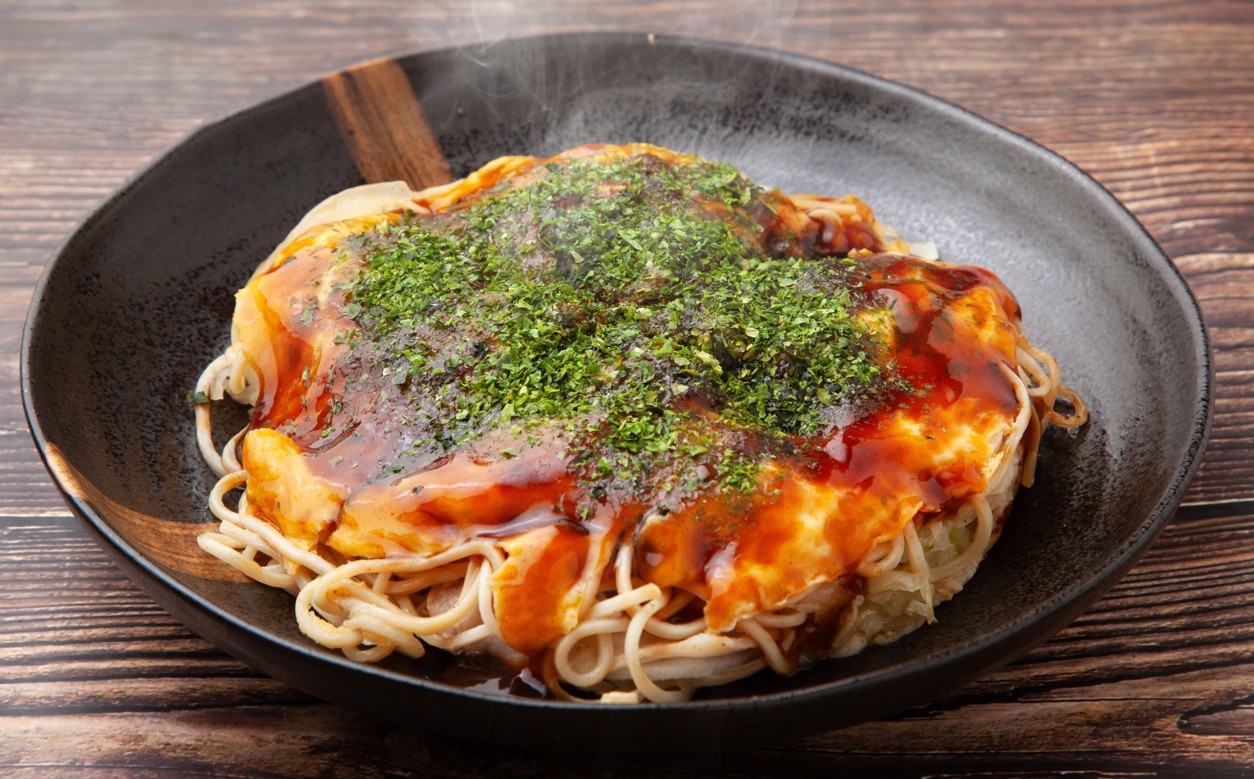
Hiroshima is world-famous for Hiroshima-style okonomiyaki, a dish that sets the city apart from Osaka and the rest of Japan. Unlike the mixed batter style elsewhere, Hiroshima okonomiyaki is built in layers: a thin crepe base, cabbage, bean sprouts, pork, optional noodles (soba or udon), egg, and a final topping of sweet-savory okonomi sauce, mayonnaise, bonito flakes, and aonori. The result is lighter yet more complex, and watching it prepared on a teppan is part of the experience.
Hiroshima oysters (kaki), cultivated in the calm waters of the Seto Inland Sea, are among Japan’s best—plump, creamy, and intensely flavorful. They are served raw, grilled, deep-fried, simmered in hot pots, or cooked with rice, particularly during the winter season.
Anago (conger eel) is another regional specialty, especially anago meshi (eel over rice) and grilled anago, reflecting Hiroshima’s coastal waters. Nearby islands are famous for citrus, particularly lemons, which appear in desserts, drinks, and savory dishes. Momiji manjū, maple-leaf-shaped cakes filled with sweet bean paste or cream, are iconic souvenirs from Miyajima.
Other regional favorites include Onomichi ramen, known for its soy-based broth with floating pork back fat and curly noodles, and Hiroshima-style tsukemen, featuring thick noodles dipped into a rich, spicy broth.
Everyday Hiroshima & Chūgoku Food
Breakfast in Hiroshima typically follows Japanese tradition—grilled fish, rice, miso soup—though Western options are common. Lunch is often casual and local: okonomiyaki, ramen, bento boxes, or noodle dishes. Dinner ranges from relaxed okonomiyaki counters to seafood restaurants and izakayas.
Seafood from the Seto Inland Sea—oysters, sea bream, squid, and conger eel—is eaten regularly. Pork features prominently in okonomiyaki, while noodles, particularly soba, are more common here than in many other regions of Japan. Local vegetables, especially cabbage bred for okonomiyaki, are essential to Hiroshima cooking.
Okonomiyaki restaurants are central to social dining. Many feature teppan counters where diners eat directly from the grill, reinforcing the dish’s communal and informal nature. Hiroshima’s mild climate allows for oyster farming year-round, though winter remains peak season.
Cultural Identity: Local Innovation, Japanese Tradition & Post-War Resilience
Hiroshima’s food culture reflects both deep Japanese culinary tradition and the realities of post-war survival. After 1945, limited ingredients led to creative adaptation, and okonomiyaki—literally “grill what you like”—became a symbol of making something satisfying from scarcity.
This history gives Hiroshima cuisine a unique emotional depth. Dishes emphasize practicality, generosity, and shared enjoyment. Eating here is not just about flavor, but about continuity, resilience, and community—values that remain central to Hiroshima’s identity.
Sake, Citrus & Local Drinks
Hiroshima Prefecture is one of Japan’s most important sake-producing regions and is widely regarded as producing some of the country’s finest premium sake. The area’s soft water and brewing expertise have made brands such as Kamotsuru, Fukucho, and Kirei internationally respected.
Sake pairs naturally with local seafood, particularly oysters and anago. Lemon-based drinks, especially lemon sours, are also popular and reflect Hiroshima’s citrus production. Beer, green tea, and a growing specialty coffee scene round out the beverage culture.
What distinguishes Hiroshima is the strength of its local sake identity—many izakayas and bars focus almost exclusively on prefectural brews, offering an excellent introduction to Japan’s sake diversity.
International Dining and Modern Hiroshima
While local cuisine dominates, Hiroshima also offers international dining shaped by its history and growth. Korean cuisine is particularly prominent, alongside Chinese, Italian, and French restaurants.
Modern Japanese restaurants reinterpret traditional Hiroshima dishes with contemporary techniques, often highlighting oysters, citrus, and seasonal seafood. Even international restaurants frequently incorporate local ingredients, reinforcing Hiroshima’s strong regional identity.
Despite modernization, Hiroshima remains deeply rooted in its food traditions. Multi-generational okonomiyaki shops and oyster restaurants maintain exacting standards, ensuring that local flavors remain authentic and unchanged.
Food Customs and Practical Tips
Dining in Hiroshima ranges from casual teppan counters to refined restaurants. Tipping is not practiced. Saying itadakimasu before eating and gochisōsama deshita after is customary.
Hiroshima okonomiyaki is typically eaten directly from the teppan using a small spatula (hera). Trying oysters prepared multiple ways is highly recommended. Okonomimura, a multi-floor complex dedicated entirely to okonomiyaki, is ideal for first-time visitors.
Don’t miss Miyajima Island for fresh seafood, oysters, and momiji manjū in a traditional setting. Consider a sake tasting to understand Hiroshima’s brewing heritage. Compared to larger Japanese cities, Hiroshima offers excellent value, with high-quality food at reasonable prices.
This guide covers what to eat in Hiroshima, from Hiroshima-style okonomiyaki and oysters to regional ramen and sake culture. Use it to plan your culinary exploration of Japan’s city of peace—where food tells a story of resilience, craftsmanship, and local pride.
Check monthly weather averages for
Latest Secret Flying deals to Hiroshima
Budapest, Hungary to Japanese cities from only €456 roundtrip
Cheap flights from Budapest, Hungary to Japanese cities from only €456 roundtrip.
View DealBarcelona, Spain to Japanese cities from only €462 roundtrip
Cheap flights from Barcelona, Spain to Japanese cities from only €462 roundtrip.
View DealLondon, UK to Hiroshima, Japan for only £391 roundtrip
Cheap flights from London, UK to Hiroshima, Japan for only £391 roundtrip.
View Deal [adblockingdetector id="638efa67113bf"]