


Best Things to Do in Hiroshima: A Complete Guide
10 Best Things to Do in Hiroshima
Looking for what to do in Hiroshima? This modern, green city on the Seto Inland Sea is known around the world for the events of 6 August 1945 — but it is also a place of remarkable resilience, quiet beauty and everyday life lived fully in the present. Wide boulevards, riverside promenades, trams and leafy parks create an open, relaxed atmosphere, while nearby islands, shrines and small towns offer some of western Japan’s most memorable scenery.
From powerful memorials and museums that reflect on the past to lively shopping streets, castles, gardens and the iconic torii gate of Miyajima rising from the sea, Hiroshima rewards travellers who explore both its history and its hopeful, forward-looking present. Here are the 10 best things to do in Hiroshima, crafted to help you experience the city in depth.
1. Reflect at Hiroshima Peace Memorial Park and Museum
Hiroshima Peace Memorial Park is the emotional heart of the city — a green space dedicated to remembering those who died in the atomic bombing and promoting a world without nuclear weapons. Walking through the park, you’ll encounter key landmarks such as the Cenotaph for the A-bomb Victims, the Peace Flame and various monuments built in memory of children, workers and citizens affected by the bombing.
The Hiroshima Peace Memorial Museum, located within the park, presents personal stories, photographs, artefacts and detailed explanations of the events leading up to, during and after 6 August 1945. Exhibits are deeply moving and at times difficult, but they are presented with a focus on education and peace rather than anger. Set aside several hours, and allow time afterwards to simply sit by the river or in the park to process what you’ve seen.
2. See the Atomic Bomb Dome (Genbaku Dome)
Across the river from Peace Memorial Park stands the Atomic Bomb Dome — the skeletal remains of the former Prefectural Industrial Promotion Hall. Preserved almost exactly as it was left after the blast, the building is now a UNESCO World Heritage Site and one of the most recognisable symbols of Hiroshima’s history.
Viewing the dome from different angles, especially at sunset or after dark when it is lit softly, brings home the scale of destruction and the city’s decision to leave this structure standing as a permanent reminder. Combine a visit here with time in the park and museum to gain a fuller understanding of Hiroshima’s path from devastation to reconstruction.
3. Take a Day Trip to Miyajima and Itsukushima Shrine
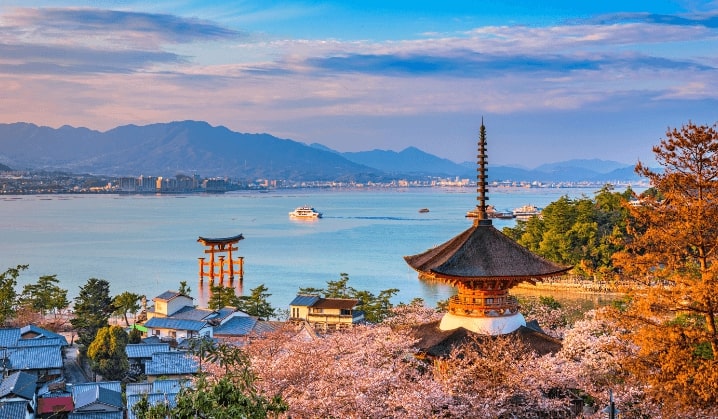
Just a short train and ferry ride from central Hiroshima, Miyajima (officially Itsukushima) is one of Japan’s most famous scenic islands. Its iconic red torii gate appears to float on the water at high tide, framing views of the Seto Inland Sea and forested hills. At low tide, you can walk out across the sand and stand beneath the towering gate, looking back toward the shrine and village.
Itsukushima Shrine itself is built on stilts above the water, with boardwalks and pavilions connected in elegant lines that echo the surrounding landscape. Beyond the shrine, you can hike or take the ropeway up Mount Misen for panoramic views, wander streets lined with shops selling oysters and momiji manju (maple-shaped cakes), and encounter friendly deer roaming near the waterfront. Miyajima easily fills a full day and is one of the most memorable experiences in the Hiroshima area.
4. Visit Hiroshima Castle and Its Surrounding Moat
Hiroshima Castle, also known as Carp Castle, is a reconstructed samurai stronghold set within a tranquil park encircled by a wide moat. Although the original castle was destroyed in the bombing, the current keep has been rebuilt in traditional style and now houses a museum on Hiroshima’s feudal history and samurai culture.
Climb to the upper floors for views over the city and surrounding greenery, then wander the grounds to see remnants of original stone walls, gates and secondary structures. In spring, cherry blossoms around the moat create a particularly picturesque scene, making the castle area one of Hiroshima’s best spots for hanami (flower viewing).
5. Stroll Through Shukkeien Garden
Shukkeien is a compact yet exquisitely designed Japanese garden whose name means “shrunken scenery” — a reference to its miniature representations of mountains, valleys and lakes. Created in the 17th century and later restored after the bombing, the garden features winding paths, arched bridges, small islands, pavilions and carefully pruned trees reflected in still water.
As you walk the circular route, the perspective shifts with each turn: one moment you’re crossing a bridge above carp-filled ponds; the next, you’re looking back at a teahouse framed by bamboo and maple leaves. Shukkeien is a peaceful place to slow down, especially in spring and autumn when seasonal colours transform the landscape.
6. Explore Hondori Shopping Street and Downtown Hiroshima
Hondori is Hiroshima’s main covered shopping arcade — a lively pedestrian street lined with fashion boutiques, cafés, game centres, restaurants and souvenir shops. Locals and visitors alike walk its length throughout the day, dipping into side alleys and smaller arcades that branch off in all directions.
Nearby, department stores, small izakaya and modern plazas create a downtown area that feels distinctly youthful and energetic. Spend time browsing local brands, people-watching from a café or trying casual Hiroshima specialties like okonomiyaki or tsukemen (dipping noodles) at small eateries just off the main drag.
7. Eat Hiroshima-Style Okonomiyaki
Hiroshima’s signature dish is its layered version of okonomiyaki — a savoury pancake cooked on a griddle with thin batter, cabbage, bean sprouts, sliced pork, noodles (usually yakisoba or udon), eggs and sweet-savory sauce, often topped with green onions and bonito flakes. Unlike Osaka-style okonomiyaki, where ingredients are mixed together, Hiroshima’s version is built layer by layer and flipped with practiced precision.
Okonomimura, a multi-floor building near Hondori, is home to several small stalls specialising in this local favourite, each with its own twist on the classic. Sitting at the counter while your okonomiyaki is cooked in front of you is both a meal and a performance — one of the most enjoyable and filling ways to experience Hiroshima’s food culture.
8. Walk Along Hiroshima’s Rivers and Bridges
Hiroshima is built around several rivers that split and rejoin as they flow toward the Seto Inland Sea, creating island-like districts linked by numerous bridges. Riverside paths and parks provide inviting routes for walking, jogging or cycling, offering a quieter perspective on the city away from busy roads.
In the evenings, soft lighting along the embankments and reflections of buildings in the water create a calming atmosphere. Locals gather on benches, couples stroll arm in arm and occasional food stalls or festivals add bursts of activity. Exploring the city by following its rivers gives you a sense of how water shapes Hiroshima’s layout and daily life.
9. Visit the Mazda Museum and Factory (On Reservation)
Just outside the city centre, Mazda’s headquarters and factory complex reflect Hiroshima’s role as an industrial and technological hub. The Mazda Museum, which typically requires advance reservations, offers guided tours through exhibits tracing the company’s history from early three-wheeled trucks to modern sports cars and electric vehicles.
Visitors also get a glimpse of the assembly line, where robots and workers collaborate to build cars in real time. For car enthusiasts and those interested in Japanese manufacturing culture, the tour provides a fascinating look behind the scenes of one of Hiroshima’s most important companies.
10. Take Side Trips Around the Seto Inland Sea: Onomichi and Beyond
Hiroshima’s position on the Seto Inland Sea makes it a convenient base for exploring nearby coastal towns and islands. One popular destination is Onomichi, a charming port town known for its hillside temples, cats, literary connections and as the starting point of the Shimanami Kaido cycling route across island-dotted seas.
Further afield, ferries and trains connect to other islands and towns where you’ll find small harbours, quiet beaches, local seafood and views of bridges stretching across calm water. Even a short side trip broadens your understanding of the region and highlights the gentle beauty of the Inland Sea that has shaped Hiroshima’s history and character.
Check monthly weather averages for
Latest Secret Flying deals to Hiroshima
Budapest, Hungary to Japanese cities from only €456 roundtrip
Cheap flights from Budapest, Hungary to Japanese cities from only €456 roundtrip.
View DealBarcelona, Spain to Japanese cities from only €462 roundtrip
Cheap flights from Barcelona, Spain to Japanese cities from only €462 roundtrip.
View DealLondon, UK to Hiroshima, Japan for only £391 roundtrip
Cheap flights from London, UK to Hiroshima, Japan for only £391 roundtrip.
View Deal [adblockingdetector id="638efa67113bf"]