


Hurghada Food Guide
Food in Hurghada: What to Eat & Drink
The culinary landscape of is a vibrant fusion of Egyptian coastal tradition, Red Sea seafood, and international resort dining, making it one of the most accessible and diverse food destinations on Egypt’s Red Sea coast. Once a quiet fishing village, Hurghada has evolved into the country’s premier beach and diving resort, developing a food culture that balances ancient Egyptian staples with freshly caught seafood, shaped by Bedouin heritage, desert surroundings, and global tourism.
The city’s cuisine reflects its transformation from a local fishing port into a major holiday hub, positioned between Africa and the Arabian Peninsula. The result is food that is hearty, aromatic, and generously spiced, where Red Sea freshness meets centuries-old Egyptian cooking traditions.
Local Specialities of Hurghada
Hurghada is best known for its exceptionally fresh seafood. Sayadeya, a coastal Egyptian classic, features white fish such as sea bass or grouper baked with spiced rice and caramelised onions. Grilled fish is a daily ritual, with denise (sea bream), boray (mullet), calamari, and shrimp marinated in lemon, garlic, and cumin, then cooked over charcoal.
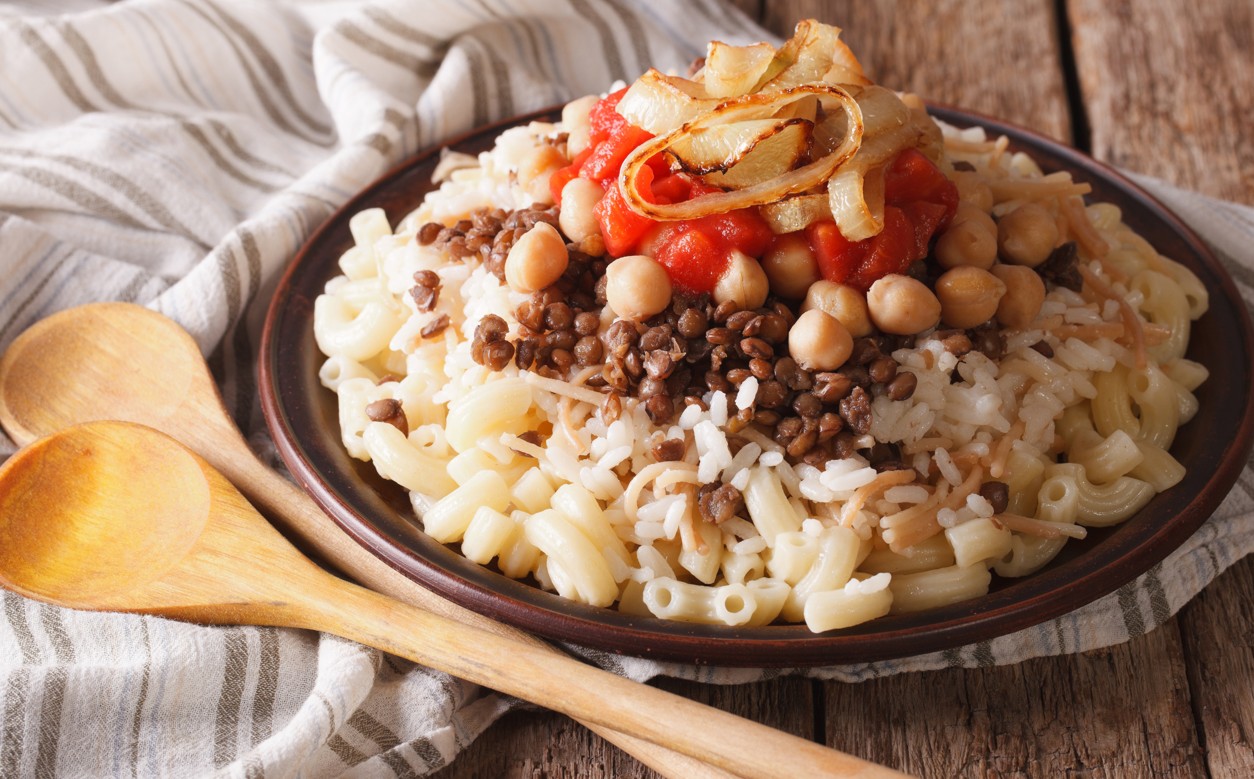
Egypt’s beloved national dish, koshari, is widely available and deeply satisfying—a layered mix of rice, lentils, chickpeas, pasta, crispy onions, and tangy tomato-vinegar sauce. Ful medames, slow-cooked fava beans seasoned with lemon, garlic, and olive oil, is the traditional Egyptian breakfast, often served with eggs and fresh pita. Molokhia, a green soup made from jute leaves simmered with garlic and coriander, is a national comfort dish served over rice with chicken or rabbit.
Ta’ameya (Egyptian falafel), made from fava beans rather than chickpeas, is lighter and greener than Levantine versions. Hawawshi, spiced minced meat baked inside pita bread, is a popular street snack. For dessert, Umm Ali, a warm bread pudding with milk, nuts, coconut, and raisins, is Egypt’s most iconic sweet.
Everyday Hurghada & Red Sea Food
Breakfast in Hurghada may be a simple local meal of ful, ta’ameya, eggs, and bread in neighbourhood cafés, or extensive international buffets in resort hotels. Lunch often revolves around seafood—grilled fish by the sea, koshari from a specialist shop, or mezze-style plates. Dinner ranges from casual street food to elaborate seafood spreads at waterfront restaurants.
Red Sea seafood—grouper, snapper, squid, shrimp, and mullet—is eaten daily, typically grilled or fried with minimal seasoning. Rice and flatbread accompany most meals, while legumes such as lentils and chickpeas provide protein in vegetarian dishes. Tomatoes, onions, eggplants, and peppers form the base of many salads and stews. Spices like cumin, coriander, cinnamon, and cardamom add warmth rather than heat.
Dining culture is split between tourist-oriented resort areas and local districts such as El Dahar, offering experiences from plastic-chair street stalls to polished marina restaurants. Thanks to the desert climate, dining often takes place outdoors, particularly at sunset with Red Sea views.
Cultural Fusion: Pharaonic Foundations, Bedouin Traditions & Coastal Trade
Hurghada’s cuisine reflects layers of Egyptian history and geography. Ancient Egyptian (Pharaonic) foundations centred on grains, legumes, and fish. Bedouin traditions contributed charcoal grilling, bread baking, and simple desert cooking techniques.
Centuries of Red Sea trade introduced spices and influences from the Arabian Peninsula and Indian Ocean routes. Modern tourism brought European dining styles and international expectations. This results in a unique food culture where a Pharaonic-era bean dish, Bedouin-style grilled fish, and Italian pasta can coexist within the same city.
Beverage Culture and Local Libations
Hurghada’s beverage culture reflects its Islamic heritage and tourist economy. Tea (shai) is central to daily life—strong black tea, often sweetened and served with mint, is consumed throughout the day. Egyptian coffee is dark, intense, and sometimes flavoured with cardamom.
Fresh juices are excellent and widely available, particularly sugarcane juice (aseer asab), mango, guava, and strawberry. Non-alcoholic malt drinks like Birell are popular locally. For visitors, international beers (including Egypt’s own Stella), Egyptian wines, and cocktails are readily available in hotels and tourist areas.
Sheesha (hookah) culture is deeply ingrained—flavoured tobacco smoked in cafés is a common social ritual, especially in the evenings. Resort bars also offer tropical cocktails and imported spirits, reflecting Hurghada’s international audience.
International Dining and Contemporary Scene
Hurghada’s dining scene includes extensive international options catering to mass tourism. Italian restaurants are particularly common, alongside German, British, and Russian eateries. Lebanese and Syrian restaurants offer high-quality Middle Eastern mezze and grills.
Despite this diversity, the most memorable meals are often the simplest: freshly grilled fish at a local restaurant or koshari from a specialist stall. Hurghada’s food scene prioritises accessibility and comfort, allowing visitors to explore authentic Egyptian flavours while retaining familiar options.
Food Customs and Practical Tips
Dining in Hurghada ranges from informal street stalls to five-star resort restaurants, with friendly but sometimes unhurried service. Tipping (baksheesh) is part of daily life—small tips for small services and around 10–12% in restaurants are customary.
For seafood, choose restaurants where you can select fish directly from ice displays. Visit El Dahar (Downtown) for the most authentic and affordable Egyptian food. The Marina and old fishing port areas are ideal for seafood dinners. Use your right hand when eating communally if utensils are not used.
Explore El Dahar for local eateries and markets, Sekalla for mid-range dining and cafés, the Resort Strip for international cuisine, and the Marina for upscale waterfront restaurants. Consider a desert safari that includes a Bedouin-style dinner under the stars for a unique culinary experience.
This guide covers what to eat in Hurghada, from fresh Red Sea fish and sayadeya to koshari, ful medames, molokhia, and traditional Egyptian desserts. Use it to plan your culinary exploration of Egypt’s Red Sea coast, where ancient food traditions meet maritime abundance and modern leisure.
Check monthly weather averages for
Latest Secret Flying deals to Hurghada
Bucharest, Romania to Hurghada, Egypt for only €202 roundtrip
Cheap flights from Bucharest, Romania to Hurghada, Egypt for only €202 roundtrip.
View DealWashington DC to Hurghada, Egypt for only $548 roundtrip
Cheap flights from Washington DC to Hurghada, Egypt for only $548 roundtrip with Turkish Airlines.
View DealNon-stop from Naples or Milan, Italy to Egyptian cities from only €72 roundtrip
Non-stop flights from Naples or Milan, Italy to Egyptian cities from only €72 roundtrip.
View Deal [adblockingdetector id="638efa67113bf"]