


Jeddah Food Guide
Food in Jeddah: What to Eat & Drink
Jeddah’s culinary landscape is a vibrant fusion of Hejazi coastal traditions, Arabian Peninsula heritage, and cosmopolitan international influences, making it one of the Middle East’s most diverse and flavorful food destinations. As Saudi Arabia’s commercial capital and the gateway to the holy cities of Mecca and Medina, Jeddah has developed a distinctive food culture that balances traditional Bedouin foundations with global sophistication. Shaped by its long history as a Red Sea port, its role as an entry point for pilgrims, and its reputation as the Kingdom’s most outward-looking city, Jeddah’s cuisine reflects centuries of trade, travel, and cultural exchange. The result is food that is aromatic, generous, and deeply rooted in both tradition and modern life.
Core ingredients such as rice, lamb, dates, yogurt, and aromatic spices form the foundation of Jeddah’s cuisine. Dishes are defined by communal dining, layered spice blends, and the distinctive coastal influences that set Hejazi cooking apart from other Saudi regional cuisines. Jeddah’s position along the Red Sea shapes its culinary identity, combining maritime seafood traditions with the hearty, comforting dishes of the desert interior. From long-established eateries in the historic Al-Balad district to refined restaurants along the Corniche, Jeddah offers a culinary journey through Saudi Arabia’s most open and diverse kitchen.
Local Specialities of Jeddah
Jeddah is particularly known for sayadiyah, a fragrant rice dish cooked with fish, caramelized onions, and aromatic spices, representing the city’s coastal Hejazi heritage. Kabsa, Saudi Arabia’s national dish of spiced rice served with meat such as chicken, lamb, or goat, is also central to local dining, with Jeddah variations often incorporating fish or shrimp.
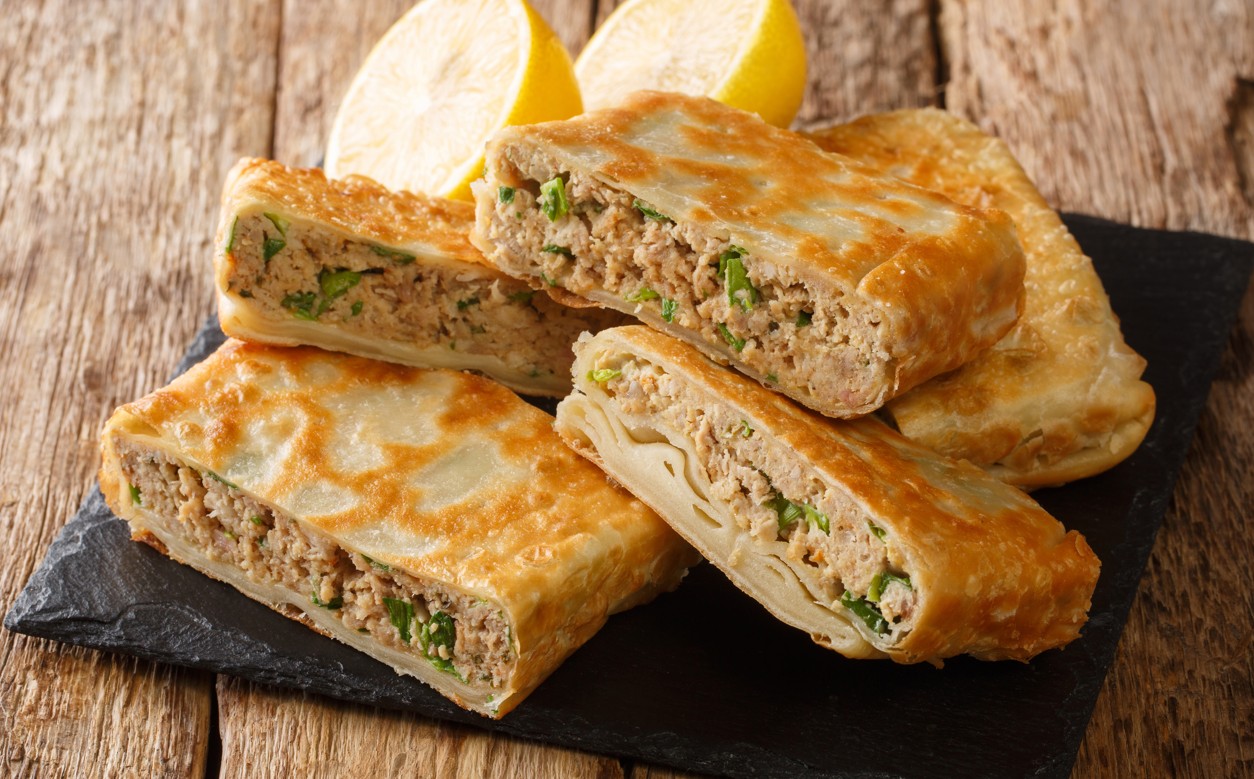
Mandi, featuring slow-cooked meat and rice traditionally prepared in an underground pit, is a festive favorite served during gatherings and celebrations. Mutabbaq, a stuffed and pan-fried pastry filled with minced meat, egg, or vegetables, is a popular street food with South Asian roots. Saleeg, a creamy white rice dish cooked with chicken broth and milk and topped with tender chicken and chili sauce, is a comforting Hejazi classic. Sambosa, the Saudi adaptation of samosas, are triangular pastries commonly enjoyed during Ramadan. Matazeez, soft dumplings simmered with lamb or chicken in a rich broth, reflects traditional home cooking, while madhbi, meat or chicken grilled over flat stones, offers a simple yet flavorful preparation.
Everyday Jeddah & Hejazi Food
Breakfast in Jeddah often includes ful medames, eggs cooked with tomatoes, or a traditional Arabic spread featuring labneh, olives, cheese, and freshly baked bread. Lunch is typically the main meal of the day and frequently centers around kabsa or mandi shared among family or colleagues. Dinner ranges from casual meals of grilled meats and mezze to more elaborate traditional dishes enjoyed late into the evening.
Rice, especially long-grain basmati, is the essential staple, forming the base of most meals. Lamb and chicken are the preferred meats, while fish and seafood play a prominent role thanks to the city’s coastal location. Dates are ever-present, served fresh or dried alongside meals and beverages. Yogurt and labneh provide balance and cooling contrast, while khobz, or Arabic bread, accompanies nearly every dish. Spices such as cardamom, saffron, cinnamon, black lime, and cloves define the characteristic Arabian flavor profile. Café culture is central to social life, with gatherings over Arabic coffee and dates forming a daily ritual. Jeddah’s coastal desert climate influences both the richness of its dishes and the frequent inclusion of cooling elements like yogurt and fresh herbs.
Cultural Fusion: Bedouin Foundations, Coastal Trade & Global Exchange
Jeddah’s cuisine reflects a layered history shaped by Bedouin desert traditions, Red Sea maritime trade, and its unique position at the crossroads of Islamic pilgrimage. Bedouin food culture emphasized dates, dairy, and meats well suited to desert life, forming the foundation of many traditional dishes.
Centuries of coastal trade introduced spices and techniques from India, Africa, and the wider Indian Ocean world. Jeddah’s role as the gateway to Mecca brought culinary influences from pilgrims across the Muslim world, while the 20th-century oil boom accelerated global exposure and innovation. Today, it is common to find Bedouin-inspired dishes, Indian-influenced rice preparations, and international cuisine coexisting within the same city. Jeddah’s food culture is ultimately defined by hospitality, expressed through generous portions, shared platters, and a warm welcome extended to locals, pilgrims, and visitors alike.
Craft Beverage Scene and Local Libations
Jeddah’s beverage culture reflects its Islamic foundations, desert environment, and growing modern café scene. Arabic coffee, or gahwa, is central to hospitality, prepared from lightly roasted beans infused with cardamom and served in small handleless cups that are continually refilled.
Tea is equally popular, often strong and sweet, sometimes flavored with mint. Laban and yogurt-based drinks provide refreshing relief from the heat, while fresh fruit juices are widely available throughout the city. Alcohol is strictly prohibited under Saudi law, but the non-alcoholic beverage scene is rich and varied. What distinguishes Jeddah is the ritual surrounding gahwa, where coffee service accompanied by dates symbolizes generosity and respect. Alongside this tradition, a thriving modern café culture has emerged, with local cafés and international chains serving as important social spaces, particularly for younger generations.
International Dining and Contemporary Scene
Although Saudi and Middle Eastern cuisine dominate, Jeddah offers an impressive international dining scene that reflects its long-standing cosmopolitan character. Lebanese restaurants are especially prominent, offering refined Levantine dishes and mezze.
Indian, Pakistani, and Filipino restaurants serve the city’s large expatriate communities, while Turkish and Egyptian eateries provide familiar regional flavors. American fast-food chains are widespread, particularly in shopping centers. Despite the breadth of international options, Jeddah’s culinary identity remains firmly rooted in traditional Saudi and Hejazi food, with even luxury hotels showcasing authentic local restaurants. The city’s food scene balances tradition with innovation, making Jeddah a testing ground for modern interpretations of classic dishes such as kabsa and mandi.
Food Customs and Practical Tips
Dining in Jeddah ranges from traditional floor-seating restaurants to upscale international venues, generally accompanied by warm and attentive service. Tipping is appreciated but not obligatory, with around 10% considered generous. When eating without utensils, using the right hand is customary.
Kabsa and mandi are often served family-style on large shared platters, emphasizing communal dining. For an authentic coastal experience, try sayadiyah at a seafood restaurant. Visiting Al-Balad offers insight into traditional cuisine within a historic setting, while Ramadan evening markets provide access to seasonal dishes and sweets.
Exploring different neighborhoods enhances the experience. Al-Balad is ideal for traditional eateries and historic atmosphere, the Corniche offers seafood with Red Sea views, and areas such as Tahliya Street and Rawdah are known for upscale dining and cafés. Balancing well-known restaurants with local spots frequented by residents provides the most rewarding experience. Be mindful of dining hours, as lunch often starts late and dinner commonly begins well after sunset. Jeddah delivers strong culinary value, particularly at local establishments. Above all, embrace the city’s culinary spirit, where generosity, hospitality, and the shared enjoyment of food reflect a city that bridges Saudi heritage with modern aspiration.
This guide covers what to eat in Jeddah, from sayadiyah and kabsa to mandi, saleeg, and traditional Saudi specialties. Use it to plan your culinary exploration of Saudi Arabia’s Bride of the Red Sea, where every meal reflects Arabian hospitality and coastal abundance.
Check monthly weather averages for
Latest Secret Flying deals to Jeddah
New York to Jeddah, Saudi Arabia for only $679 roundtrip
Cheap flights from New York to Jeddah, Saudi Arabia for only $679 roundtrip with Etihad Airways.
View DealNon-stop from Athens, Greece to Jeddah or Riyadh, Saudi Arabia from only €244 roundtrip
Non-stop flights from Athens, Greece to Jeddah or Riyadh, Saudi Arabia from only €244 roundtrip with Aegean Airlines.
View DealFrench cities to Medina or Jeddah, Saudi Arabia from only €250 roundtrip
Cheap flights from French cities to Medina or Jeddah, Saudi Arabia from only €250 roundtrip.
View Deal [adblockingdetector id="638efa67113bf"]